
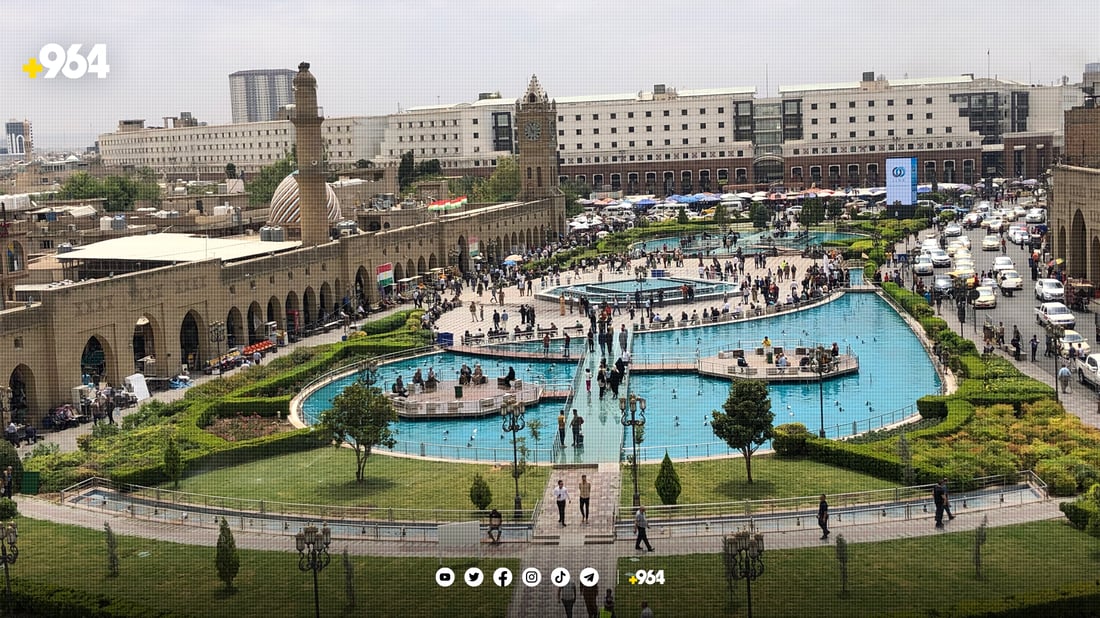
A view of the historic Citadel and central square in downtown Erbil, the capital of the Kurdistan Region of Iraq.
Erbil tourism counts heavy losses from conflict, eyes recovery after US-Iran deal
ERBIL — Tourism operators in Erbil say the sector suffered heavy losses over the past three months because of the conflict between Iran and U.S.-Israeli forces, which compounded security fears and weaker consumer spending across the Kurdistan Region. Hotel owners and industry representatives told 964media that dozens of hotels closed and laid off workers during the period.
The sector is now looking with cautious optimism to the recent U.S.-Iran agreement to end the conflict. “The war affected both domestic and international tourism,” said Shikur Aziz, deputy head of the Kurdistan Hotels and Restaurants Association. “Tourists avoid areas perceived as insecure, even if they are far from the fighting. Official travel warnings can lead to canceled bookings and postponed trips, while air traffic also declines.” He said the conflict cut occupancy at hotels, restaurants and resorts that rely heavily on foreign visitors, with revenues falling, conferences postponed and investors reluctant to launch new projects.
Operators began seeing signs of recovery after the initial ceasefire on April 8. Emad Sabih, who owns Discovery World Travel and Tourism in Erbil’s Ainkawa district, said the two months since had brought encouraging signs for domestic tourism, with a final U.S.-Iran agreement in mid-June further improving expectations. “We expect international tourism to improve gradually as flights resume and travelers regain confidence,” he said. Domestic tourism typically recovers faster, he added, because local travelers feel more confident and avoid the cost of flights and visas, while international visitors take longer to return as they weigh flight stability, ticket prices and perceptions of the region.
Ahmad Mohammed, public relations manager at the Blue Moon Hotel, said fears of a prolonged conflict led many to cut discretionary spending and postpone leisure travel. Ramadan, which coincided with the conflict’s outbreak in February, deepened the decline, he said, as visitor numbers usually fall during the fasting month, though the hotel kept receiving some guests traveling for business or medical treatment.
The downturn coincided with sustained violence across the region. Community Peacemaker Teams-Iraqi Kurdistan documented 751 attacks between Feb. 28 and May 28, with Erbil governorate recording 588, more than three-quarters of the total. Sulaymaniyah recorded 135, Duhok 22 and Halabja six. Those killed included 10 people affiliated with Iranian Kurdish opposition groups and 12 civilians, Kurdish security members and other non-combatants.