
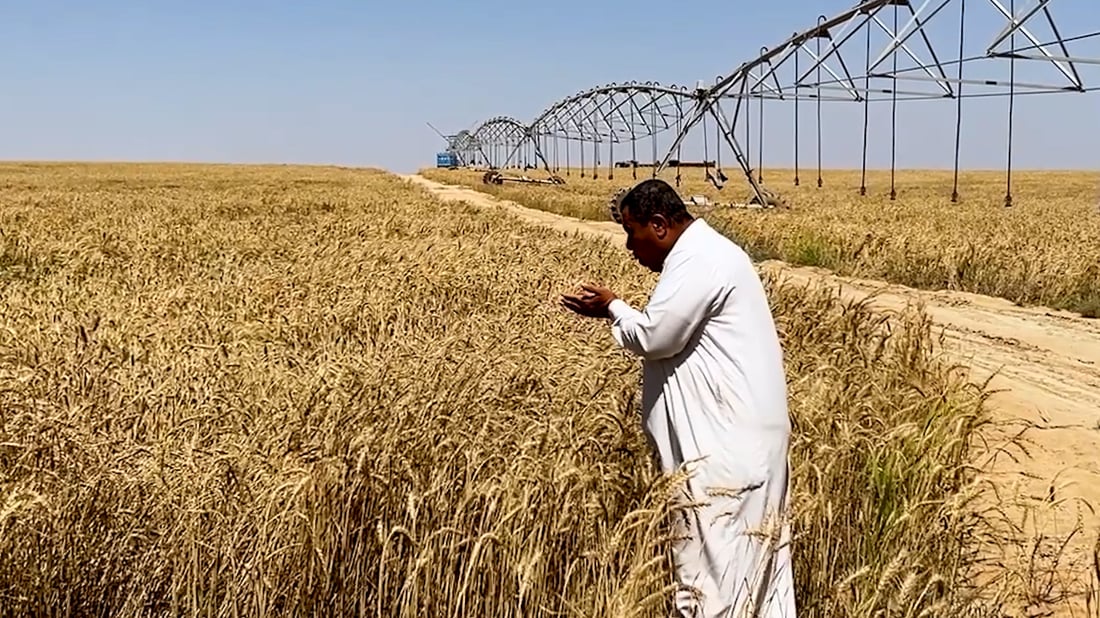
A farmer inspects a wheat field in Ain al-Tamr, Karbala Governorate, during the harvest season. Photo by 964media.
Agriculture
Karbala wheat output surges but farmers say procurement limits punish success
KARBALA — Wheat cultivation in Ain al-Tamr, west of Karbala, has expanded to around 164,000 dunams this season, up 10,000 dunams from last year, with additional areas planted outside the government agricultural plan. Local officials expect total wheat deliveries to exceed 200,000 tons.
Miqdad al-Tamimi, mayor of Ain al-Tamr, told 964media that wheat production in the district accounts for 70% of Karbala’s total wheat output. Farmers have begun harvesting across the area, relying on around 15 combine harvesters and their crews from Erbil after rainfall delayed field operations.
Iraq purchases wheat through a government procurement program that pays fixed prices above market rates to support domestic production, maintain strategic food reserves and guarantee farmer incomes. The Ministry of Trade buys large quantities each harvest season and stores them in government silos, making wheat one of the country’s most heavily subsidized crops. Recent reductions in procurement quotas and lower purchase prices have prompted complaints from farmers across several governorates.
Al-Tamimi said his main concern is the government cap of 900 kilograms per dunam for accepted wheat deliveries, despite local yields ranging between 1,300 and 1,500 kilograms per dunam. “Wheat productivity in Ain al-Tamr is very distinguished,” he said, attributing higher yields to modern agricultural machinery and center-pivot irrigation systems. “Everyone asks: why don’t you buy the remaining quantity?”
Farmer Qahtan Adnan described the season as highly productive because of heavy rainfall but said procurement limits have cut the amount farmers can sell to the state. “The state now receives 900 kilograms from each dunam instead of 1,300 kilograms, and this is like a punishment for the farmer,” he said. He added that the Agricultural Equipment Administration requires farmers to continue paying annual irrigation system installments of up to 5 million Iraqi dinars ($3,268), with total system costs reaching 45 million dinars ($29,412). “How can he pay these amounts with the reduction in the quantity of crops being received?” he said.
Harvesting began May 10, with three workers assigned to each combine harvester and operations typically running from 10 a.m. to 4 or 5 p.m. Nidham Shukr, a combine harvester owner, said the season started late this year because of climate changes, with harvesters usually arriving between April 20 and 25 before returning north after around 20 days. “The people of Ain al-Tamr are kind, the area is safe, and we spend most of our time on the farms,” he said, noting that harvester owners come from Mosul and Kirkuk as well as Erbil.
Cooperation between local farmers and harvesting crews from the north began three years ago. Driver Tayeb Ahmed said ties between the communities have strengthened over time. “Our ties with the people of the area have grown stronger, and we exchange visits with them throughout the year,” he said.
Adel Nima, deputy director of the Ain al-Tamr Agriculture Division, said the district also contains large areas planted outside the official agricultural plan whose size and expected production have yet to be determined. Last year, 120 dunams outside the plan produced around 90,000 tons, with total wheat production from all lands reaching 225,000 tons.
Nima also criticized the government purchase price. “Setting the price of one ton of wheat at 700,000 dinars ($458) is not enough to cover farmers’ expenses for fertilizers and irrigation system installments,” he said. The price last season was 850,000 dinars ($556) per ton.