
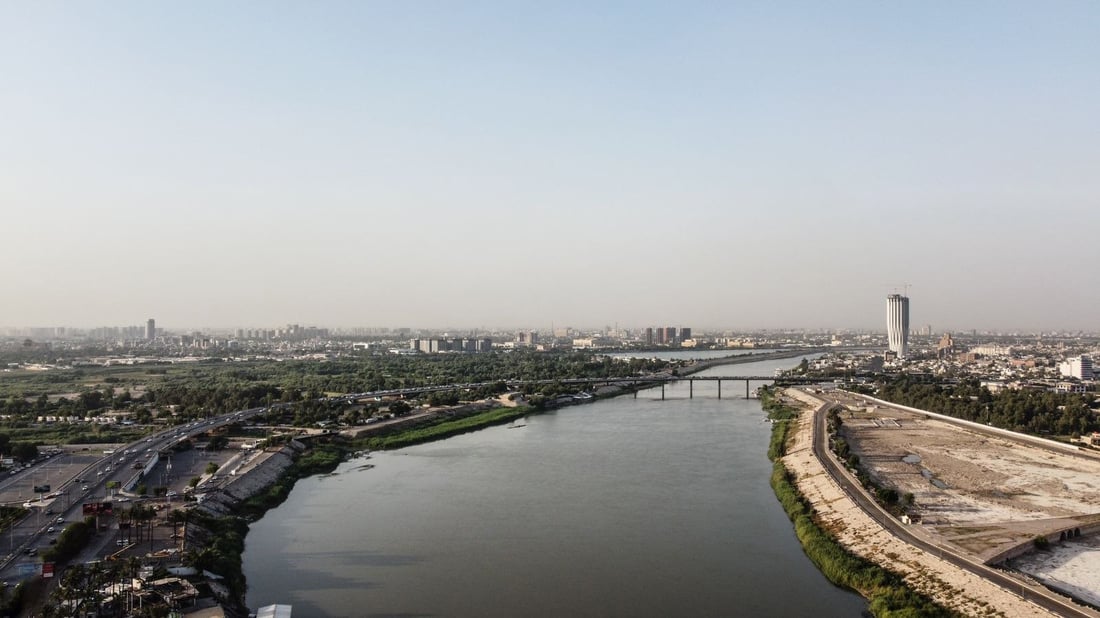
A view of the Tigris River flowing through Baghdad, with bridges and urban areas visible along its banks.
Iraq must build sewage treatment plants to protect rivers, ministry says
BAGHDAD — Iraq’s Ministry of Environment called Sunday for sewage treatment plants to be built in all cities as a condition for protecting the Tigris and Euphrates from pollution, saying more than two billion cubic meters of wastewater could be recovered annually if proper infrastructure is in place.
Ministry spokesperson Luay al-Mukhtar urged authorities to prioritize sewage projects in government financial planning and annual budgets, stressing that plants must be “properly designed and implemented by reputable companies committed to environmental standards.”
On hospital wastewater, Mukhtar said liquid discharges — which may include chemicals, laboratory waste and contaminated water — require dedicated treatment units at each facility before being discharged into sewage systems or rivers.
Pollution of Iraq’s rivers has been repeatedly documented, with untreated sewage among the primary contributors. Contamination from the Diyala River has previously forced northern Wasit water treatment plants to shut down after pollutants reached the Tigris, disrupting supplies. Illegal discharges and mass fish deaths in floating farms along the Tigris have also been recorded.
Water Ministry raises fines, takes legal action as river abuses reach 10,000