
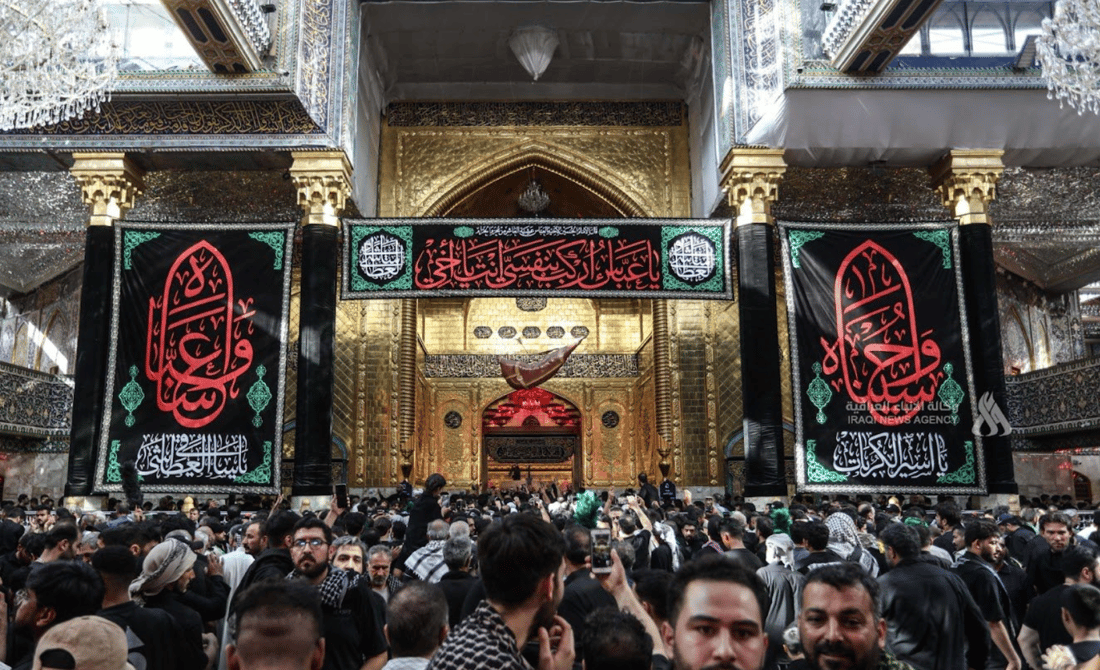
FILES: Pilgrims gather at the Imam Hussain Shrine in Karbala during the Arbaeen pilgrimage in 2025.
Karbala’s tourism sector collapses by 90% as war halts pilgrim arrivals
KARBALA — Tourism in Karbala has collapsed by 90 percent since the outbreak of the regional war, with hotels, tourism companies, amusement parks and restaurants largely shut down and operators calling for government support to avoid permanent closure, local officials said.
“The war on Iran caused a 90% decline in tourism in Karbala, both domestic and foreign,” said Israa al-Nasrawi, head of the tourism and antiquities committee in Karbala’s provincial council, citing a sharp drop in arrivals from Iran, India and Pakistan — the city’s main sources of foreign pilgrims.
Tourism operators said the impact has been total. “Last year’s tourism season was strong compared to this season, which is effectively zero,” said Mohannad Shukri, director of a local tourism company, adding that most firms have shut down and incurred “very large financial losses” while still facing tax obligations and licensing costs. Ahmed al-Hashemi, trips manager at Al-Sultan Company, said companies have laid off most staff and retained only minimal personnel to run limited land trips for Umrah travelers.
Operators have questioned why Iraqi airports remain closed while flights continue in other conflict-affected countries. “Why doesn’t Iraq fly like Beirut?” some asked, pointing to continued air traffic in Lebanon despite daily strikes.
Karbala’s tourism director Alaa Jabbar al-Daami noted the sector’s structural fragility. “The tourism sector is among the most affected by even the simplest events — it is the first to be affected and the last to recover,” he said.
Karbala is one of the holiest cities in Shiite Islam, home to the shrine of Imam Hussein, the Prophet’s grandson killed in the Battle of Karbala in 680 AD. The city hosts millions of pilgrims annually, particularly during Ashura and Arbaeen commemorations, with large numbers coming from Iran, Pakistan and India. It has 526 classified hotels and more than 200 budget hotels, most of which have suspended operations, with only a handful receiving domestic visitors on weekends.