
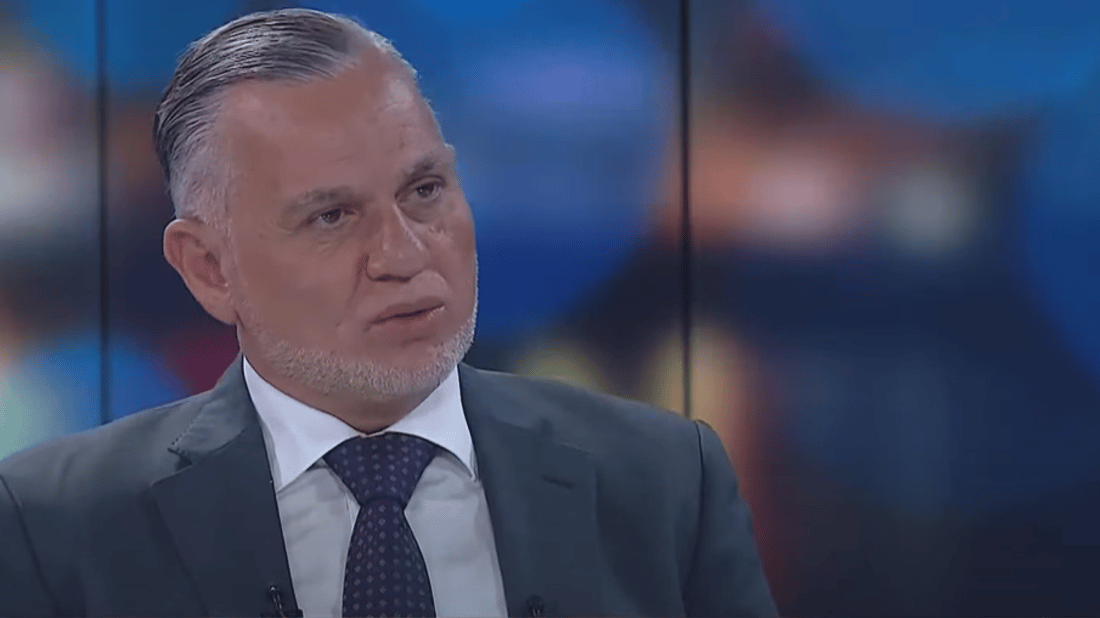
Baha al-Araji, head of the Reconstruction and Development parliamentary bloc
Media Monitor
Sudani bloc head says US pressed PM to cut PMF salaries and target factions
BAGHDAD — The head of the Reconstruction and Development bloc said Thursday that the United States has conditioned its relationship with Prime Minister Mohammed Shia al-Sudani on cutting salaries for the Popular Mobilization Forces and targeting some armed factions — conditions Sudani has refused.
“This is what Mr. Sudani did not accept, because the factions are our brothers,” Baha al-Araji said in a televised interview, adding that Sudani supports restricting weapons to state control “through political and legal means, not bloodshed.”
Araji said delays in dollar shipments to Iraq are linked to U.S. requests that Sudani halt PMF salaries, which the prime minister rejected. He said 90% of diplomatic missions have withdrawn from Iraq, which he attributed in part to attacks on diplomatic premises.
Earlier this month, the United States summoned Iraq’s ambassador in Washington and demanded that Baghdad “immediately take all measures to dismantle the Iran-aligned militia groups in Iraq,” following what it described as an ambush of U.S. diplomats in Baghdad on April 8. Since the regional war began in late February, Iran-aligned factions under the Islamic Resistance in Iraq umbrella have carried out repeated drone, rocket and missile attacks on U.S. military and diplomatic targets in Baghdad and Kurdistan Region. The United States has simultaneously struck PMF-linked positions across multiple governorates, killing dozens of fighters.
Araji also described continuing divisions within the Coordination Framework over how to select a prime minister. He said Monday’s meeting saw the State of Law Coalition submit six signatures backing Basim al-Badri, which Badr Organization chief Hadi al-Amiri rejected, saying “we do not want signatures but voting.” A proposal requiring approval from two-thirds of framework leaders followed by two-thirds of its parliamentary members, backed by Amiri, Ammar al-Hakim and Qais al-Khazali, was opposed by State of Law and shelved.
Araji said the next meeting would not address candidate selection unless agreement on the mechanism is reached first. “We hope the mechanism of ‘direct voting’ will be adopted as it is the most fair,” he said.
The framework postponed Wednesday’s meeting to Friday. The Dawa Party maintains Maliki remains its official nominee, while rival factions say eight blocs back Sudani against four for Maliki. Two other names remain under consideration: Badri, head of the Accountability and Justice Commission, and Ihsan al-Awadi, director of Sudani’s office, proposed by the Reconstruction and Development bloc. Under Article 76, President Nizar Amedi has 15 days from his April 12 inauguration to task the largest bloc’s nominee with forming a government.