
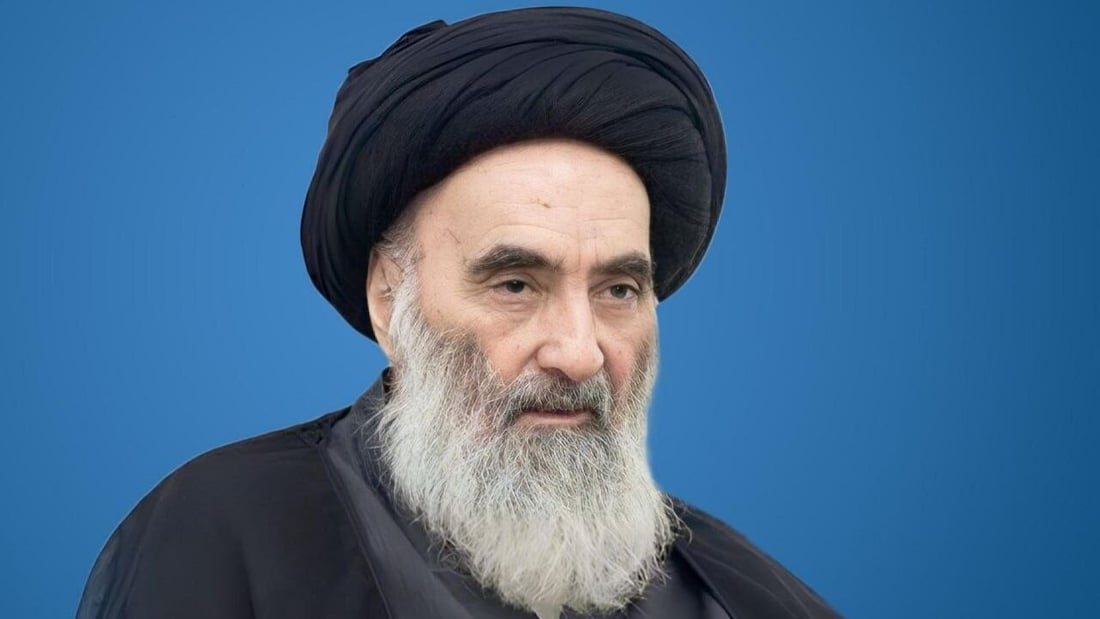
Sistani hopes Iran’s new supreme leader will preserve unity amid war
NAJAF — Iraq’s top Shiite cleric Ayatollah Ali al-Sistani expressed hope Wednesday that Iran’s new supreme leader would succeed in serving the Iranian people and maintaining national unity during the ongoing war.
“With the commemoration of the late leader of the Islamic Republic of Iran, His Eminence Ayatollah Sayyid Ali Khamenei, we hope that his noble successor will be granted success in serving the great Iranian people, repelling the harm of enemies, and preserving unity and national harmony,” Sistani’s office said.
Mojtaba Khamenei, 56, was appointed supreme leader by Iran’s Assembly of Experts following the death of his father in the U.S.-Israeli strikes that launched the regional war Feb. 28. He has yet to appear in public after being wounded in the same strike that killed his father and his wife, according to officials.
Sistani, who has lived in the Iraqi holy city of Najaf for decades, was himself born in Iran but is known for resisting Tehran’s growing political influence in Iraq. Last week he denounced what he called “an unjust war” on the Islamic republic.
Several Iraqi leaders have also reacted to the leadership transition. Iraqi President Abdul Latif Rashid expressed hope that “the coming phase will witness an end to the war and the prioritization of wisdom and dialogue.”
Prime Minister Mohammed Shia’ al-Sudani congratulated Mojtaba, expressing confidence in Iran’s leadership “to manage this critical stage.”
Kurdistan Region President Nechirvan Barzani said the Kurdistan Region seeks to maintain “historical and friendly relations with the Islamic Republic of Iran, aiming for the mutual benefit of both nations and promoting peaceful coexistence throughout the entire region.”
Prominent Iraqi political and armed factions also welcomed the appointment, describing the transition as a continuation of the ideological path established by the late supreme leader.
AFP contributed to this report