
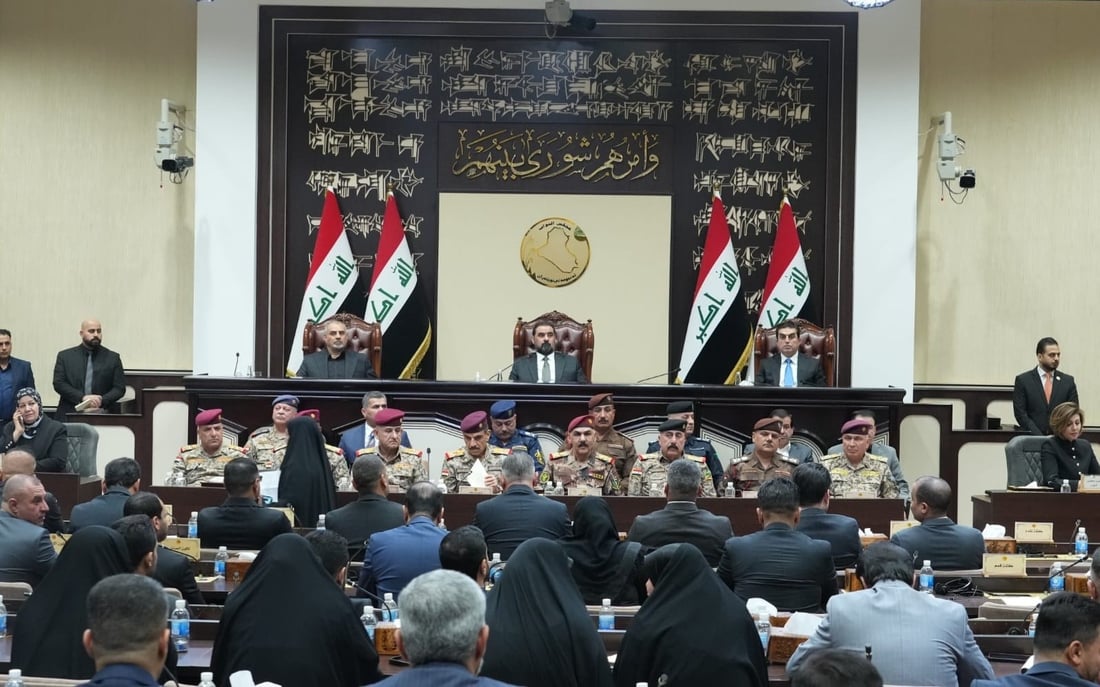
Iraqi parliament rejects involvement in regional war
BAGHDAD — Iraq’s parliament on Saturday declared its rejection of attempts to draw the country into the regional war and announced the formation of a committee to investigate violations of national sovereignty, as the country faces growing pressure from multiple directions following U.S. and Israeli strikes on Iran.
Meeting in a session attended by senior security and military commanders, lawmakers condemned all attacks targeting Iraqi territory and security forces and reiterated “their categorical rejection of using Iraqi land or airspace in any hostile acts directed against neighboring states.”
“The Council of Representatives condemned all attacks targeting Iraqi sovereignty and the sites of security and military forces,” the parliamentary statement said, adding that Iraq will not allow any party to “drag Iraq into the ongoing regional conflicts.”
Parliament affirmed full support for military and security institutions in protecting borders and national sovereignty, and specifically called for securing diplomatic missions operating in Iraq — a notable addition following the rocket attack on the U.S. Embassy in Baghdad’s Green Zone on Saturday night.
Lawmakers also called on the UN Security Council and international organizations to “take the necessary steps to stop the attacks and respect international laws, treaties and conventions.”
The session was not without tension. Several lawmakers chanted anti-American and anti-Israeli slogans at the start before parliament voted to go into closed session. A physical altercation also broke out between two lawmakers during the closed portion of the meeting, resulting in one being barred from parliament by Speaker Haibat al-Halbousi.
Parliament also called on political forces to fulfill their constitutional responsibilities, including electing a president and forming a national unity government — a reminder that Iraq remains without a fully formed government as the security crisis deepens. The Communications and Media Commission was directed to take legal measures against platforms spreading misinformation that could threaten public security.