
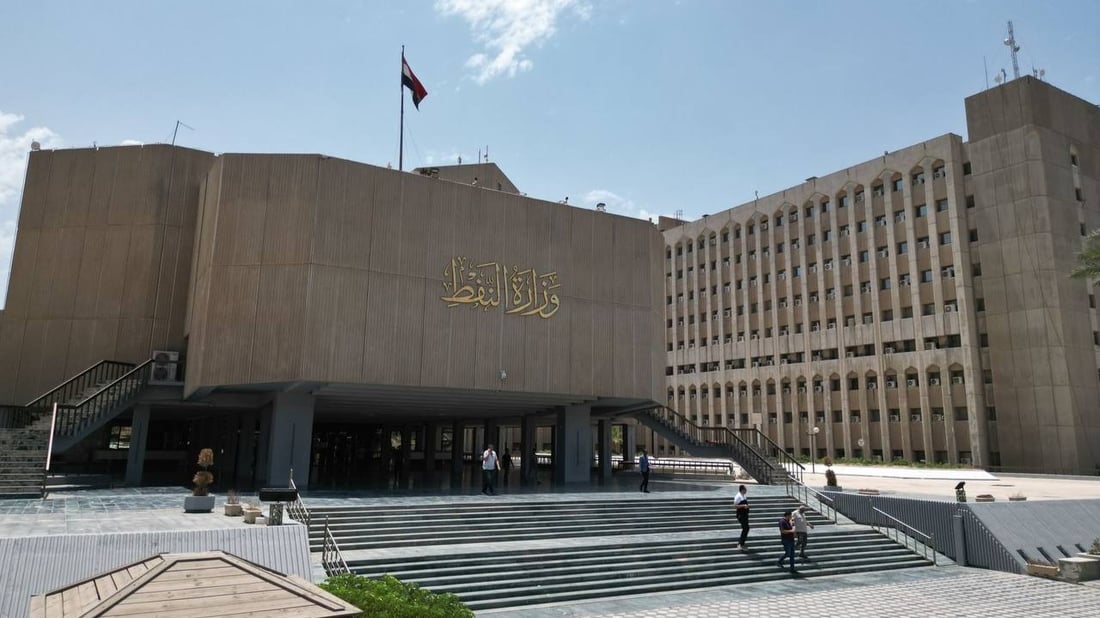
Iraq's Ministry of Oil building
Iraq plans alternative routes to secure oil exports
BAGHDAD — Iraq’s Oil Ministry announced Tuesday it has developed alternative plans to ensure oil exports, while confirming ongoing understandings to shield the country from potential disruptions in the Strait of Hormuz.
Ministry spokesperson Assem Jihad told the Iraqi News Agency that “the ministry’s policy is to not leave any opportunity unused for exporting oil,” noting that “the ministry is working to reach understandings and to open and activate available outlets.”
He added that “the ministry continues to activate secondary outlets, including the Ceyhan pipeline and the national pipeline,” explaining that “fuel oil is currently being exported through Syria’s Baniyas, in addition to ongoing understandings to restore the Saudi pipeline that has been idle since 1991.”
Jihad stressed that there are “understandings with both the American and Iranian sides to avoid the blockade affecting the Strait of Hormuz and with all parties to ensure exports,” adding that “the ministry leaves nothing unaddressed as this represents the national economy, and the Iraqi state depends on oil exports for more than 90% of its economy.”
Iraq’s export strategy follows a sharp drop in shipments in March, when exports fell to 18.6 million barrels, generating just over $1.95 billion in revenues, compared with more than 99 million barrels in February after the Strait of Hormuz was effectively closed during regional conflict involving the United States, Israel and Iran. The disruption slowed tanker traffic and forced Iraq to cut production while seeking alternative routes, including increased use of the Kirkuk-Ceyhan pipeline and shipments through Syria’s Baniyas port.
Of the March total, 14.56 million barrels were exported from central and southern fields, while 2.77 million barrels were shipped from Kirkuk through Turkey’s Ceyhan port and 1.27 million barrels from the Kurdistan Region via the same route.
In response to the crisis, Baghdad and the Kurdistan Regional Government reached an agreement to resume flows through the northern Kirkuk-Ceyhan pipeline after a dispute, helping to offset some losses from southern exports. Iraq also began transporting oil by land through Syria toward Baniyas and reopened the al-Waleed border crossing with Syria for the first time in more than a decade as part of emergency measures.
The Strait of Hormuz is a critical route for Iraq’s oil exports, with most shipments typically passing through the waterway. The temporary disruption highlighted the country’s reliance on a single corridor and the vulnerability of its export infrastructure during regional tensions.
Oil revenues account for about 90% of Iraq’s state income, making fluctuations in export volumes a key factor in public finances and government spending.