
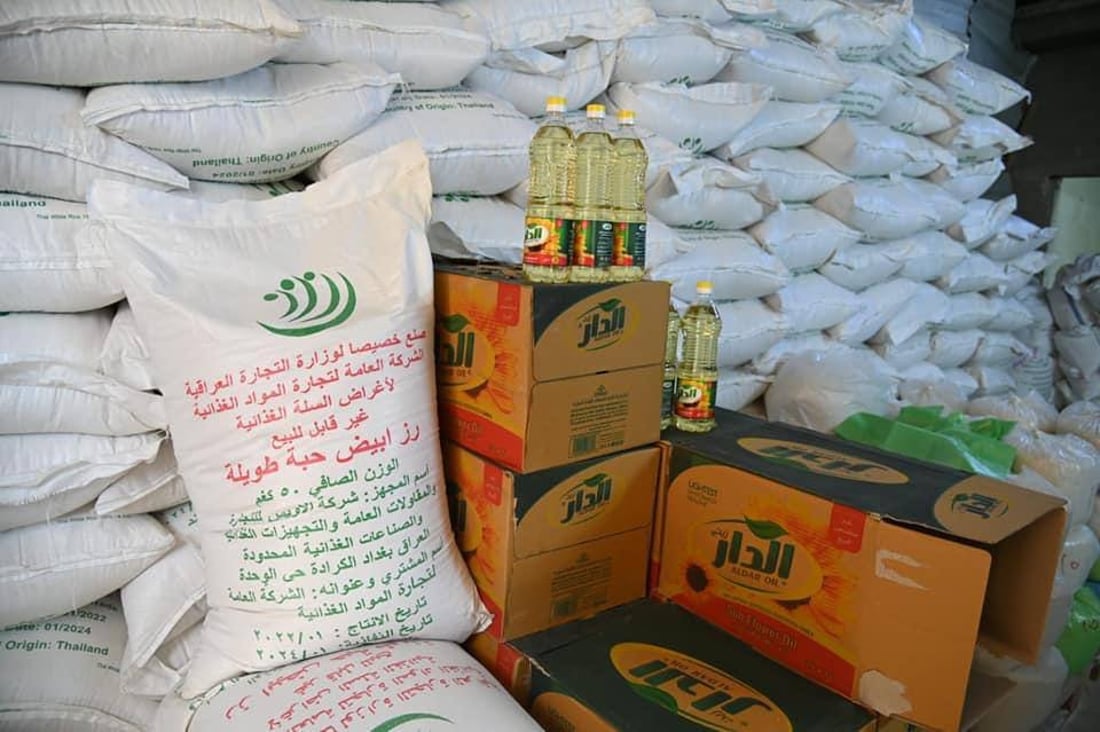
Food ration items, including rice, cooking oil and other staples, stored for distribution under Iraq’s Public Distribution System.
Iraq’s Trade Ministry denies social media claims of spoiled food ration items
BAGHDAD — Iraq’s Ministry of Trade on Wednesday denied social media reports alleging that spoiled lentils and tomato paste were distributed through the country’s food ration basket, saying all goods undergo laboratory testing and strict oversight before distribution.
The ministry “categorically denies what has been circulated on some social media platforms regarding the presence of spoiled food items, lentils and tomato paste, being distributed as part of the food basket items,” according to a statement.
It said inspection and monitoring teams conduct regular follow-ups at warehouses and with ration agents, and warned it would take “necessary legal measures against any party proven to be negligent or in violation of instructions.” The ministry also called on media outlets and citizens to rely on official sources and not spread rumors.
The denial follows a pattern of similar statements in recent months. On Jan. 24, the ministry rejected reports of cuts to food rations, saying each person’s share was being distributed in full. On Feb. 24, 2025, it denied social media reports of spoiled rice in Babil, saying the circulating video was two years old and the rice shown had never been distributed.
The ministry’s denials have not always held up. In June 2025, videos from Sulaymaniyah showed tomato paste cans distributed through the ration program swelling and rupturing when opened. The ministry initially denied any issue, though subsequent reports indicated the problem was widespread, with some cans releasing foam or emitting unpleasant odors.
Iraq’s food ration basket is part of the Public Distribution System, a state-run program established in the 1990s that provides basic commodities — including rice, flour, sugar, cooking oil, lentils and tomato paste — to registered households at subsidized prices through local ration agents.