
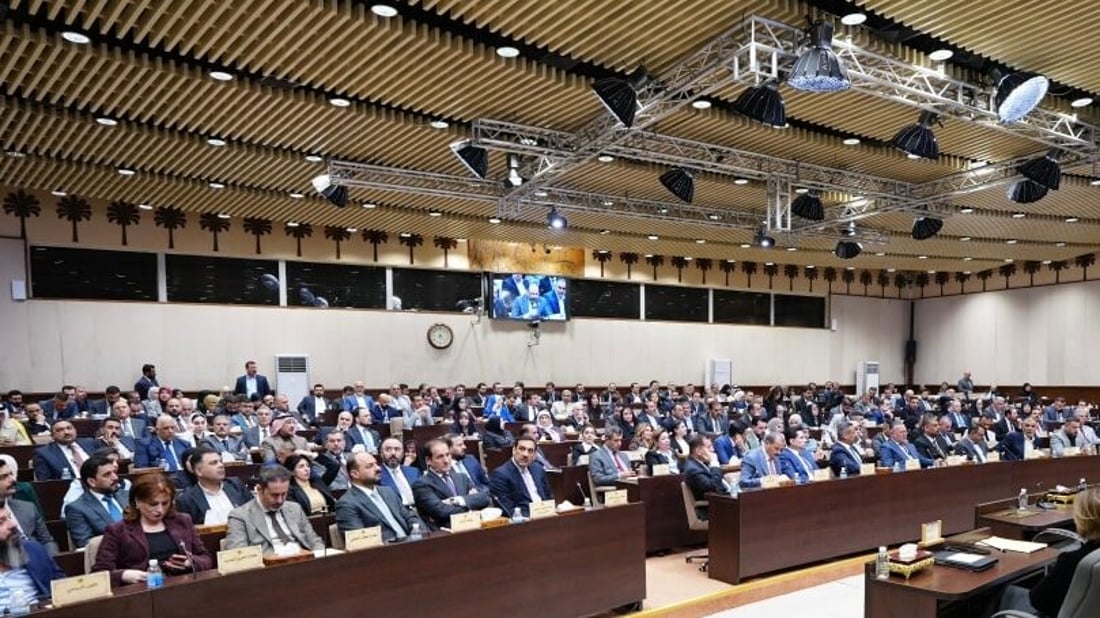
Iraq parliament sets session
Parliament to hear security briefing on detainees transferred to Iraq
BAGHDAD — Iraq’s parliament said its Wednesday session will include a broad discussion on the issue of prisoners transferred to Iraq, with the justice minister, Deputy Interior Minister for intelligence affairs and the deputy commander of Joint Operations Command expected to attend.
The agenda, published by parliament’s media directorate, lists a “general topic for discussion” focused on the issue of prisoners transferred to Iraq, alongside other items, including reviewing challenges filed over the validity of some lawmakers’ membership and holding general discussions. Parliament’s media directorate said the session is scheduled to begin at 11 a.m.
The detainee file has drawn attention after Iraq’s Supreme Judicial Council said all crimes attributed to Islamic State members transferred from Syria will be examined exclusively under Iraqi law, with investigations involving suspects from 42 countries, including figures accused of genocide, crimes against humanity and chemical weapons use. Ali Diaa, deputy head of the National Center for International Judicial Cooperation, said the First Karkh Investigative Court is handling the cases and that the total number of detainees “is expected to reach between 7,000 and 8,000 people,” adding: “It is not possible at the present time to talk about handing over these suspects to their countries before the completion of investigation procedures.”
Iraq’s Security Media Cell has said the country has received 2,250 Islamic State members from Syria by land and air in coordination with the international coalition and that detainees were placed in “highly secured official centers.” Cell chief Lt. Gen. Saad Maan said, “The firm principle is to try all those involved in committing crimes against Iraqis and affiliated with the ISIS terrorist organization before competent Iraqi courts,” while the Foreign Ministry has said detainees will either face trial or be sent to rehabilitation centers if involvement in crimes cannot be proven.