
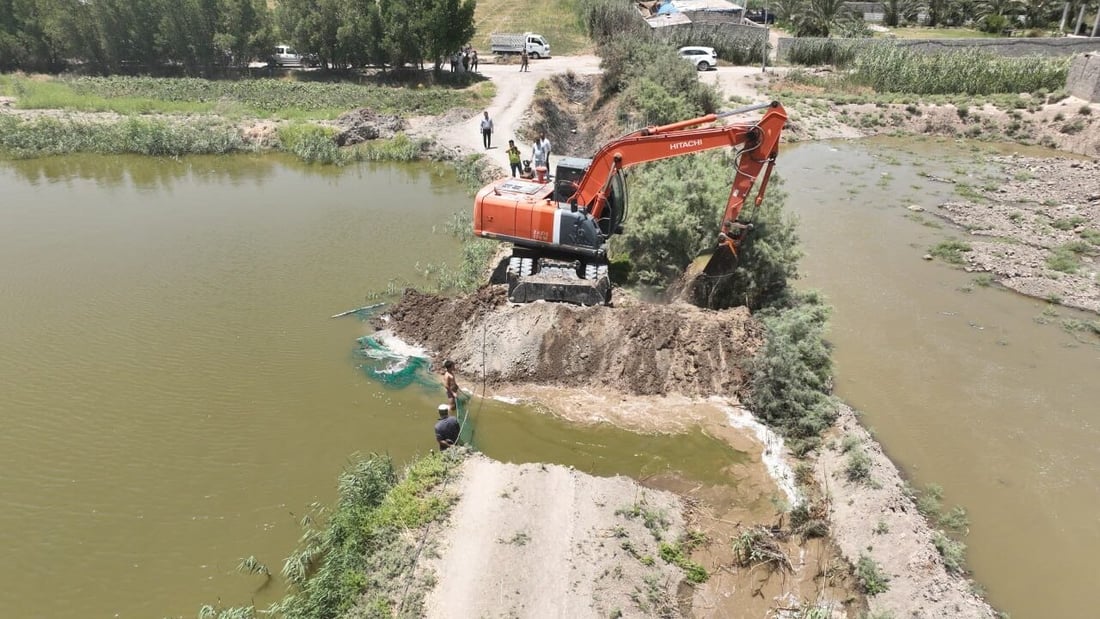
FILES: Iraqi water authorities use heavy machinery to dismantle an illegal fish pond as part of a nationwide campaign to stop unauthorized use of water resources.
Iraq moves to curb water violations, launches drinking water plan
BAGHDAD — Iraq’s Ministry of Water Resources announced Monday the adoption of an emergency plan to secure drinking water supplies in the governorates, alongside measures to prevent farming outside the approved agricultural plan and to remove all unauthorized fish ponds.
In a statement, the ministry said Water Resources Minister Aoun Diab chaired a meeting of the central crisis cell tasked with addressing water scarcity and removing violations. The body was formed with the approval of Prime Minister Mohammed Shia al-Sudani.
The country faced its worst water shortage in eight decades in 2025, with reserves at their lowest levels in 80 years due to drought, climate change and upstream dam projects in Turkey and Iran.
According to the statement, the committees assigned to the crisis cell will work to remove violations of approved water allocations, “take effective measures and hold violators accountable,” prevent cultivation outside the approved agricultural plan, and “remove all unauthorized fish ponds.”
The unauthorized fish farms are straining Iraq’s already fragile water resources. Many ponds are built without government approval and draw large quantities of water from the Tigris and Euphrates as drought conditions worsen. In response to the shortages, the Ministry of Water Resources has launched operations to dismantle these sites, draining the ponds, breaking down their banks and refilling them to prevent future use, particularly in areas where farms were constructed without permits.
The ministry said the measures also include “developing an emergency plan for drinking water in the governortes” and providing protection for irrigation facilities and staff. The committees will submit monthly reports to the central crisis cell on water conditions and violations of water allocations.
Iraq is among the countries most vulnerable to climate change, facing rising temperatures, severe drought, declining rainfall and increasing desertification.
The meeting also reviewed “a detailed briefing on the water situation and storage levels and a comparison with previous years,” including actual consumption along the Tigris and Euphrates rivers and calculations of cultivated areas.
According to the statement, the minister stressed “the necessity of unifying efforts across all institutions to overcome the severe water scarcity crisis that has struck the country.”
He said Iraq is currently experiencing “the harshest years of drought,” attributing the situation to climate change and upstream countries’ investment in storage and irrigation projects at the sources of the rivers, “particularly neighboring Turkey.”
The minister also emphasized “the importance of intensifying efforts to protect the river environment and prevent the dumping of waste,” saying the measures aim to protect public health and preserve the river’s environmental flow.