
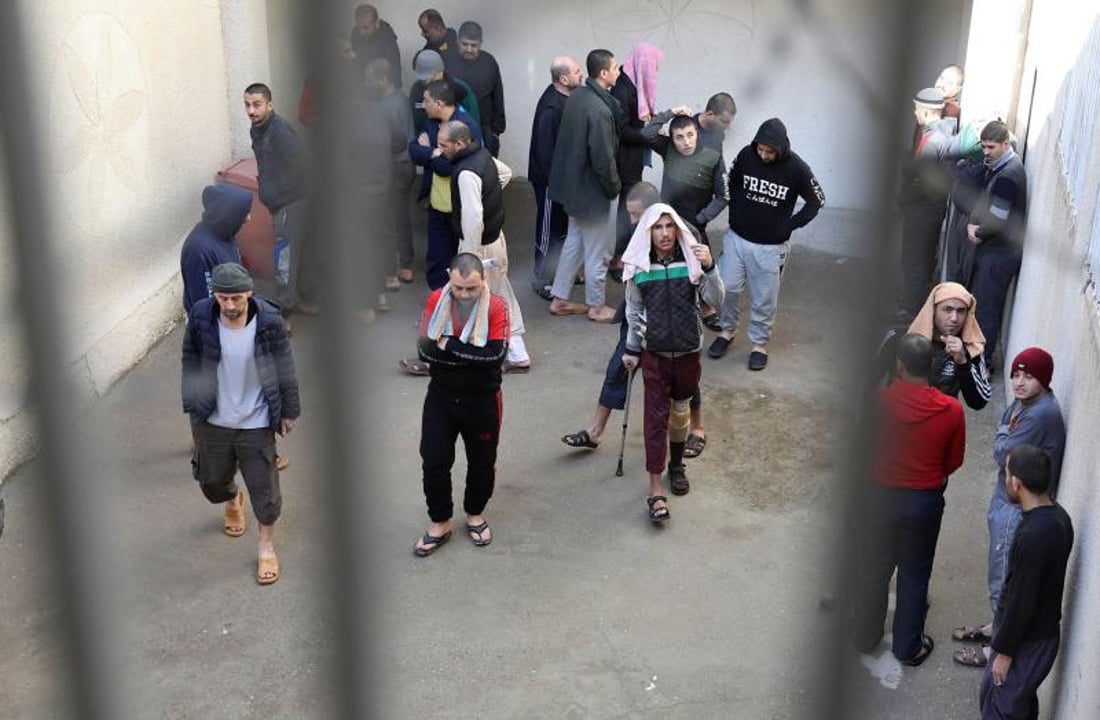
Iraq outlines fate of ISIS detainees transferred from Syria
BAGHDAD — Iraq’s Foreign Ministry said Sunday that Islamic State detainees transferred from Syria to Iraq will either face trial under Iraqi law or be sent to rehabilitation centers if their involvement in crimes cannot be proven, as Baghdad presses other countries to repatriate their nationals held in regional detention facilities.
Foreign Ministry Undersecretary Hisham al-Alawi told the state-run Iraqi News Agency that “the number of ISIS members brought to Iraq is very limited, out of 7,000 present in Syria, and some of them are emirs and leaders in the ISIS terrorist organization.”
He said that “those brought to Iraq are about 450 members, while the vast majority remain in Syrian prisons and are of different nationalities.”
Al-Alawi said Iraq has sought to accelerate the return of its own citizens. “Some of those transferred are Iraqis, and we worked during the past period to speed up bringing them back,” he said.
He added that accountability would be based on evidence. “Those who committed crimes are referred to the courts, while those whose guilt is not proven will be transferred to rehabilitation centers, and their situations will also be reviewed,” al-Alawi said.
Addressing foreign detainees, he said, “As for those present in the prisons, most of them are from other countries, numbering more than 40 nationalities. Iraq has for years officially urged their countries to assume responsibility, take them back and deal with them according to their laws.”
“The response was not strong from most countries, but some initiated steps to implement what Iraq requested,” he said.
Al-Alawi said that of the roughly 7,000 detainees held in Syria, about 2,000 were Iraqis. “A portion of them has been returned to Iraq,” he said, adding that Iraq’s position has long been that “we have sufficient numbers, and other countries must bear responsibility for dealing with their citizens.”
He said Iraqi courts apply local law based on where crimes were committed. “The Iraqi judiciary has established a legal principle confirming that any citizen, whether Iraqi or of another nationality, if he committed crimes on Iraqi territory, will be tried in Iraq and Iraqi local laws will be applied to him,” al-Alawi said. “If he did not commit crimes in Iraq, then he will be dealt with in his country.”
Reuters has previously quoted an Iraqi judicial official describing the transfer process as a trap, noting that Western countries oppose the death penalty that could face their nationals under Iraqi law while also refusing to repatriate them.
Iraq has recently begun receiving Islamic State detainees from camps and prisons in northeastern Syria after fighting and shifting control raised concerns over detention facility security. The Supreme Judicial Council said earlier that all transferred suspects, regardless of nationality or rank within the organization, are subject exclusively to Iraqi jurisdiction, with courts beginning formal proceedings and documenting crimes in coordination with national and international judicial bodies.
Government officials have framed the transfers as a preemptive step to protect national security, citing the risk of escapes and reorganization if detainees remain in facilities facing fragile security conditions. The initial phase involved 150 detainees, according to U.S. Central Command, with any expansion tied to security assessments, as Iraqi authorities continue to urge countries to take back their citizens linked to the group.