
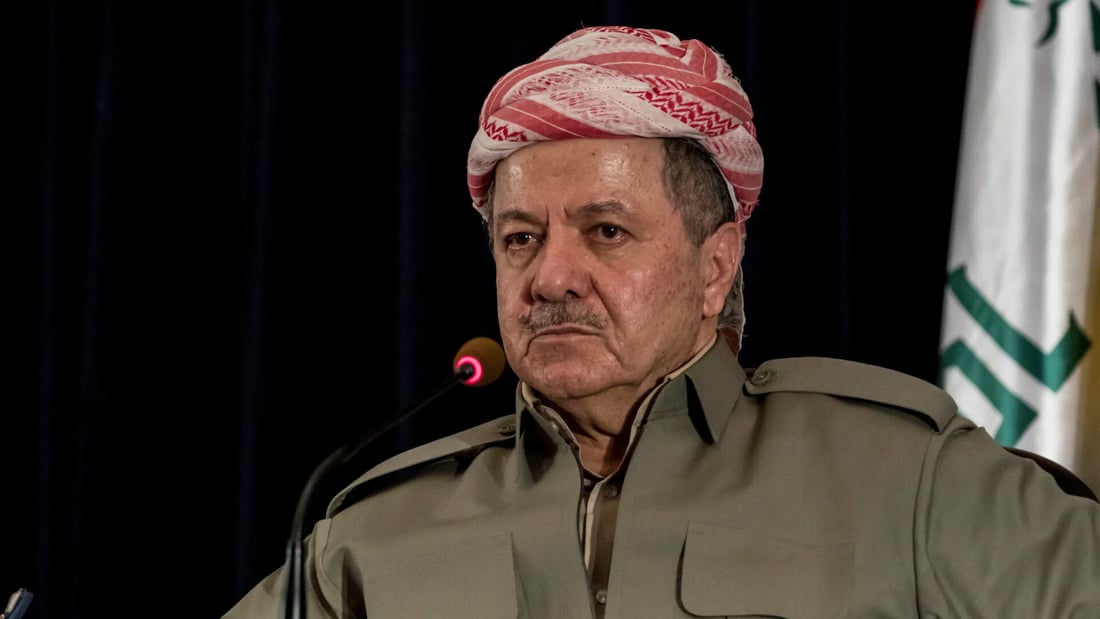
Kurdistan Democratic Party leader, Masoud Barzani
Following assault on Kurds in Aleppo
Barzani condemns campaign targeting Syrian Arabs in Kurdistan Region
ERBIL – Kurdistan Democratic Party leader Masoud Barzani on Monday condemned what he called media campaigns and incitement targeting Arab Syrian residents in the Kurdistan Region, after the fighting in Aleppo that hit Kurdish neighborhoods and triggered a wave of angry reaction online.
“In reaction to the events that occurred in Aleppo in recent days, unfortunately, some media outlets, social media platforms, and others launched a campaign against Arab Syrian citizens residing in the Kurdistan Region,” Barzani said in a statement.
He described the campaigns as inappropriate and inconsistent with Kurdish values and the policies of Kurdistan Region institutions, calling on authorities to prevent similar incidents in the future.
“Such campaigns and actions are inappropriate and misplaced. They are entirely inconsistent with the principles and values of the people of Kurdistan and conflict with the general policy and vision of the Kurdistan Region’s institutions,” he added.
Some social media users called for punitive measures against Syrian Arabs living in the Kurdistan Region, including firing them from their jobs and revoking their residency permits, in response to the violence in Aleppo.
Heavy fighting broke out this week in Aleppo’s predominantly Kurdish neighborhoods of Sheikh Maqsoud and Ashrafiyeh, with residents and Kurdish-led forces coming under assault as Syrian government forces and allied fighters advanced. The violence displaced civilians and ended with an evacuation and withdrawal deal that saw Kurdish fighters and families leave the area.
Local activists and monitors said Syrian government shelling and allied fire hit civilian homes and medical facilities in Sheikh Maqsoud and Ashrafiyeh, killing and wounding residents, and that government authorities detained hundreds of Kurds after taking control of the neighborhoods.
Syrians, including both Arabs and Kurds, are in the Kurdistan Region primarily because they fled the conflict in Syria that began in 2011. The Syrian civil war displaced millions of people, and many sought refuge in neighboring countries.
Barzani said refugees should not be held responsible for actions they had no role in. “In truth, it is unacceptable to place blame for a crime committed by certain individuals onto others who have no connection to it. Syrian Arab refugees living in the Kurdistan Region must be respected,” he said.
The Aleppo violence has reverberated across the region, sharpening ethnic sensitivities as Kurds in Iraq and abroad voiced alarm over the targeting of Kurdish communities. Protests took place across many cities throughout the Kurdistan Region in solidarity with Syrian Kurds in Aleppo.
Separately, Kurdish media monitors have warned that some Arab outlets and online platforms have amplified narratives about the Aleppo conflict using hostile language toward Kurds, a trend they say risks normalizing anti-Kurdish rhetoric.