
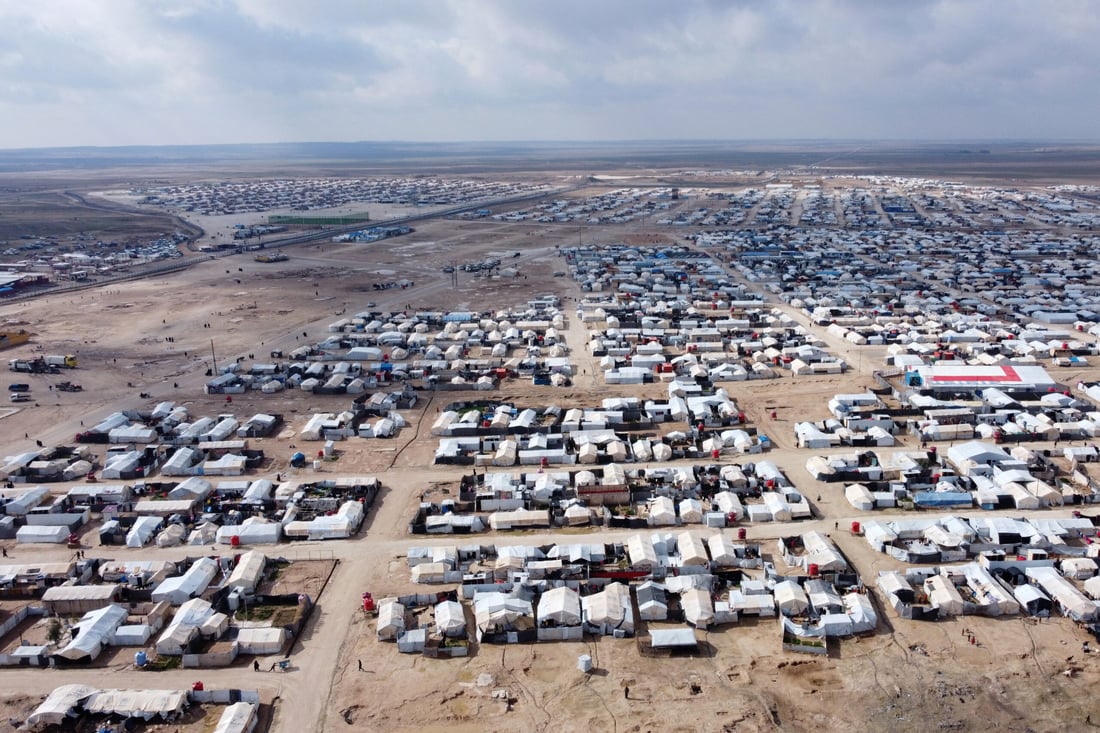
FILE PHOTO: A view of al-Hol camp in Syria's northeastern Al-Hasakah Governorate. (Photo by Delil SOULEIMAN/AFP)
Sudani calls Syrian president, SDF commander as prison escapes raise border concerns
BAGHDAD — Prime Minister Mohammed Shia al-Sudani held separate phone calls Tuesday evening with Syrian President Ahmed al-Sharaa and Syrian Democratic Forces commander Mazloum Abdi, focusing on border security and the risk posed by Islamic State detainees escaping from detention sites in northeastern Syria, according to statements from Sudani’s media office.
During his call with al-Sharaa, Sudani discussed “the current developments in Syria and the security challenges facing the country,” reaffirming Iraq’s support for Syria’s security and stability. He stressed “the importance of adopting dialogue as a means to resolve crises,” ensuring “the rights of all components of the Syrian people,” and safeguarding “the unity of Syrian territory and the sovereignty of the Syrian state over it,” the statement said.
Al-Sharaa, according to the Iraqi statement, said Syria is committed to securing the shared borders and emphasized the need to strengthen coordination “to secure the borders, pursue the remaining ISIS terrorist elements, and coordinate efforts to reopen the border crossings between the two countries.”
In a separate call with Abdi, Sudani discussed recent security developments and their repercussions for Syria, Iraq and the region. He emphasized “the importance of consolidating dialogue during this sensitive phase” in a way that “prevents terrorists from escaping from prisons and undermining security and stability in Syria, Iraq, and the region as a whole,” according to the statement.
The calls came amid renewed concerns over detention sites holding Islamic State-linked detainees and their relatives, including prisons in Hasakah and camps such as al-Hol, as fighting expanded in northeastern Syria.
The SDF said yesterday it withdrew from al-Hol camp and redeployed forces around northern Syrian cities facing “increasing risks and threats,” blaming what it called “international indifference” and “the failure of the international community to assume its responsibilities” regarding the Islamic State issue. The SDF statement said, “our forces were compelled to withdraw from Al-Hol Camp and redeploy in the vicinity of cities in northern Syria that are facing increasing risks and threats.”
Full statements:
Prime Minister Mohammed S. Al-Sudani received, on Tuesday evening, a phone call from the President of the Syrian Arab Republic, Mr. Ahmed al-Sharaa.
The call addressed the current developments in Syria and the security challenges facing the country. Prime Minister Al-Sudani affirmed Iraq’s firm commitment to preserving Syria’s security and stability, stressing the importance of adopting dialogue as a means to resolve crises, ensuring the rights of all components of the Syrian people, and safeguarding the unity of Syrian territory and the sovereignty of the Syrian state over it.
The Syrian President, in turn, affirmed his country’s commitment to securing the shared borders between the two countries, praising the efforts of the Iraqi government and the measures it has taken in this regard. He also emphasized the importance of strengthening bilateral coordination between Iraq and Syria, particularly in the security field, to secure the borders, pursue the remaining ISIS terrorist elements, and coordinate efforts to reopen the border crossings between the two countries.
Prime Minister Mohammed S. Al-Sudani held a phone call with the Commander of the Syrian Democratic Forces, Mr. Mazloum Abdi.
During the call, developments in the situation in Syria were discussed in light of recent security developments and incidents, and their repercussions on regional security and stability, as well as the situation in Iraq.
Prime Minister Al-Sudani emphasized the importance of consolidating dialogue during this sensitive phase in a manner that guarantees the rights of all Syrian components, preserves the country’s unity and security, and prevents terrorists from escaping from prisons and undermining security and stability in Syria, Iraq, and the region as a whole.