
'Threats of ethnic cleansing'
Round up: Iraqi, Kurdish leaders urge restraint as clashes hit Syria’s Aleppo
BAGHDAD — Iraqi and Kurdistan Region leaders on Thursday called for restraint and dialogue as violence intensified in Syria’s Aleppo, warning that attacks in Kurdish-majority neighborhoods threaten civilians, risk ethnic targeting and could destabilize the wider region.
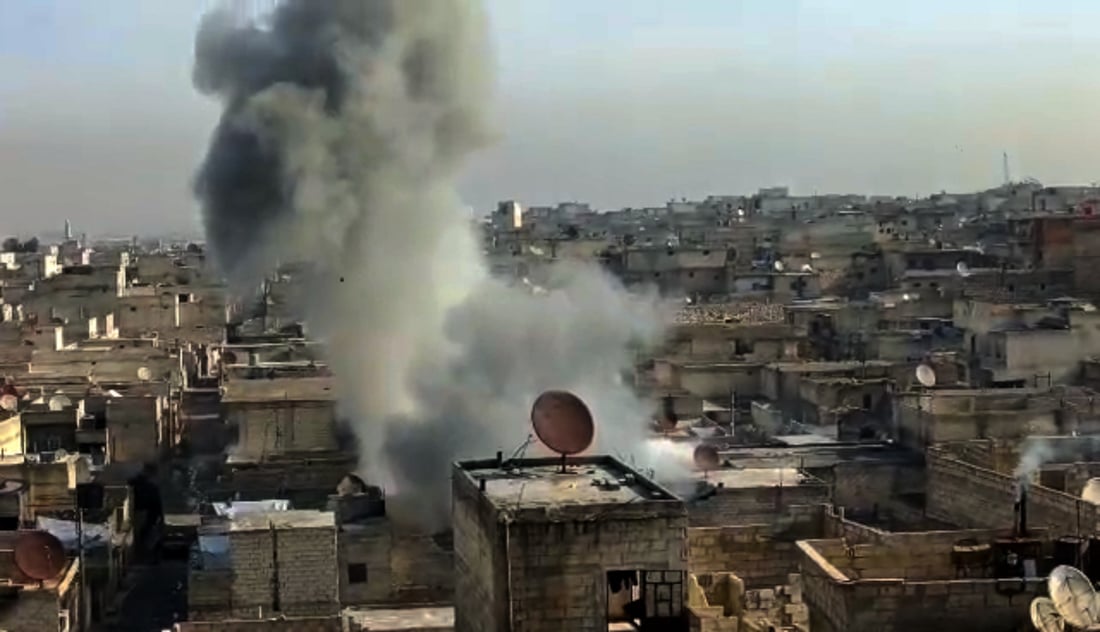
The remarks come as clashes have intensified in recent weeks in parts of Aleppo, including predominantly Kurdish neighborhoods such as Sheikh Maqsoud and Ashrafiyeh, between Syrian government forces and the Kurdish-led Syrian Democratic Forces. The fighting has displaced tens of thousands of civilians following stalled negotiations between the two sides.
Kurdistan Democratic Party leader Masoud Barzani also called for a “peaceful resolution” and said Syria’s political changes had created an opening for a settlement that safeguards Kurdish rights.
Barzani said the regime change offered “a good opportunity to find a suitable solution that respects the legitimate rights of the Kurdish people in Syria and resolves all outstanding issues.”
But he warned that the escalation in Aleppo was endangering civilians. “The dangerous situation and the current conflict and violence in the city of Aleppo are deeply concerning and pose a threat to the lives of innocent civilians,” Barzani said. He added that “there are threats of ethnic cleansing against Kurds in the area.”
“I urge the Syrian authorities not to allow political disputes to become ethnic tensions,” he said, while also calling on Kurdish parties, including the Syrian Democratic Forces, to work to de-escalate and pursue dialogue.
Iraqi President Abdul Latif Jamal Rashid said he was following the situation closely and urged all sides to step back from escalation.
“We are following with great concern the tensions and acts of violence in the neighboring Syrian city of Aleppo,” Rashid said in a statement. He urged all parties involved to “exercise self-restraint, return to the negotiating table, and address the problems through peaceful means.”
Rashid said continued clashes “do not serve the interest of any side,” and reiterated Iraq’s “full support” for peaceful solutions that reinforce “the principles of coexistence and acceptance of others.”
Iraqi Foreign Minister Fuad Hussein discussed developments in Syria and the region in a phone call with Saudi Foreign Minister Faisal bin Farhan, focusing on Aleppo and its implications, according to a statement from Iraq’s Ministry of Foreign Affairs.
The ministry said the two ministers exchanged views on regional conditions, “especially the events taking place in the city of Aleppo,” stressing “the need to stop conflicts and continue along negotiation tracks, especially between the transitional government and the leadership of the Syrian Democratic Forces.”
Hussein expressed concern over “attacks targeting civilian and residential areas in Aleppo” and the displacement of “thousands of Kurdish citizens outside their areas,” emphasizing “the importance of joint action to stop these attacks and support security and stability in Syria.” He warned that the continuation of such events “will have direct repercussions on the situation in Iraq.”
The statement said both sides underscored the need to maintain communication with the transitional administration in Damascus and to address what it described as the seriousness of the developments.
Kurdistan Regional Government Prime Minister Masrour Barzani echoed those concerns in a separate statement, citing attacks on Kurdish neighborhoods and warning of demographic change.
“The developments in Aleppo, and the targeting of Kurds in an effort to change the demography of the area and create threats to the lives of civilians, raise questions about the authorities in Damascus and the conscience of the international community,” Barzani said.
He added, “War and violence do not provide fundamental solutions to any problem. No justification or pretext should allow ethnic cleansing.”
“We hope all sides exercise restraint, protect civilians’ lives, and turn to dialogue and negotiations to resolve disputes. We also hope that Syria’s current system of governance will rise to the responsibility of a democratic and inclusive authority for all the people of Syria,” he said.
Patriotic Union of Kurdistan leader Bafel Jalal Talabani said he was watching events in Aleppo’s Kurdish areas with concern.
“With deep concern, I follow the events in Sheikh Maqsoud and Ashrafiyeh in Aleppo. In these difficult and challenging times, my heart is with our people in Western Kurdistan (Rojava),” Talabani said.
“I support every effort to de-escalate the situation and to peacefully resolve the disputes,” he added, urging restraint and “responsible dialogue.”