
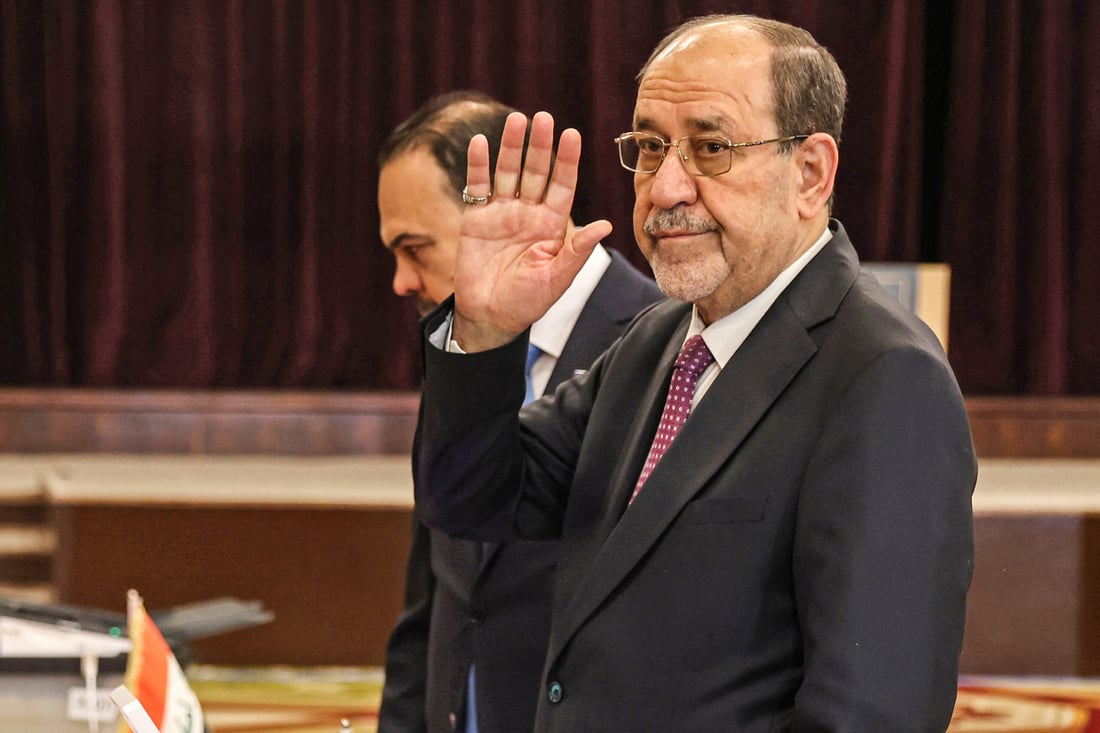
(FILES) Ex-PM Nouri al-Maliki arrives to cast his ballot in Baghdad during Iraq's 2025 parliamentary elections. (Photo by AHMAD AL-RUBAYE / AFP)
Maliki meets Hamoudi as Coordination Framework faces nomination tensions
BAGHDAD — Supreme Islamic Council leader Humam Hamoudi and State of Law Coalition head Nouri al-Maliki on Monday stressed the importance of “unifying the national decision” amid ongoing dispute over Maliki’s nomination for prime minister.
According to a statement from Hamoudi’s office, Hamoudi received Maliki and the two discussed political developments and the outcomes of national dialogues aimed at completing the formation of the next government.
The statement said they also addressed “the necessity of accelerating the resolution of this matter in light of difficult internal challenges and the sensitivity of the regional situation.”
Both sides emphasized “the importance of preserving national unity, the cohesion of the Coordination Framework and the spirit of harmony within it,” and stressed the need to “unify the national decision with a realistic Iraqi vision that draws on past experiences and aligns with the requirements of the stage.”
They described this as a basis for “the stability of the political process and building a strong state capable of meeting challenges and popular aspirations.”
Maliki was nominated by the Coordination Framework following the November 2025 parliamentary elections as its candidate for prime minister. His nomination has led to disagreements within the alliance and drawn opposition from Sunni political forces, while also prompting public criticism from the United States.
President Donald Trump said in a social media post that the United States would not continue its support for Iraq if Maliki returned to office. Maliki previously served as prime minister from 2006 to 2014 and stepped down in 2014 after the fall of Mosul to the Islamic State group.
Maliki has for weeks declined to attend Coordination Framework meetings or discuss scenarios involving his withdrawal. In his interview on Feb. 3, he said he was nominated by the framework and would not step aside, stating that if the alliance wished to reverse course, it could withdraw his nomination itself.