
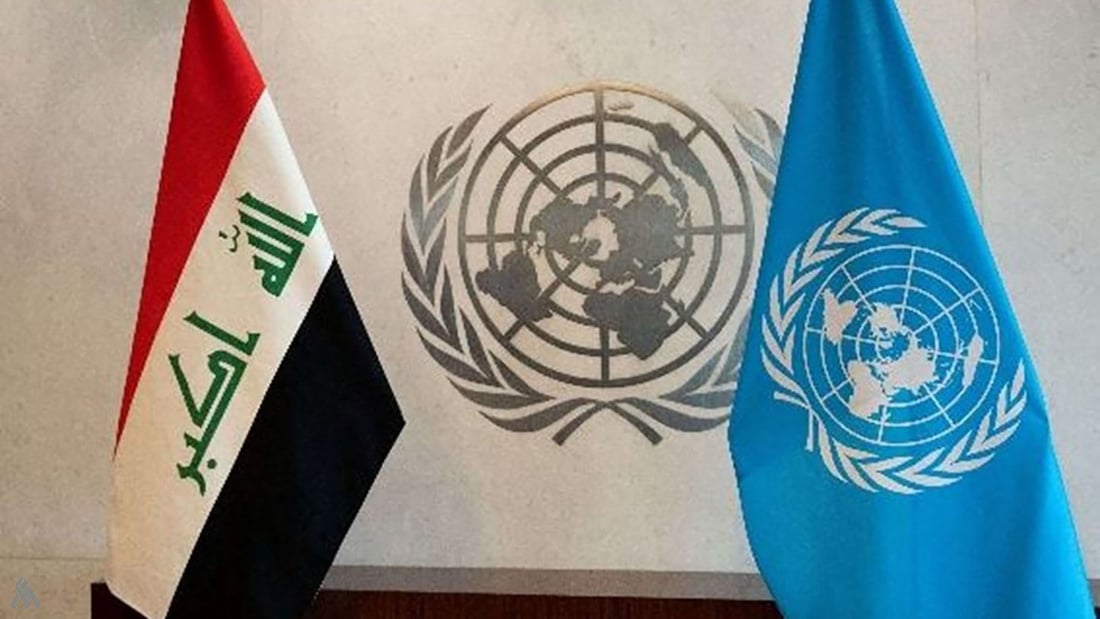
UN says engagement in Iraq to continue after UNAMI ends, shifting to development focus
BAGHDAD — The United Nations said its engagement in Iraq will continue after the conclusion of the United Nations Assistance Mission for Iraq, with future cooperation led by the U.N. resident coordinator and focused on development priorities agreed with the Iraqi government.
In a statement titled “A new chapter for the UN in Iraq,” UNAMI said, “With the conclusion of UNAMI’s mandate, the United Nations’ engagement in Iraq continues under the leadership of the UN Resident Coordinator.” It said “the United Nations Country Team works in close partnership with the Government of Iraq to advance national development priorities through the United Nations Sustainable Development Cooperation Framework, signed on 25 December 2025.”
UNAMI said the transition “marks a decisive shift toward long-term, sustainable development, driven by national leadership, stronger institutions, and effective partnerships,” adding that the U.N. will continue its work “from supporting economic diversification, climate action and water management to social protection, governance, and durable solutions.” The statement said “the UN remains a trusted and committed partner to the Government of Iraq.”
The announcement follows recent Iraqi government statements outlining how relations with the United Nations will be managed after UNAMI’s closure. Government spokesperson Basem al-Awadi said the deputy special representative of the U.N. secretary-general in Iraq, Ghulam Mohammad, will coordinate future engagement between Iraq and the United Nations. Ending UNAMI’s mission, he said, marks “an important step in Iraq’s path to restoring full sovereignty.”
“Everyone now agrees that Iraq has reached a stage of maturity and strength, and must take full control of its decisions and manage its affairs independently,” al-Awadi said. He added that future coordination will focus on development and humanitarian matters only, “without political involvement,” and that “the political role of the United Nations will officially end with the conclusion of UNAMI’s mission within the next two weeks.”
Prime Minister Mohammed Shia al-Sudani echoed that position in a meeting last month with Mohamed al-Hassan, the special representative of the U.N. secretary-general for Iraq, as al-Hassan concluded his mission. Al-Sudani thanked “Mr. Al Hassan and all those who served in UNAMI for the assistance provided to Iraq across various fields throughout its period of operation, since the fall of the dictatorial regime until today.” He said the end of the mandate “signifies that Iraqi state institutions have achieved advanced levels of performance in fulfilling their constitutional and legal responsibilities,” calling it a step that “reinforces national sovereignty.”
UNAMI was established in 2003 under U.N. Security Council Resolution 1500 and expanded in 2007 under Resolution 1770. The Security Council adopted Resolution 2732 in May 2024, extending the mission for a final period. Under that resolution, UNAMI is set to cease operations on Dec. 31, 2025, except for remaining liquidation activities.