
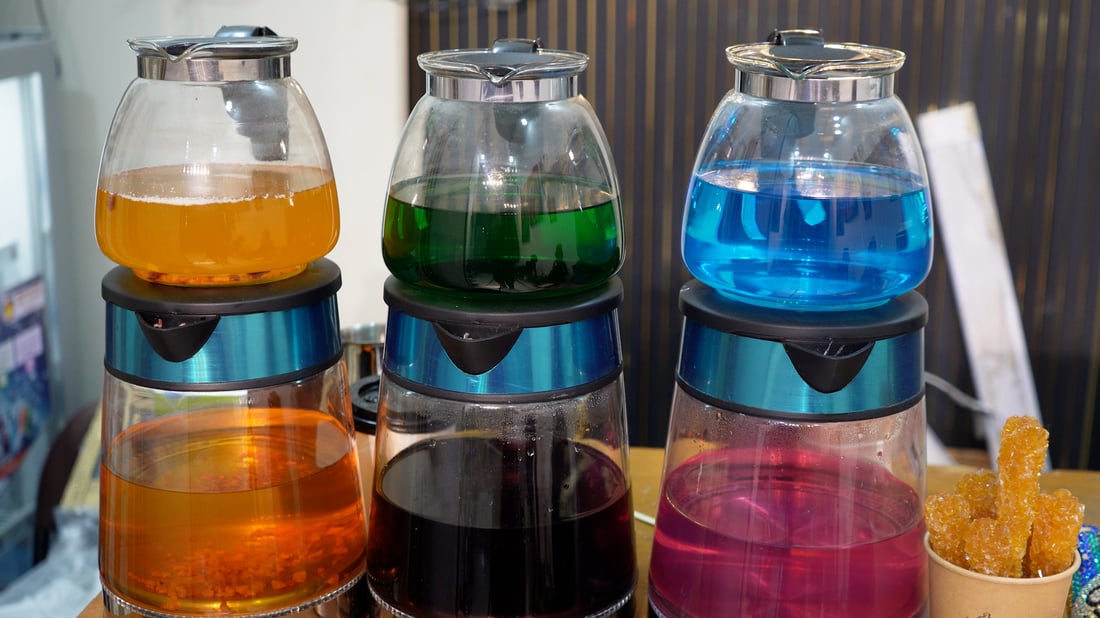
Basra cafe revives sangin’ tea tradition and drops shisha to refocus on conversation
BASRA — A tea house in central Basra is reviving an old local tradition by bringing back “sangin,” a Persian-derived term used in southern Iraq to describe heavy, thick tea, while reshaping how tea is prepared and served.
Laith al-Asadi, known as Abu Abdullah, opened the “Sangin” cafe in the Abbasiyah area near Algeria Street and said he set strict standards for what he considers a proper tea experience.
“I decided to ban shisha,” al-Asadi told 964media, a move he said came “despite the financial losses,” to deepen the focus on tea and conversation.
Al-Asadi said the cafe follows clear rules for preparing tea, often referred to locally as “sedating the tea.” He said he uses a special blend enhanced with select flavors but declined to reveal the details.
“Like all tea makers, we keep our secrets,” he said.
He said the key is avoiding direct fire. The tea mixture is placed in a teapot, hot water is added and it is left to brew slowly using steam heat, which he said keeps the temperature controlled “between boiling and the cold taste customers dislike.”
With Basra’s short winter season underway, al-Asadi said he introduces a menu of what he calls cold-weather tea, aimed at easing seasonal illnesses. The list includes sage tea, lemon with ginger, lemon with mint, cinnamon, chamomile, anise and other winter herbs.
To break the routine of traditional tea, the cafe also serves fruit tea made without ready-made tea bags. Al-Asadi said he prepares the drinks from natural mixes, including kiwi, cherry, blueberry, raspberry, orange, mango and strawberry.
Although he has lived for more than a decade in the Mutayha area of central Basra, al-Asadi said his attachment to Abu al-Khasib remains strong and he still visits weekly, even when he has no work. He said his decision to open near Algeria Street was inspired by older Abu al-Khasib cafes, where “neither dominoes nor shisha disturbed the atmosphere, only long tea sessions.”
The cafe has also drawn support from Basra visual artist Hamed Saeed, who al-Asadi said admired the concept and chose to back the project with artworks by painters and calligraphers known across the governorate.