
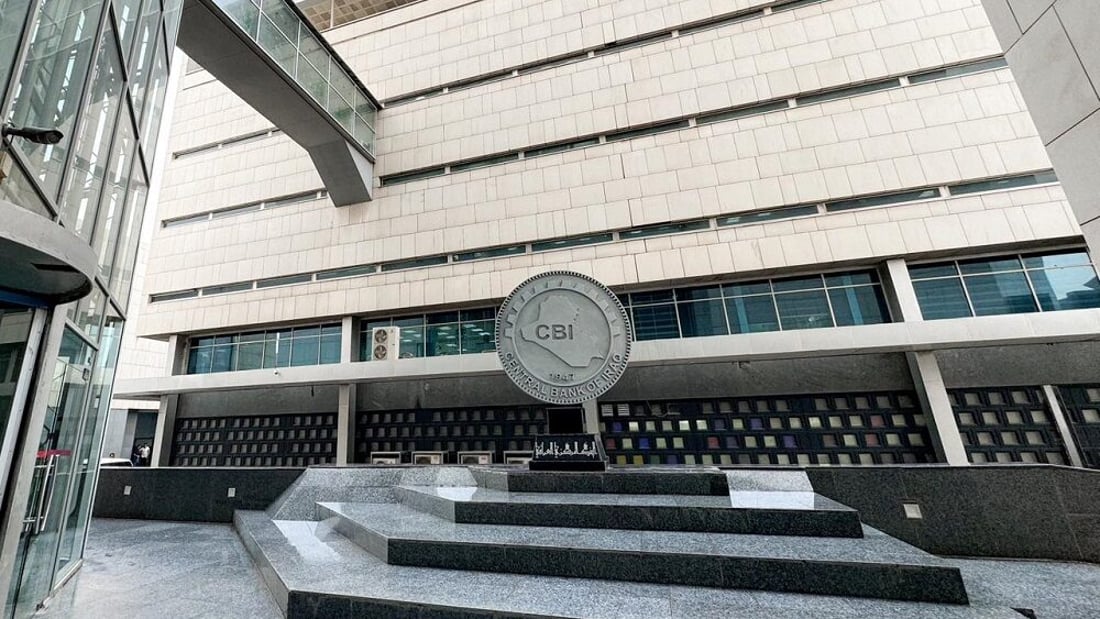
The Central Bank of Iraq (CBI) headquarters in Baghdad
Central Bank, Rasheed Bank and Qi Card step up measures against electronic fraud
BAGHDAD — The Central Bank of Iraq has announced new measures to combat electronic fraud, saying it is working with Rasheed Bank and Qi Card to protect customer accounts through tighter monitoring and public awareness campaigns.
Haider Ghazi, head of media at the Central Bank, told the state-run Al-Sabah newspaper that the bank “receives citizens’ complaints through its official online platform and forwards them to relevant banks, e-payment companies, or currency exchange offices to take necessary actions.”
He said the Central Bank’s oversight operates on several levels, including “electronic monitoring via the national switch network linking all financial and non-banking institutions and e-payment companies,” alongside “surprise field visits and regular transaction audits.”
Ghazi added that the bank is continuing media campaigns “to promote financial literacy and expand financial inclusion, reducing the risk of fraud.”
The government-owned Rasheed Bank said it is also tightening controls on customer accounts. Media head Amal Al-Shuwaili stated that “protecting customer accounts from electronic fraud is among the bank’s top priorities,” noting the adoption of “advanced control systems to prevent unauthorized access to user data.”
Al-Shuwaili warned that the bank does not request personal or confidential information through phone calls or text messages and advised the public “not to share passwords or interact with suspicious links,” urging customers to report any questionable activity.
Mohammed Ali, assistant director in the Financial Affairs and Banking Awareness Department at Qi Card company, said most fraud cases “are linked to users sharing verification codes with untrusted sources.”
He explained that all transactions require a verification code that contains full details of the operation, and “sharing this code essentially means handing over the funds to the scammer.”
Ali emphasized that “only the company’s official system is authorized to send login codes or transfer verification messages,” and any messages outside this system “are unofficial.” He said most fraud attempts occur through fake websites or pages impersonating charitable or loan-granting institutions.
Iraq’s National Intelligence Service said Thursday it has dismantled an international network involved in electronic fraud and money laundering, following a coordinated operation carried out under the supervision of the Supreme Judicial Council.
In early November, Iraq’s National Security Service warned of increasing online financial fraud and the growing use of deepfake technology, saying fraudsters are using fake social media pages and websites claiming to represent local and foreign banks to steal citizens’ money and banking data.
Earlier in September, the National Security Service warned citizens of new fraud attempts using malicious WhatsApp links, saying attackers aim to seize accounts, steal financial data, and extort money.