
Rainfall boosts Iraq’s water reserves, cuts dam releases
BAGHDAD — Iraq’s Ministry of Water Resources on Saturday unveiled a map outlining the direction of rainwater and flood flows across the country, saying recent rainfall increased water reserves and allowed for reduced releases from dams and reservoirs.
Ali Radhi, director general of the National Center for Water Resources Management, told the Iraqi News Agency that “the Ministry of Water Resources has a prior plan to deal with incoming floods and rainfall, which was concentrated in the northern and northeastern areas, where amounts ranged approximately between 120 and 260 millimeters.”
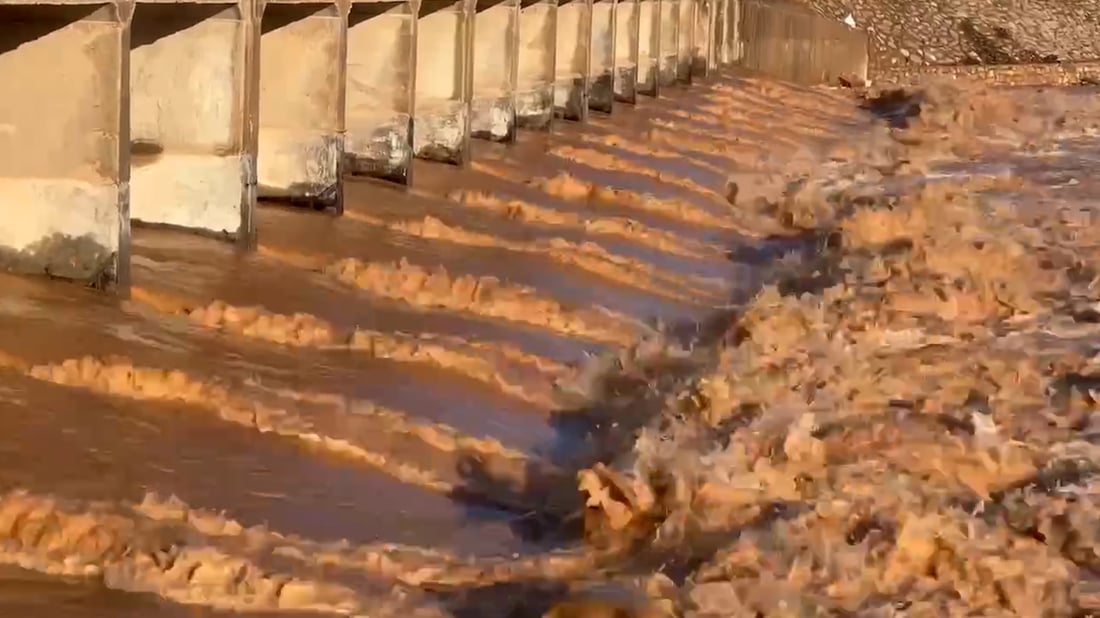
He said floodwaters were directed toward major dam reservoirs, adding that “storage rose to more than 700 million cubic meters,” while “more than 200 million cubic meters of floodwater were directed to Lake Tharthar, particularly flows coming from the Upper Zab, Lower Zab, and the tail of Mosul Dam.”
Radhi said the ministry also diverted part of the floodwaters to the marshes “to enhance inundation levels,” and sent controlled water releases through the Qalat Saleh outlet “to improve the environment of the Shatt al-Arab and push back the salt wedge, to reduce the effects of salinity on Basra governorate, especially the northern areas.”
He added that “the rainfall that fell in central and southern areas and across all Iraqi governorates contributed greatly to restoring balance to water resources.”
Radhi said the rains also helped secure irrigation needs for the first watering of the current winter season. “The rainfall contributed to securing the requirements of the first irrigation for the current winter season for most agricultural areas, especially in the central and southern governorates, which will greatly support agricultural production and reduce the effects of water scarcity,” he said.
He noted that current storage figures remain preliminary. “The mentioned statistics on water storage are preliminary, as the impact of the weather system on Iraq is still ongoing, with continued flood inflows and light, scattered rainfall across the governorates,” Radhi said. “After the impact of this system subsides, an official statement will be issued by the Ministry of Water Resources clarifying the volume of water entering Iraq.”
Radhi said rainfall and floods in northern and western desert areas also helped recharge groundwater. “The rains and floods witnessed in the northern and western desert areas contributed to enhancing groundwater, easing pressure on it, and meeting requirements,” he said.
He added that the conditions led the ministry, through the National Center, to reduce water releases. “The rains and floods led to a decision by the Ministry of Water Resources to reduce water releases from dams and reservoirs, which will help preserve water storage, ensure its sustainability, and extend the life of live storage,” he said.
Radhi said Iraq does not need new large dams. “The Ministry of Water Resources has a large storage system, so it does not need to build other large dams,” he said, adding that the ministry’s plan focuses on expanding water-harvesting dams.
He explained that “water-harvesting dams are small dams aimed at benefiting from rainfall and floodwaters in certain sites and areas, especially the northern, southern, and western deserts, to stabilize residents of these areas, secure water for grazing and agriculture, and recharge groundwater.”
Radhi stressed “the importance of relying on information issued by the Ministry of Water Resources and not circulating some information published by certain channels or on social media, as it is incorrect and inaccurate.”