
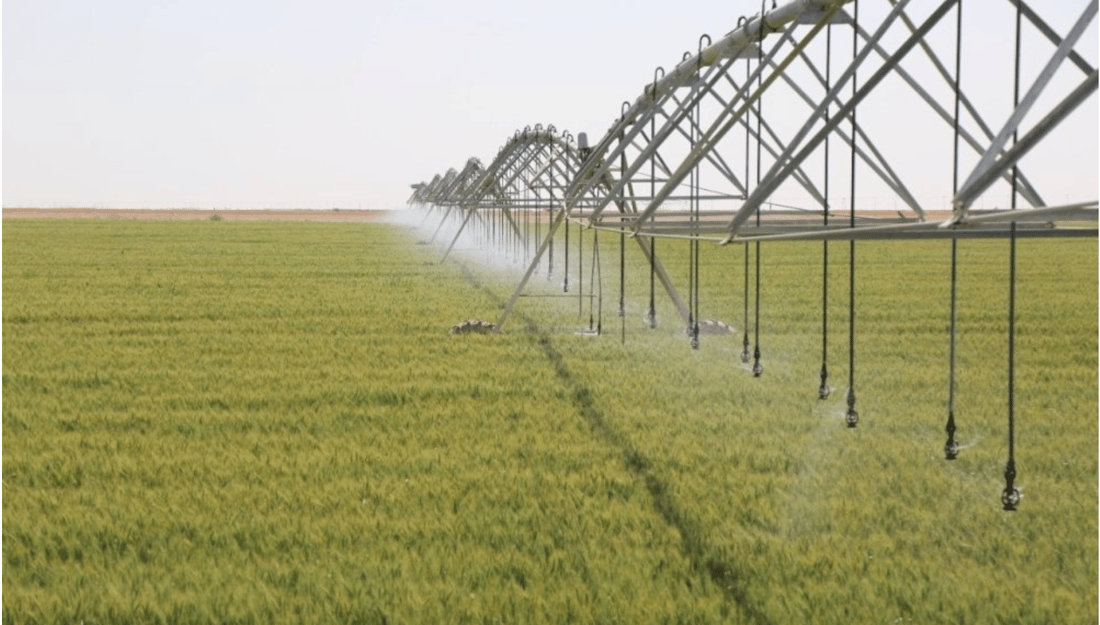
A modern pivot irrigation system waters farmland in Iraq.
Expands irrigation drive
Agriculture Ministry launches 2025–26 winter plan after drought delays
BAGHDAD — Iraq’s Agriculture Ministry said Saturday the 2025–26 winter farming plan will cover about 1.1 million acres using modern irrigation, adding that the November start to planting will improve water efficiency and boost output.
Administrative Deputy Minister Mahdi Suher al-Jubouri told the Iraqi News Agency that approving the plan “faced big challenges due to drought, lack of rainfall, and the drop in water inflows and storage in the Tigris and Euphrates.” He said the conditions delayed approval “until early November 2025.”
Al-Jubouri said the plan includes roughly 865,000 acres that will rely mainly on groundwater through modern irrigation systems. The Cabinet approved an additional 247,000 acres in irrigated areas using the same systems, bringing the total to about 1.1 million acres across desert and irrigated regions.
He said the ministry is offering farmers access to modern irrigation systems at a 30 percent subsidy with repayment over ten years. Systems covering 15, 20, and 30 acres are available, and fixed irrigation systems can be purchased on credit through the General Company for Agricultural Supplies, especially in central and southern governorates.
Al-Jubouri said adopting drip, fixed-sprinkler, and pivot irrigation will conserve water and increase yields of vegetables, forage crops, and strategic crops such as wheat and barley. He said the measures will help reduce the impact of climate change, drought, and declining water inflows through tools such as laser leveling, fertilizing seeders, modern irrigation systems, and high-yield crop varieties resistant to drought and salinity.
He added that beginning planting in November will improve water use and raise productivity for the coming season.
In September, Industry Minister Khalid Battal inaugurated a factory for modern irrigation systems in Abu Ghraib in partnership with Saudi Arabia’s Al-Khorayef Company. The plant, branded Rash and managed by Al-Faris General Company with Al-Khorayef, can produce 1,500 systems a year for areas between 15 and 60 acres.
Iraq’s Ministry of Trade said on Aug. 5 that wheat reserves exceed 6 million tons, enough to meet demand through early 2027. The government buys wheat directly from farmers at subsidized prices and stores it in silos to maintain food security. Director Haider Nouri Al-Kar’awi said the country has achieved self-sufficiency for the third year and has begun local white flour production expected to reach full capacity within two years.