
Dhi Qar
Nasiriyah trader keeps Iraq’s handmade tribal rugs in demand
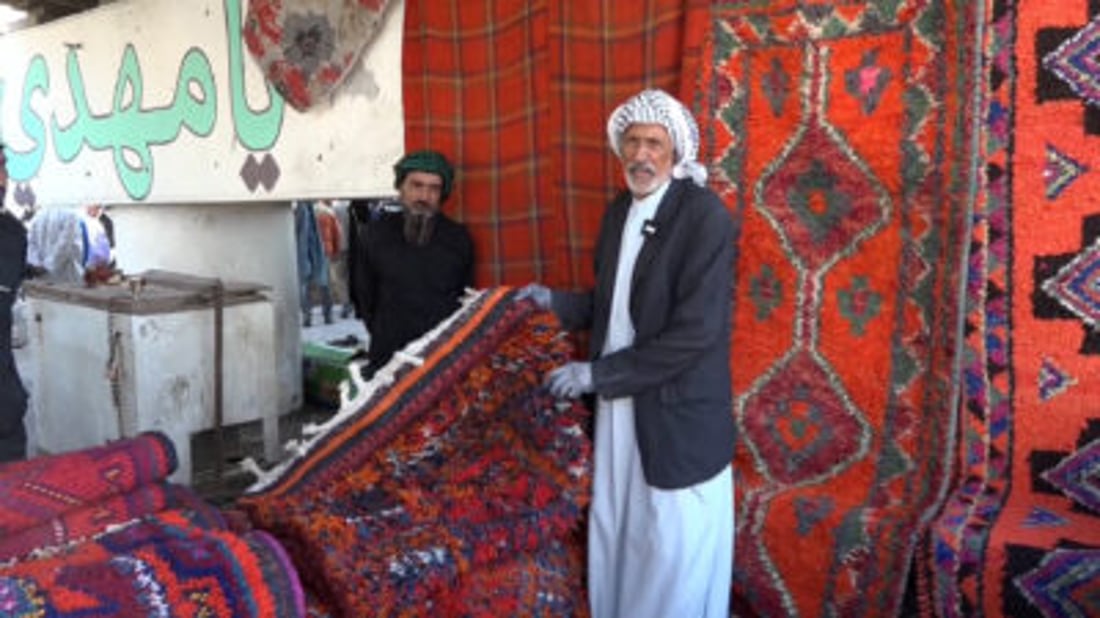
NASIRIYAH — In central Nasiriyah, Rasool Kadhim, known as Abu Mohammed, has spent more than three decades selling handmade Iraqi rugs crafted from sheep wool by women in rural villages and desert communities.
“I’ve been selling Iraqi handmade rugs since 1991,” Kadhim told 964media. “We have the Hayawi type (3.5m x 1m) and Ghazzawi (3.5m x 90cm).” Medium-sized pieces start at around 40,000 dinars ($28).
He displayed a range of styles with roots across southern and central Iraq, including the Hayawi from Wasit, the Hijaimi from Samawah, the Ghazzawi and Badri from Nasiriyah, the Hatami from the Bani Rikab area, and the Yahlawi, named for the Al Jahl tribe.
He said the Badri, measuring 4 meters by 1 meter, is woven in Nasiriyah and is known for its high quality, while the Hijaimi, made by the Bani Hijaim in Samawah, Diwaniyah and Hilla, is less durable. The Yahlawi is made in Shatra by the Al Jahl tribe, and the Hatami is produced in Qala’a, Nasr, Fajr, Rifa’i and Shatra.
“We used to export to Jordan, Saudi Arabia, the UAE, Qatar, and Bahrain,” he said, noting a decline in foreign demand. “Now most of our customers are from Iraqi cities like Samawah, Hilla, and others in Dhi Qar.”
Nearby, imported carpet seller Murtadha Risan explained how Iranian pieces are priced, pointing to tarakum, the number of knots per square meter, and shaneh, the number of horizontal threads per meter of width. “Higher tarakum means stronger, softer, more precise rugs with a higher price,” he said.
Handmade rugs are now used mostly in heritage sites, cafes and as decorative pieces. Machine-made carpets dominate homes, and even some guesthouses now use Kashan, Risan said.