
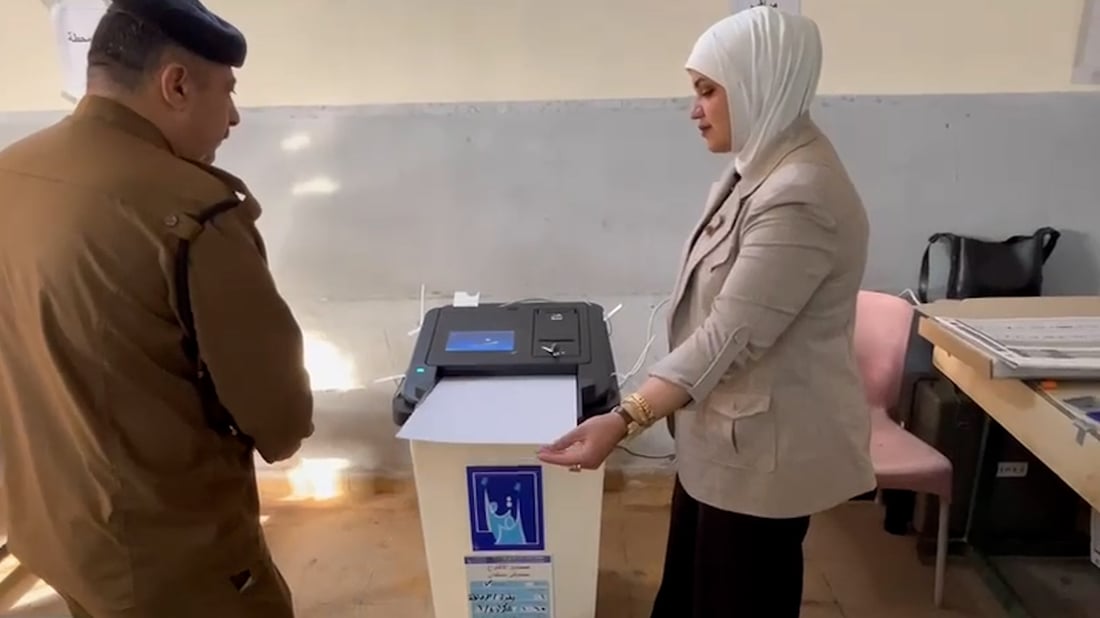
IHEC releases final election results, confirms full seat distribution
BAGHDAD — Iraq’s Independent High Electoral Commission on Monday released the final results of the 2025 parliamentary elections, confirming turnout at more than 56 percent and publishing the full distribution of all 329 seats across the country’s 18 governorates.
Prime Minister Mohammed Shia al-Sudani’s Reconstruction and Development Coalition finished first with 46 seats, the highest total nationwide. Nouri al-Maliki’s State of Law Coalition ranked second with 29 seats. Mohammed al-Halbousi’s Taqaddum won 27 seats, matching the total secured by Qais al-Khazali’s Sadiqoon Movement. The Kurdistan Democratic Party, led by Masoud Barzani, followed with 26 seats.
Hadi al-Amiri’s Badr Organization and Ammar al-Hakim’s National State Forces Alliance each won 18 seats. The Azm Iraq Alliance, led by Muthanna al-Samarrai, secured 15 seats, the same number won by the Patriotic Union of Kurdistan under Bafel Talabani.
Other blocs with national representation included the Iraqi Foundation Coalition with 8 seats; the Services Alliance and the Kurdish opposition National Stance Movement with 5 seats each; the Kurdistan Islamic Union with 4; the New Generation Movement with 3; and the Kurdistan Justice Group with 1.
Single-seat winners included Idraak, Sumeriyon, Support the State, Faw–Zakho Gathering and the Arab Project in Iraq.
Reconstruction and Development’s 46 seats included 15 in Baghdad, 4 in Nineveh, 4 in Basra and additional seats in Dhi Qar, Babil, Karbala, Maysan, Wasit, Salah al-Din, Muthanna, Diwaniyah and Najaf.
State of Law’s 29 seats included 9 in Baghdad and representation across Babil, Karbala, Maysan, Muthanna, Najaf, Diwaniyah, Wasit, Basra and Dhi Qar.
Taqaddum’s 27 seats included 10 in Baghdad, 5 in Anbar, 4 in Nineveh and seats in Kirkuk, Salah al-Din and Diyala.
Sadiqoon’s 27 seats included 5 in Baghdad and 5 in Basra, with additional seats in Najaf, Wasit, Diyala, Karbala, Maysan, Dhi Qar, Babil, Muthanna and Diwaniyah.
The Kurdistan Democratic Party’s 26 seats were concentrated in the Kurdistan Region and disputed areas: 9 in Erbil, 9 in Duhok, 5 in Nineveh, 2 in Sulaymaniyah and 1 in Kirkuk. In addition to its 26 seats, the party backed several successful minority quota candidates: Sami Oshana in Duhok, Kaldo Ramzi in Erbil, Imad Youkhana in Kirkuk, Haider Fayli in Wasit and Khalid Sido in Nineveh.
The Patriotic Union of Kurdistan won 15 seats, with 8 in Sulaymaniyah, 4 in Kirkuk and 3 in Erbil. The party also backed three winning candidates outside its traditional strongholds, including one seat in Baghdad inside the Reconstruction and Development Coalition and two seats in Nineveh inside the Alliance of the People of Nineveh, bringing its effective influence to 18 seats.
IHEC said the final count recorded 729,923 invalid ballots nationwide, a figure comparable to the entire turnout of governorates such as Karbala, Maysan or Diwaniyah and similar to the number of voters in Wasit or Najaf.
Governorates in the Kurdistan Region recorded the highest numbers of void ballots, including 137,611 in Sulaymaniyah, 116,900 in Erbil and 34,694 in Duhok. Other major figures included 105,384 in Baghdad, 48,131 in Nineveh, 34,177 in Diyala, 29,733 in Basra, 29,490 in Kirkuk, 26,782 in Anbar, 25,303 in Dhi Qar, 25,189 in Salah al-Din, 24,424 in Babil, 18,078 in Karbala, 17,655 in Najaf, 17,207 in Diwaniyah, 15,499 in Maysan, 14,604 in Wasit and 9,062 in Muthanna.
IHEC said objections to the final results will be accepted for three days before the outcomes move to judicial review and certification by the Federal Supreme Court.