
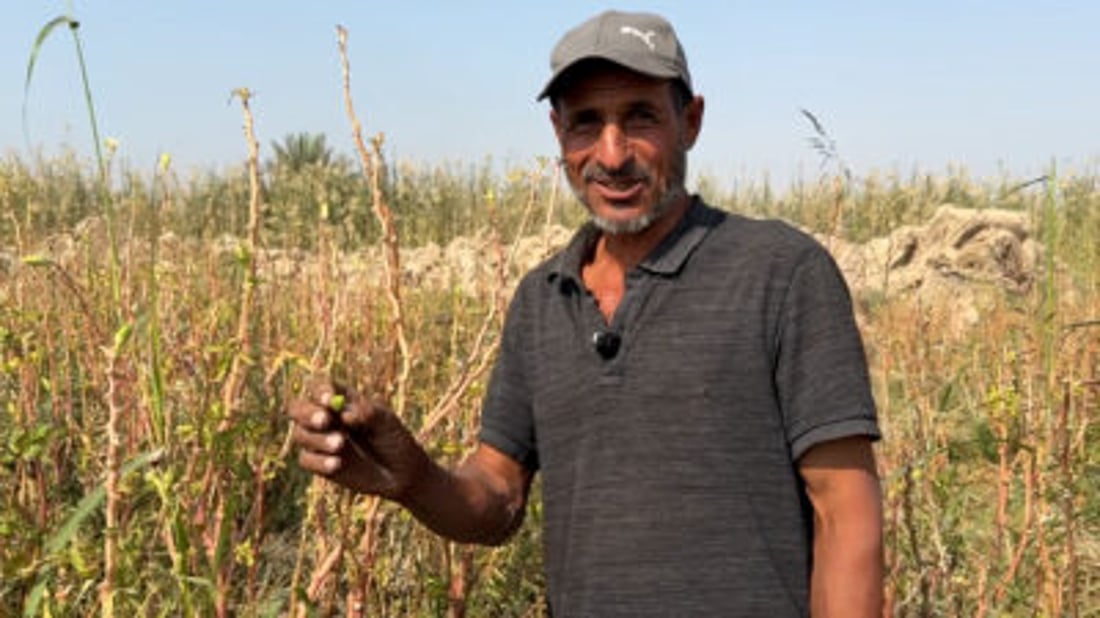
A farmer in the village of Al-Amiriya, Diyala. (Photo: 964media)
'The source of everything'
Diyala farmers prepare fields for winter crops after summer harvest
DIYALA — As Iraq moves into its winter farming season, farmers in Al-Amiriya village in Diyala governorate are preparing their fields after completing the summer harvest.
The period marks a short break between the two main agricultural cycles: summer, which runs from spring to autumn, and winter, which begins in autumn and continues into spring. During this transition, livestock graze on the remains of summer crops, helping to clear and fertilize the soil before plowing begins.
Farmer Abbas Abu Iraq told 964media, “There are two main agricultural seasons. Some crops mature in three months, others in six.”
He was seen collecting the last pods of dry okra to save their seeds for future planting, following a local tradition of keeping seeds inside the full fruit. He noted that while older generations used to sun-dry okra by threading them into cones, modern farmers now freeze or buy vegetables available year-round through greenhouse production.
Abu Iraq compared the relationship between farmers and their land to that of a mother and child, saying, “The land is the source of everything.” He said the okra season ends when leaves fall and the fruit becomes affected by seasonal pests.
Another farmer, Riyad Salim, said his field had just been plowed after harvesting okra and is now planted with winter crops such as spinach. “We sow most crops by hand, but we buy spinach seeds to avoid weeds. These vegetables are only enough to meet our daily needs. Everything in farming has become expensive — fertilizers, pesticides, and other supplies,” he said.
Salim added that winter vegetable planting begins in late August to early September, while grain crops like wheat and barley are planted later, toward the end of November.