
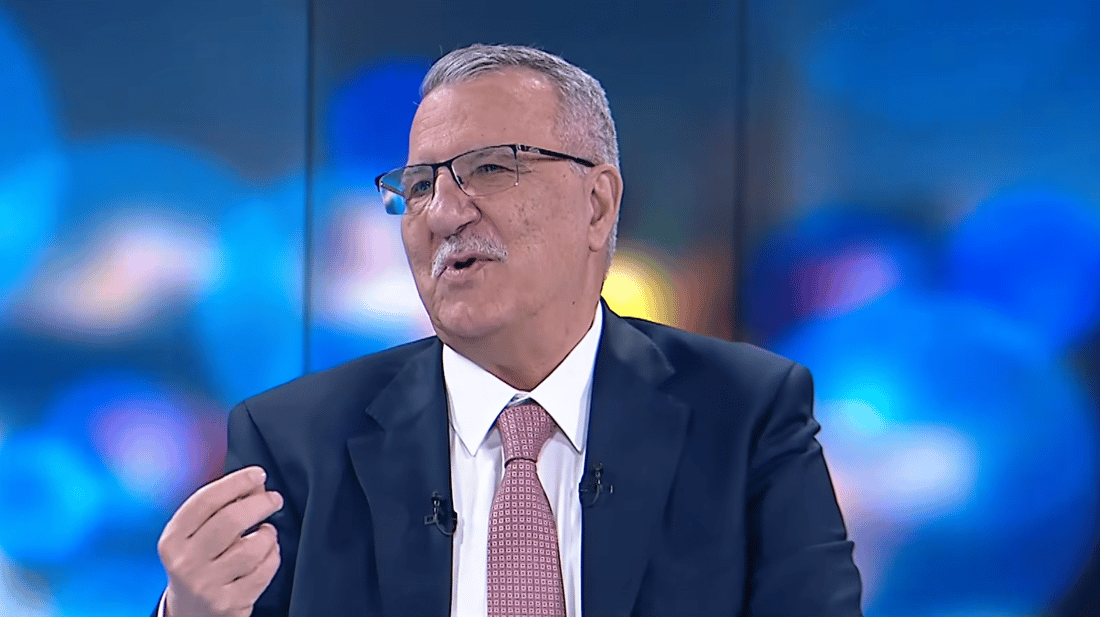
Dhafir Al-Ani, member of the Taqadum Alliance
Media Monitor
Taqadum lawmaker predicts weaker Iranian role, stronger US influence in next Iraqi government
BAGHDAD — Dhafir Al-Ani, a member of the Taqadum Alliance led by Mohammed Al-Halbousi, said he expects a major shift in the balance of foreign influence shaping Iraq’s next government, predicting diminished Iranian sway and greater U.S. involvement after the November 11 parliamentary election.
“Qaani is not Soleimani, and there will be no other Soleimani in Iraq,” Al-Ani told UTV, referring to Esmail Qaani, commander of Iran’s Quds Force, and his predecessor, the late Gen. Qassem Soleimani, who played a key role in shaping Iraq’s post-2003 political landscape.
He said previous Iraqi governments “were largely shaped by Iran, followed by a smaller American role, then a limited Arab role,” adding that “Najaf also had a reasonable influence, especially during critical moments.”
Al-Ani said current regional developments have altered Iran’s position. “Iran today is not the same as before the Gaza war and its consequences,” he said. “Iran is now trying to present a peaceful image after the 12-day war.”
The Taqadum Alliance, led by former Parliament Speaker Mohammed Al-Halbousi, remains one of Iraq’s largest Sunni blocs and is expected to play a key role in post-election coalition talks.
Excerpts from Dhafir Al-Ani’s interview with Utv:
Qaani is not Soleimani, and there will be no other Soleimani in Iraq. Previous governments were largely shaped by Iran, followed by a smaller American role, then a limited Arab role. Najaf [reference to Shia religious authority] also had a reasonable role, especially during critical moments.
This time, in my view, there will be a larger American role, a clear role for Najaf, and a minimal role for Iran. Iran today is not the same as before the Gaza war and its consequences. Iran is now trying to present a peaceful image after the 12-day war. Therefore, it will not have a major role in the new government, and this is a good thing for Shia, Sunnis, and Kurds. There will be a much smaller supplementary role for Arab and Turkish actors.
It is in Iraq’s interest to have a guiding map of its political forces regarding the shape of the next government, with clarity on international standards for what is called a good governance model that can be part of the international community.
America will use the principle of incentives and inducements. We will hear from them: If the militia phenomenon ends, sanctions will be lifted. This is called the incentive method, and I believe there are many rational actors who will respond to this. I hope we don’t reach the second stage, which is stubbornness. My message is directed to all political forces.