
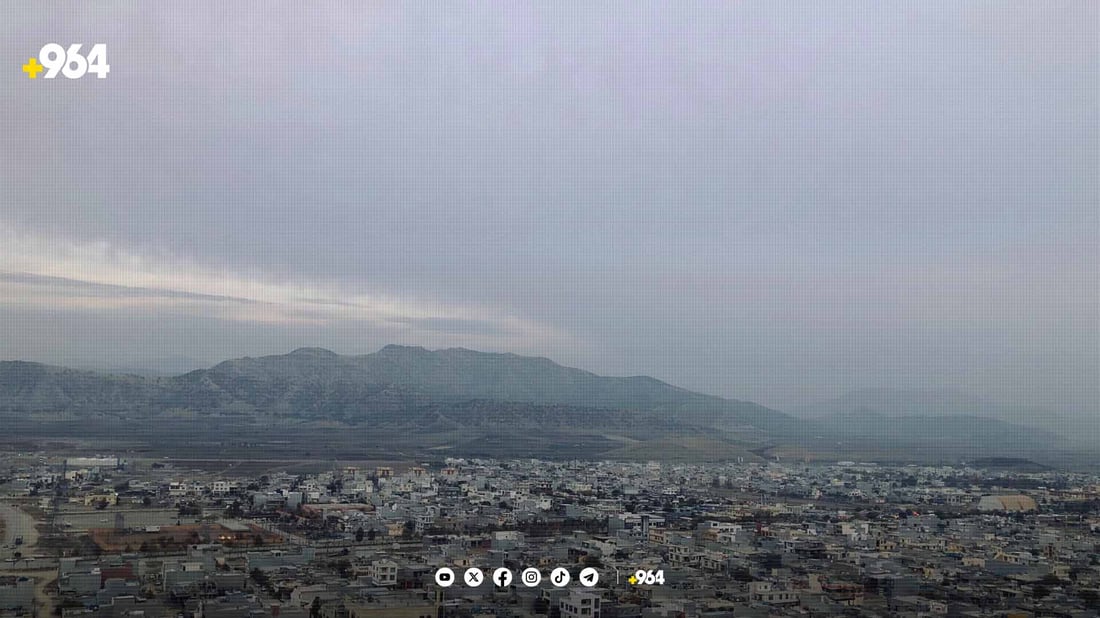
A view of Penjwen district, Sulaymaniyah Governorate. (Photo: 964media)
KRG to sign $424m Dukan–Sulaymaniyah water project contract
SULAYMANIYAH — The Kurdistan Regional Government’s Ministry of Municipalities and Tourism said Thursday that the contract for the Dukan–Sulaymaniyah 3 water project will be signed on Sunday.
The ministry said the project, approved by Prime Minister Masrour Barzani, will be carried out at a cost of $423,890,000, up from the previously allocated $398,486,000, after Barzani authorized additional funding to improve implementation and expand services for Sulaymaniyah residents.
According to the ministry, the Dukan–Sulaymaniyah 3 project “will address Sulaymaniyah’s water shortage for the next 30 years.” The signing ceremony will take place at the Ministry of Municipalities and Tourism headquarters between the ministry and the implementing company.
The ministry said it had underscored the project’s urgency in a letter (No. 11443, dated Sept. 2, 2024) submitted to the Council of Ministers’ presidency. Following review, Barzani approved its immediate execution in an official decree (No. 1394, dated Sept. 18, 2025).
The Dukan–Sulaymaniyah water system was first established more than four decades ago. The first supply line was completed in 1983 and the second in 2008. The third phase will extend drinking water to new neighborhoods, expanding coverage across the city.
The announcement follows months of water shortages that severely affected Sulaymaniyah over the summer. By early August, some areas went without piped water for up to five days at a time, forcing mosque closures, disrupting daily life, and driving up the cost of tanker-delivered water.
The crisis came during one of the driest years on record in the Kurdistan Region. By early May, Sulaymaniyah had recorded just 350 millimeters of rain — nearly half of the previous year’s 671 millimeters — while rainfall in Erbil and Duhok dropped below 160 millimeters.
A similar project was completed in Erbil in July 2025 and is now in its final testing phase, delivering 480,000 cubic meters of treated water daily from the Greater Zab River to reduce reliance on groundwater sources.