
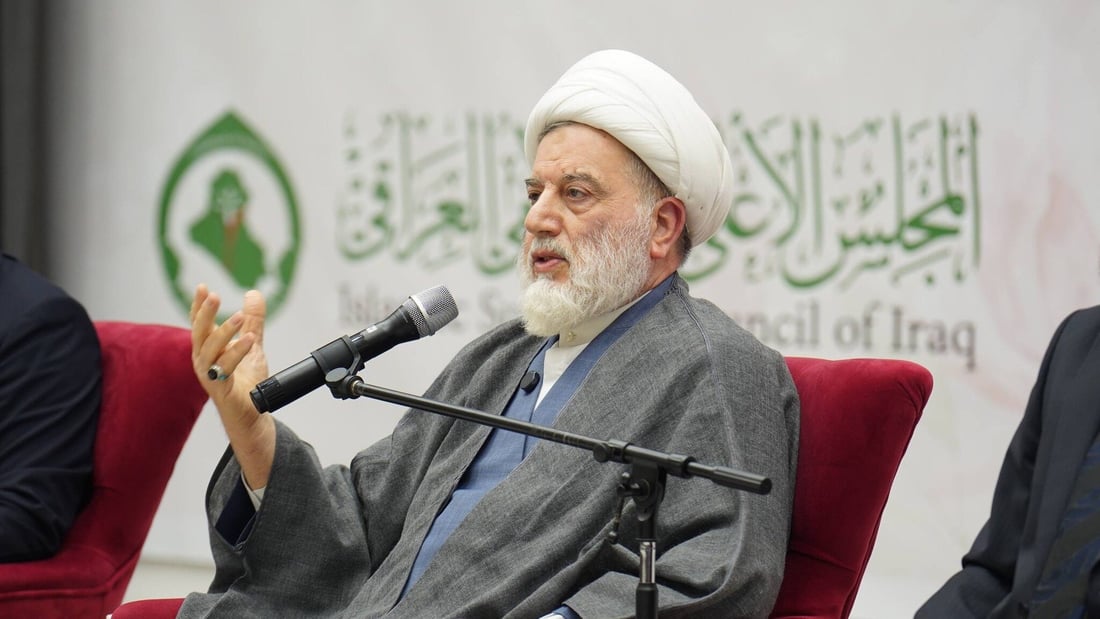
FILES: Hummam Hamoudi, head of Iraq’s Islamic Supreme Council, speaks during a political forum in Baghdad.
Hammoudi backs corruption drive but asks where oversight bodies were
BAGHDAD — Humam Hammoudi, leader of the Islamic Supreme Council of Iraq, called on Sunday for the anti-corruption campaign to continue under what he described as a comprehensive, nonpolitical strategy, while questioning why the state’s own watchdogs had failed to catch the corruption now surfacing.
Speaking at a dialogue forum, Hammoudi welcomed the campaign. “It was necessary to purify and cleanse Iraq’s political project, despite the pain, hardship, losses and exceptional measures involved,” he said. It must continue, he added, but “according to a vision and an integrated project, away from politicization or exploitation,” addressing “the root of the problem and its causes.”
He pressed on the failure of oversight. “Where were government integrity bodies, financial oversight and parliamentary monitoring regarding the North Oil crimes that have come to light today?” he asked, saying there had been “clear shortcomings.” Hammoudi said Iraq’s political system “will not be shaken by the removal of corrupt individuals, regardless of their position,” describing it as a constitutional parliamentary order. He said the country’s top Shia religious authority had called for fighting corruption since the founding of the post-2003 system, because corruption “leads to the collapse of society and the end of the state,” and argued that corruption was “part of the legacy of the [U.S.-led] invasion after 2003,” which he said had encouraged the looting of state institutions.
The comments follow last week’s operation, in which officials announced the arrest of dozens of current and former lawmakers, political figures and officials. State media said the arrests followed confessions by detained former Deputy Oil Minister Adnan al-Jumaili, and the Supreme Judicial Council said assets seized in the investigation had reached more than 98 billion dinars and $11 million.
Prime Minister Ali al-Zaidi, visiting the Interior Ministry on Saturday, reaffirmed the campaign, calling the ministry the government’s “frontline institution in the fight against corruption” and saying there would be “no tolerance for any corrupt individual, regardless of affiliation.” He said he had directed the Integrity Commission, the Federal Board of Supreme Audit and the security forces to keep pursuing corruption cases.