
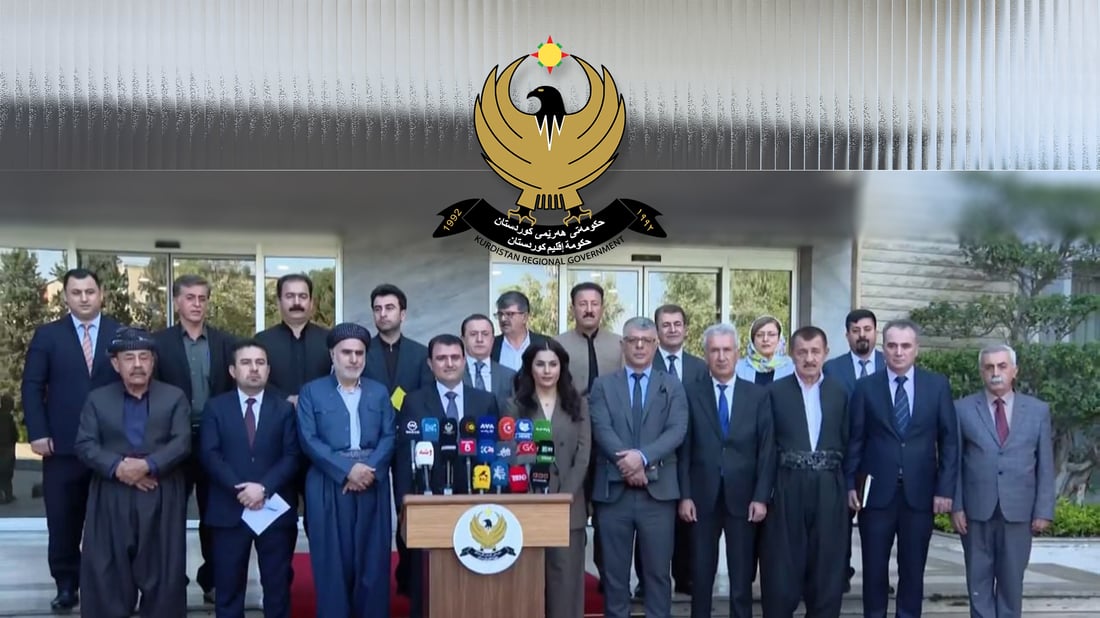
Halabja Governor Nukhsha Nasih and senior officials attend a press conference in Erbil
New crossing with Iran
Kurdistan Regional Government formally recognizes Sazan Crossing in Halabja
HALABJA — The Kurdistan Regional Government on Monday announced a series of major projects for Halabja governorate, the most notable being the official recognition of the Sazan border crossing with Iran.
Halabja Governor Nukhsha Nasih was in the Council of Ministers in Erbil, where she said the government “has made decisions on several important projects that will gradually be implemented.”
Omed Sabah, head of the Council of Ministers’ Diwan, told reporters in a press conference that several new projects were approved and officially confirmed the recognition of Sazan as a border crossing. “By the decision of the Prime Minister of the Kurdistan Region, it has been decided to formally recognize the Sazan border crossing, and all legal and administrative procedures will be initiated for that purpose,” Sabah said.
The Sazan border lies near Sazan village, about 13 kilometers east of central Halabja, along the Sirwan River. Across the river, the border connects with Kermanshah governorate in Iran.
Halabja currently has two other crossings, Pshte and Tawela, neither of which are internationally recognized. Local authorities say Sazan carries greater economic and logistical importance, as it could become the closest formal border point linking Halabja, Sulaymaniyah, and Garmiyan with Iran’s Kermanshah, Paveh, and Javanrud districts.
During the announcement, 18 local officials, residents, and community leaders from Halabja were present as the government detailed its commitments, including the allocation of 250 billion Iraqi dinars (about $177 million) for development projects in the governorate. The plan also includes hiring 250 residents from Halabja, establishing a special health board for survivors of the 1988 chemical attack, developing a master plan for the city, and promoting tourism investment in the region.
Governor Nasih said these projects represent “a new phase of development and recognition” for Halabja, long seen as a vital link between the Kurdistan Region and western Iran.