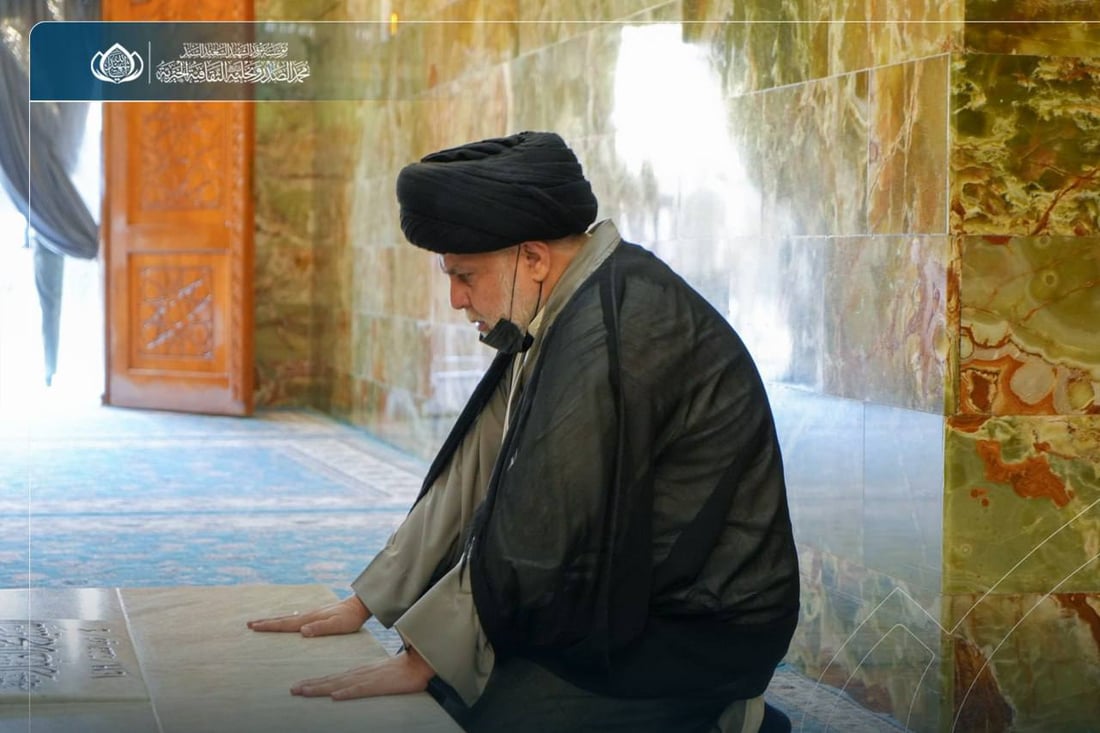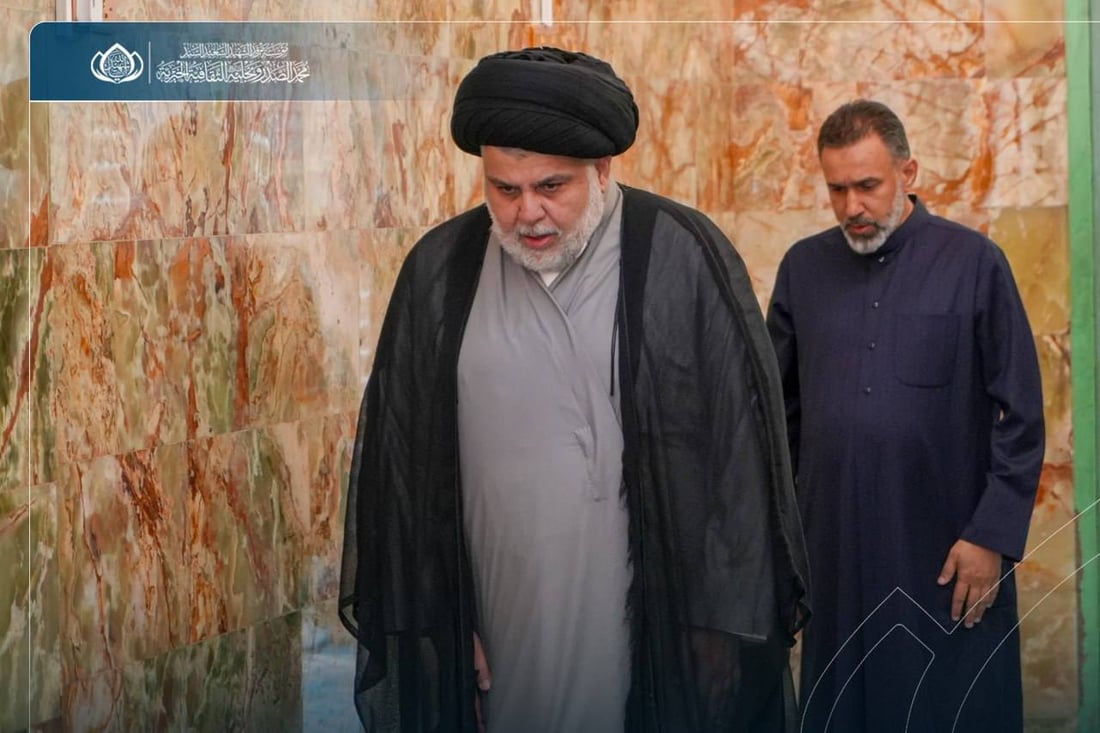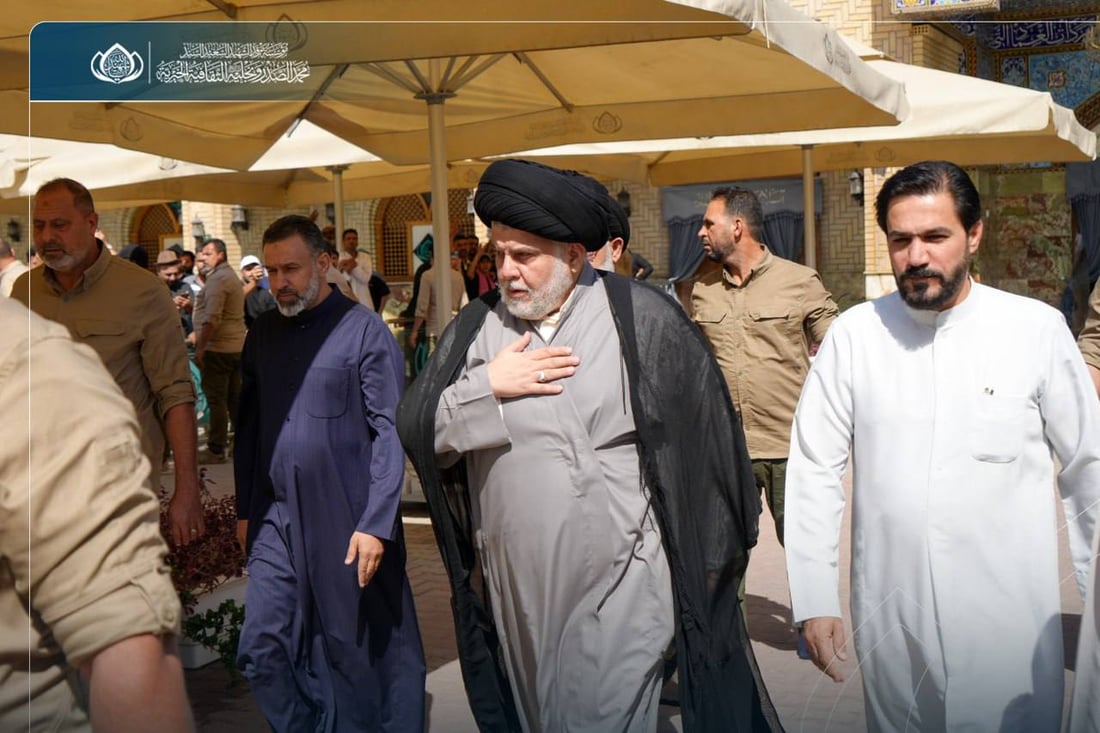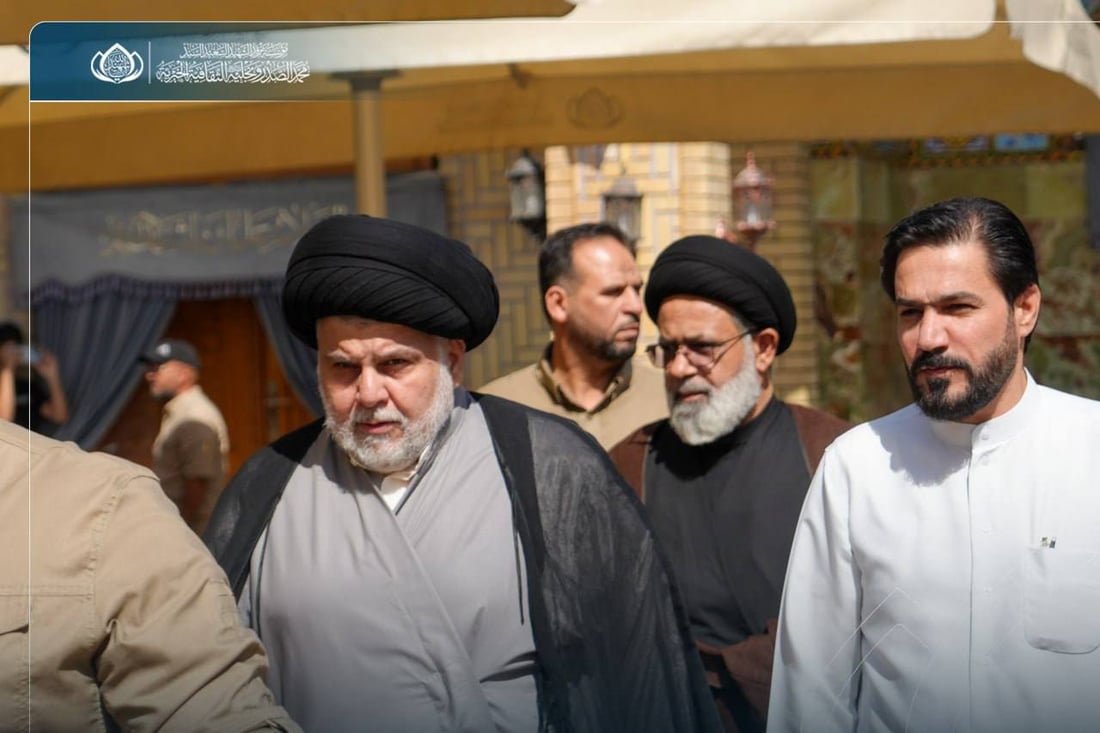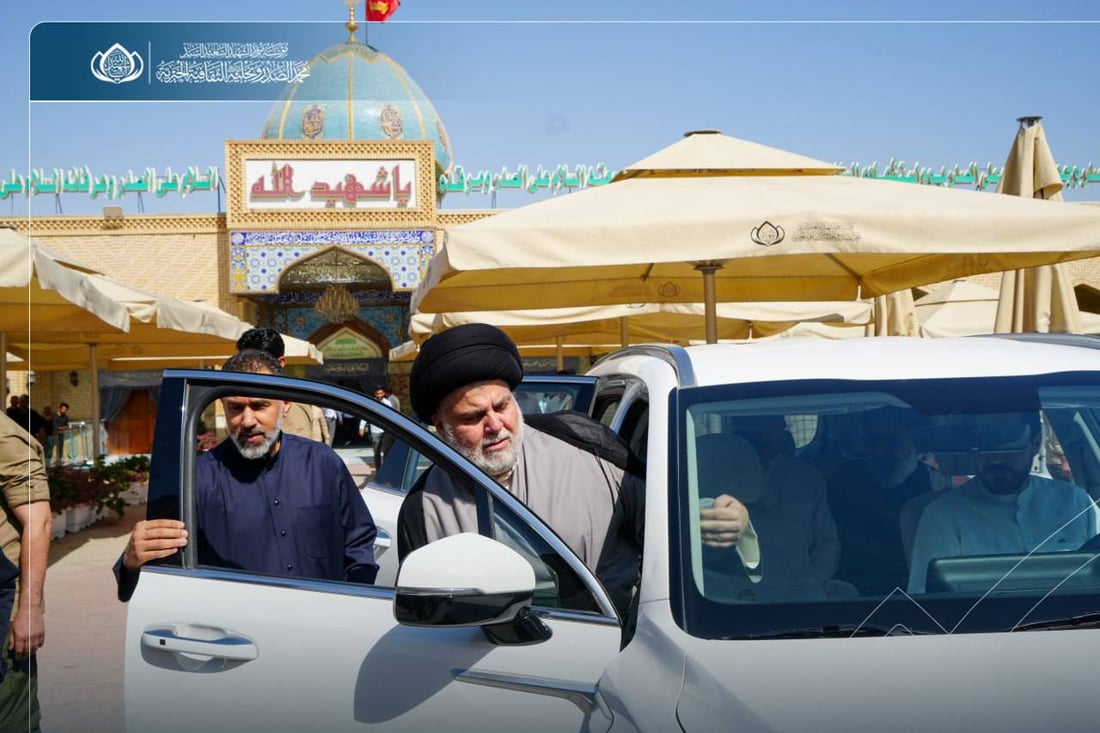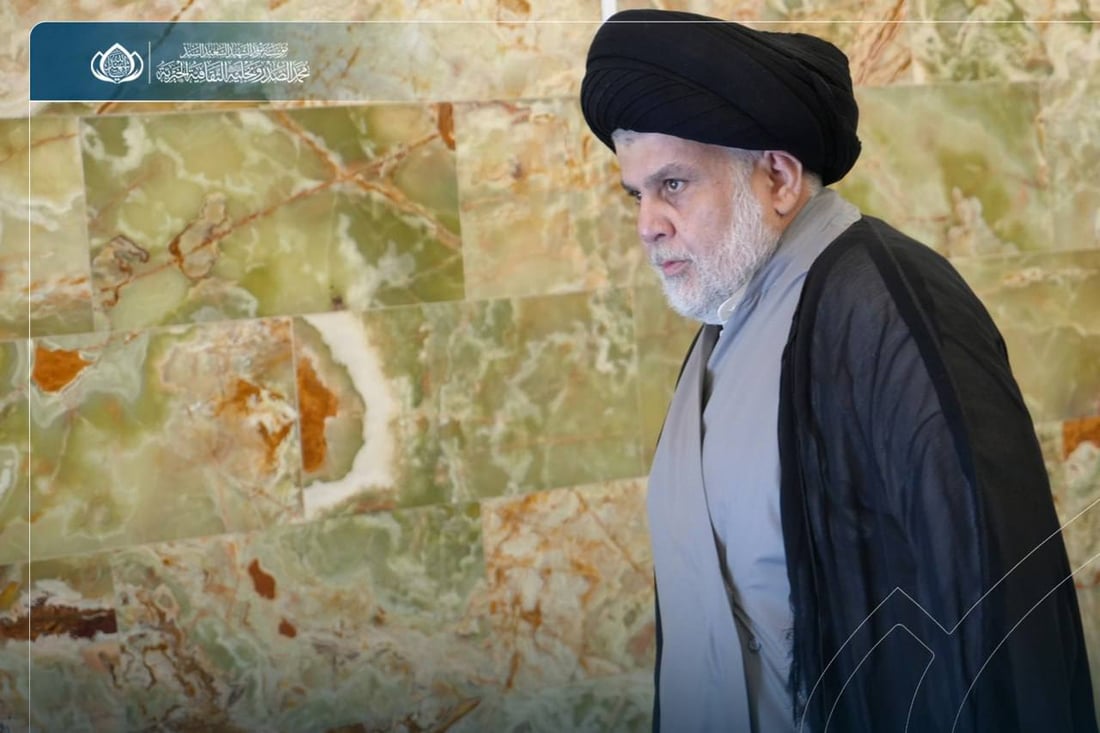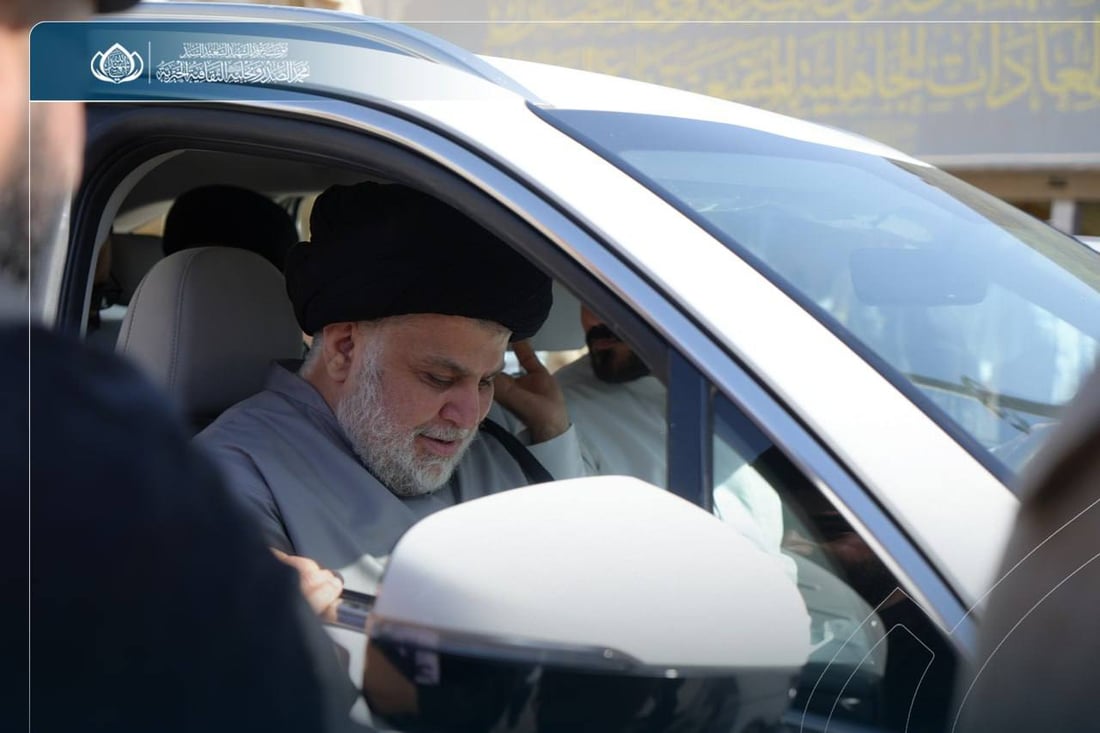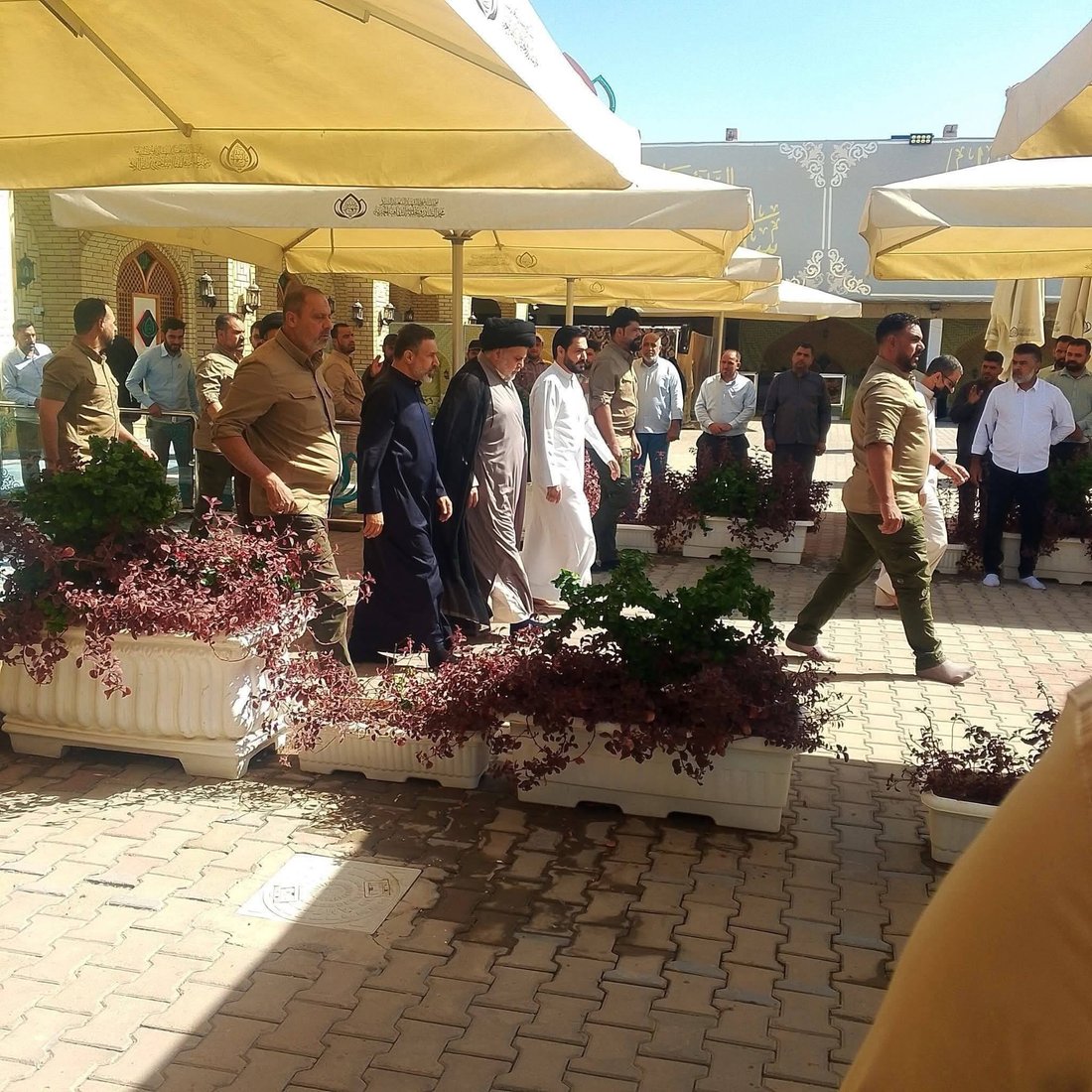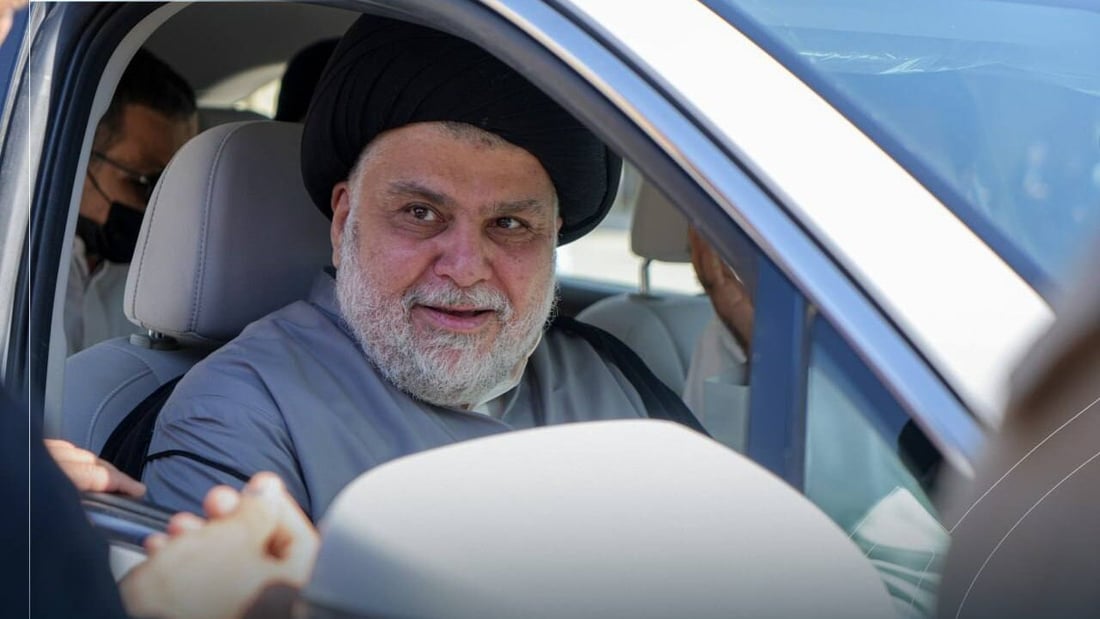
Muqtada al-Sadr appears in Najaf on Monday, a day after his supporters rallied in Basra over alleged assassination threats.
Muqtada Al-Sadr visits Najaf after Basra protests over alleged assassination plot
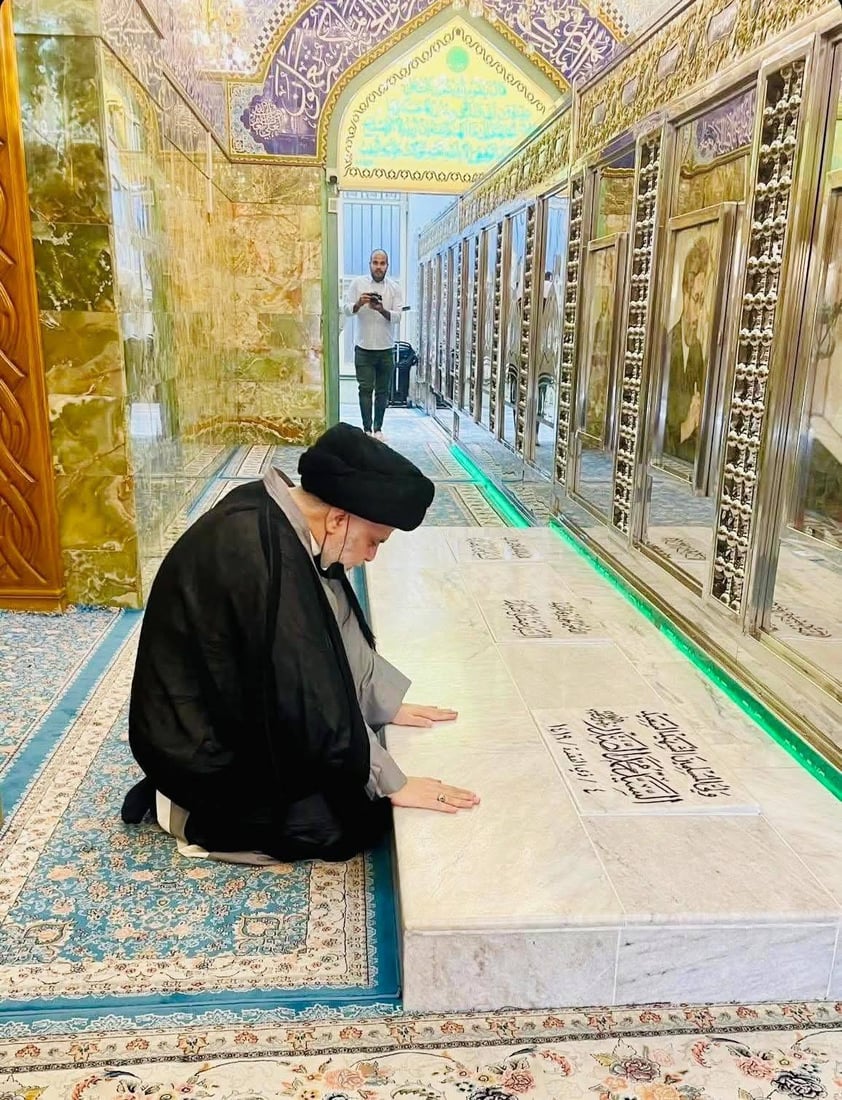
NAJAF — Muqtada al-Sadr appeared publicly in Najaf on Monday, a day after large crowds of his supporters rallied in Basra over claims of threats to assassinate the Shiite cleric. A video released from the visit showed al-Sadr performing rituals at the shrine of his late father, Grand Ayatollah Mohammed Sadiq al-Sadr. One participant said the cleric “looked relaxed and smiling.” His office also published photos of him stepping out of his vehicle with aides as people gathered to greet him.
The previous night, supporters of the Sadrist movement gathered outside the Saraya al-Salam headquarters in the Tuwaysa area of central Basra. Videos shared online showed demonstrators chanting angrily, raising photos, banners and flags. The rallies followed a YouTube program by journalist Ali Fadel alleging “an attempt” to target al-Sadr with a drone. The program claimed lawmaker Yasser al-Maliki was behind the plot with support from leaders of other Shiite armed groups.
Saraya al-Salam, the armed wing of the movement, deployed in the streets of Basra after the broadcast, sparking concern in a governorate long considered a stronghold of southern Shiite influence.
Al-Maliki rejected the accusations, calling them “slanders and lies” aimed at fueling strife and obstructing reconciliation efforts. In a message to “the Sadrist brothers,” he questioned the logic of accusing those who share ideological ties with al-Sadr of plotting against him, and said he would pursue legal action against those spreading the claims.
Al-Sadr on Monday issued a lengthy statement warning political rivals against escalation. He said it was “strange that arrows are still being directed” at his National Shia Movement despite its withdrawal from the political process.
“Your money and your drones that will target the shrine of the Second Martyr, according to the leaks we received, will not benefit you. You will not do it, because that would harm your own existence,” he wrote.
He said attempts to intimidate his movement would fail. “If you want escalation, know that we will not be frightened by your threats, nor will we harm you. The results will only divide you further after they are announced, and the conflicts between you will increase,” he said, adding that some would boycott elections while others would participate. “The experienced will not give his voice to the inexperienced.”
Al-Sadr urged politicians to act with caution, warning that corruption, poor governance, weapons outside state control and tribal conflicts were deepening Iraq’s crises. “Iraq should not become a victim of what is happening in the region. If weapons remain outside the state and tribal conflicts continue, the situation will only deteriorate,” he said.
He cited shortages in electricity, health services, education and border security as urgent national issues, criticizing political forces that, he said, focus on sectarianism, factional power and corruption instead of reform. “The real danger lies in extremism, corruption, and sectarianism, which pose a national threat,” he said.
Sadr has a history of withdrawing from Iraq’s political process, having ordered all 73 Sadrist lawmakers to resign during the parliament. He also has confirmed he will boycott the upcoming Nov. 11 election.