
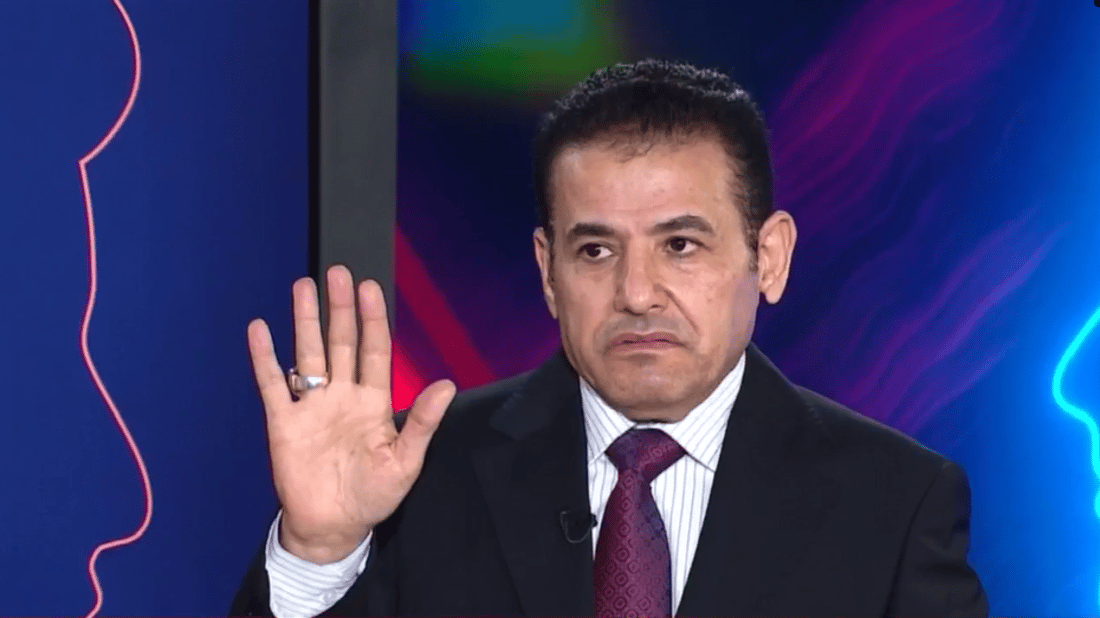
Qasim Al-Araji, the Iraqi prime minister’s security adviser
Media Monitor
Al-Araji says he requested delay of PMF law until after elections
BAGHDAD — National Security Adviser Qasim al-Araji said Iraq should postpone legislation regulating the Popular Mobilization Forces until after parliamentary elections, acknowledging concerns about the powerful paramilitary organization.
“Yes, there are observations and concerns,” al-Araji told Sharqiya News. “For this reason, the National Security Advisory submitted a request to postpone the enactment of the PMF law until after the upcoming parliamentary elections.”
The government pulled the bill on Aug. 10 after warnings and protests. The legislation would have formally transformed the PMF into a permanent military institution with extensive operational, political, and financial powers.
National Security Advisor Qasim al-Araji, in an interview on Sharqiya News:
The Popular Mobilization Forces is an Iraqi institution that has made great sacrifices. We will not accept interference from any party—whether friend or foe—regarding its existence or any demand to dissolve it. That said, yes, there are observations and concerns. For this reason, the National Security Advisory submitted a request to postpone the enactment of the PMF law until after the upcoming parliamentary elections. The law may indeed require public outreach and consensus-building, as any law that sparks contention needs to be properly promoted and explained.
Since 2023 and throughout 2024, a joint negotiation committee has held several meetings to restructure Iraq’s relationship with the International Coalition. These talks resulted in a timeline for the Coalition’s withdrawal from the country. The first phase involves relocating forces from central and southern Iraq to the Kurdistan Region by the end of September this year. The second phase stipulates their withdrawal from the Kurdistan Region as well, by the end of September 2026.
There are parties attempting to link this withdrawal to current regional developments and events. This is incorrect. When negotiations with the Coalition began in 2023, no one knew what would unfold in 2025. The Kurdistan Region is an integral, constitutional part of Iraq, and the relocation of forces there was part of a prior agreement—unrelated to ongoing regional dynamics.