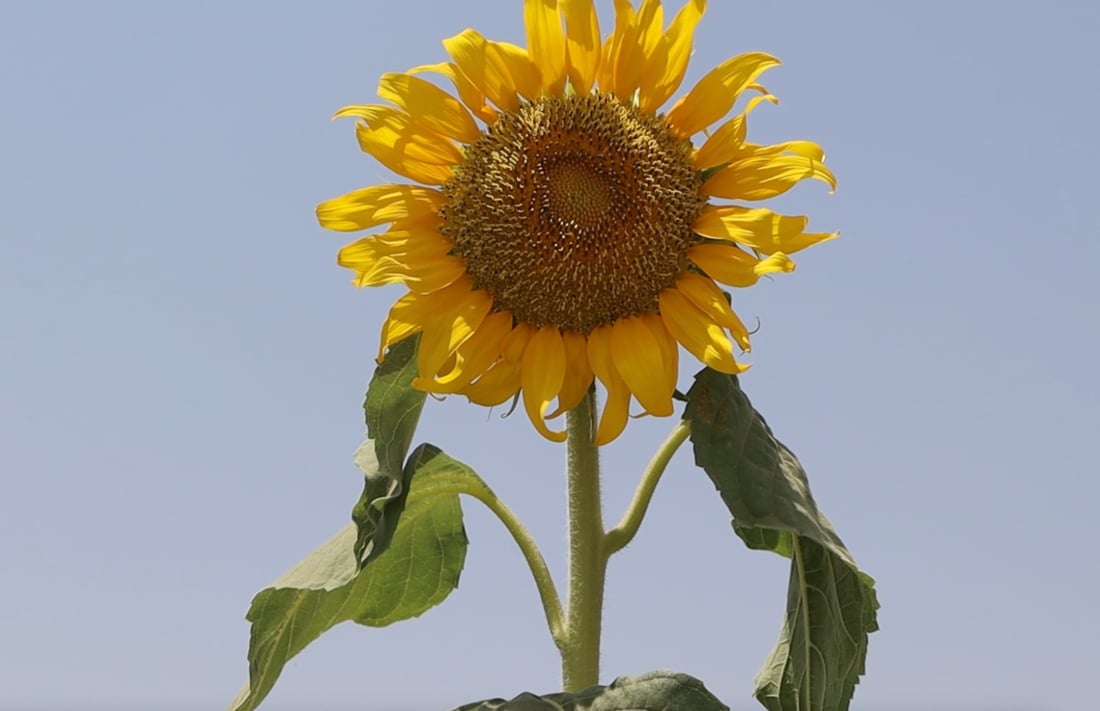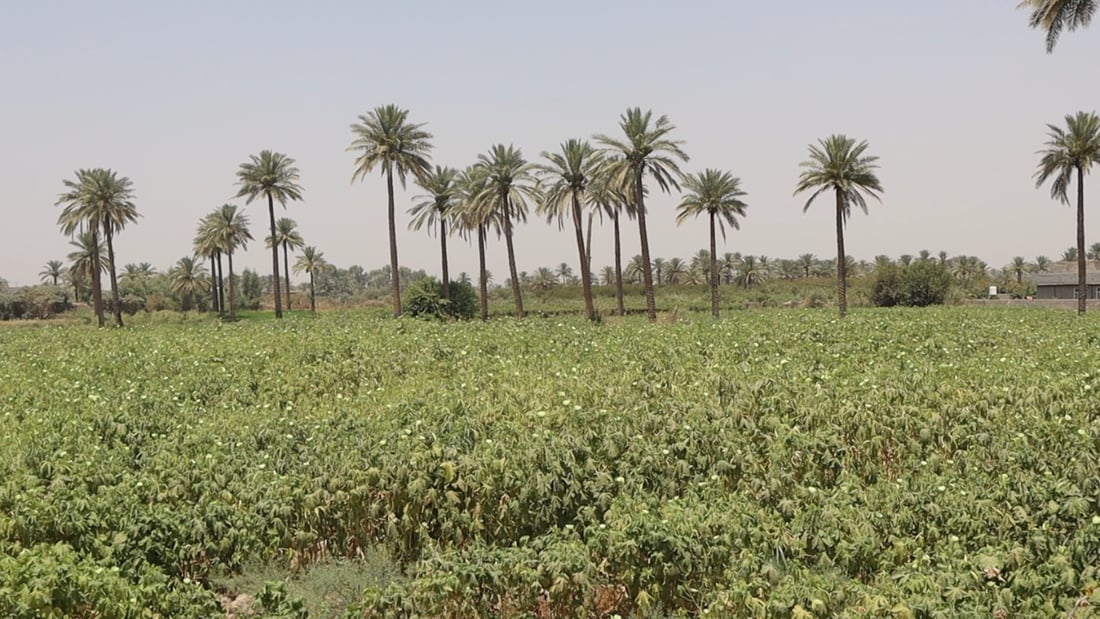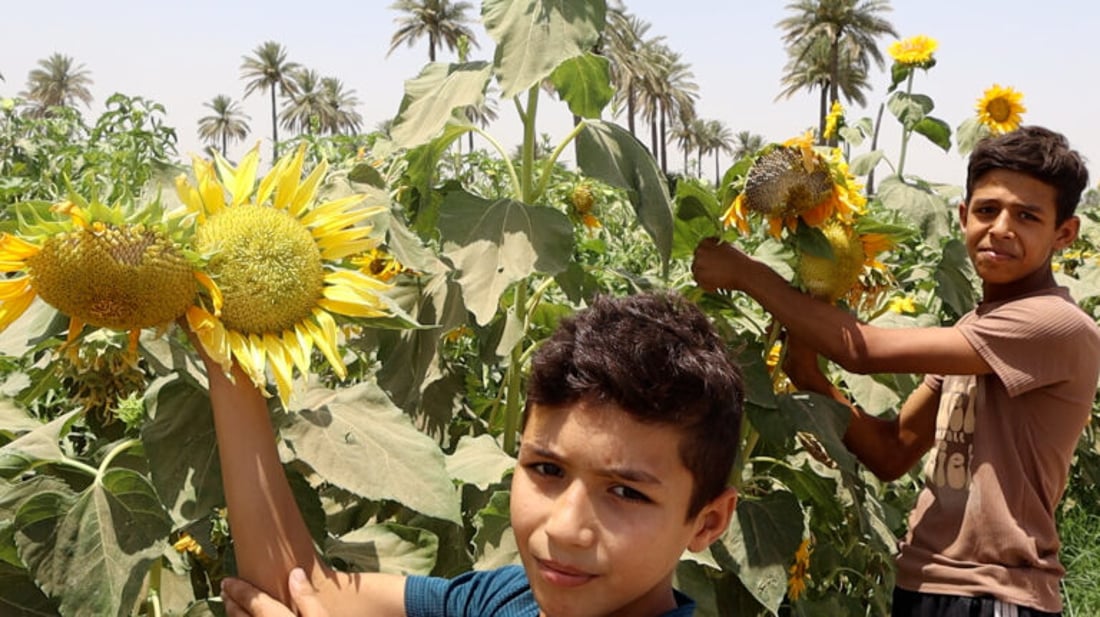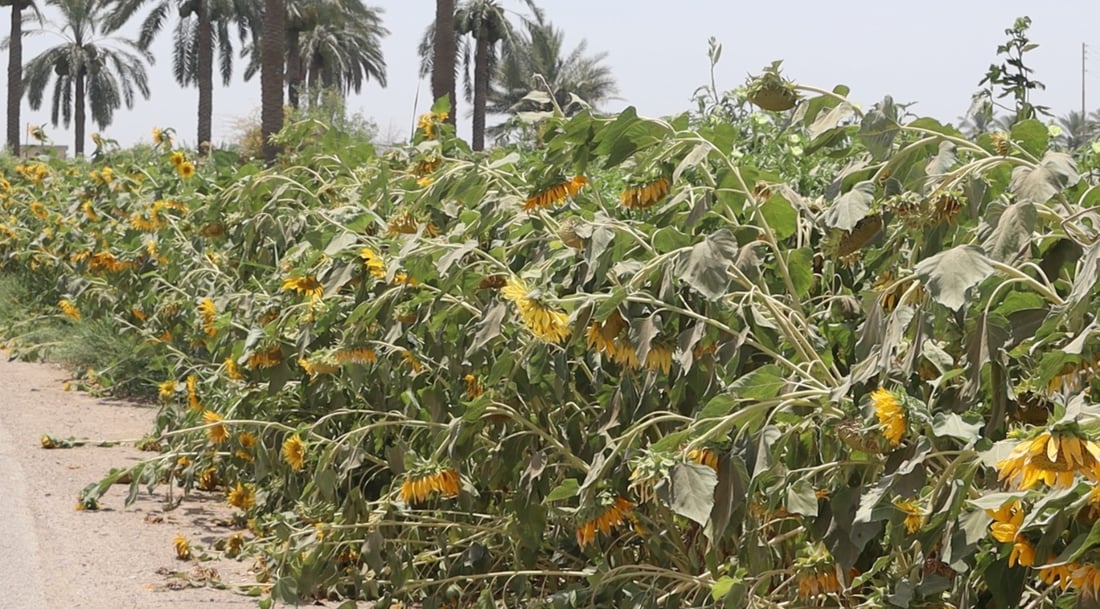
A sunflower field in Salah Al-Din. (Photo: 964media)
Shift to more profitable crops
Sunflower farming declines sharply in Salah al-Din amid drought, lack of processing plants
SALAH AL-DIN — Once a prominent crop in southern Salah al-Din, sunflower cultivation has sharply declined since its peak in the 1990s, with farmers across Iraq shifting to more profitable and manageable alternatives.
Local farmers and agricultural experts say the downturn is due to a combination of prolonged drought, limited mechanization, and the absence of domestic facilities to process sunflower seeds and extract oil — leaving growers with no clear market for their harvests.
“Before the 1990s, sunflower farming was thriving,” said Tawfiq Salih, a farmer in the region. “But with the absence of oil production plants, most farmers turned to more profitable crops. Now, we plant sunflowers around okra fields as windbreaks and for shade, and occasionally for consumption.”
Salih said he recently planted about 1,000 sunflower seedlings on a 300-square-meter strip around his okra farm—a small fraction of what was once widely cultivated in areas such as Al-Rawashid, Aziz Balad, and Al-Juwazirat.
Ali Ahmed, an agricultural economist and extension specialist, said sunflower and cotton production in Iraq has declined by more than 90% in recent decades. “These crops require large areas, a reliable water supply, and a significant labor force, not to mention harvesting machinery,” he said.
But the central issue, he noted, is the lack of infrastructure. “The key issue is the absence of factories. After harvest, the farmer has no buyer for sunflower crops, so they turn to economically viable alternatives,” Ahmed said.
Farmers across Salah al-Din now prioritize crops like tomatoes, eggplants, and okra, which offer quicker returns and stable demand in local markets.