
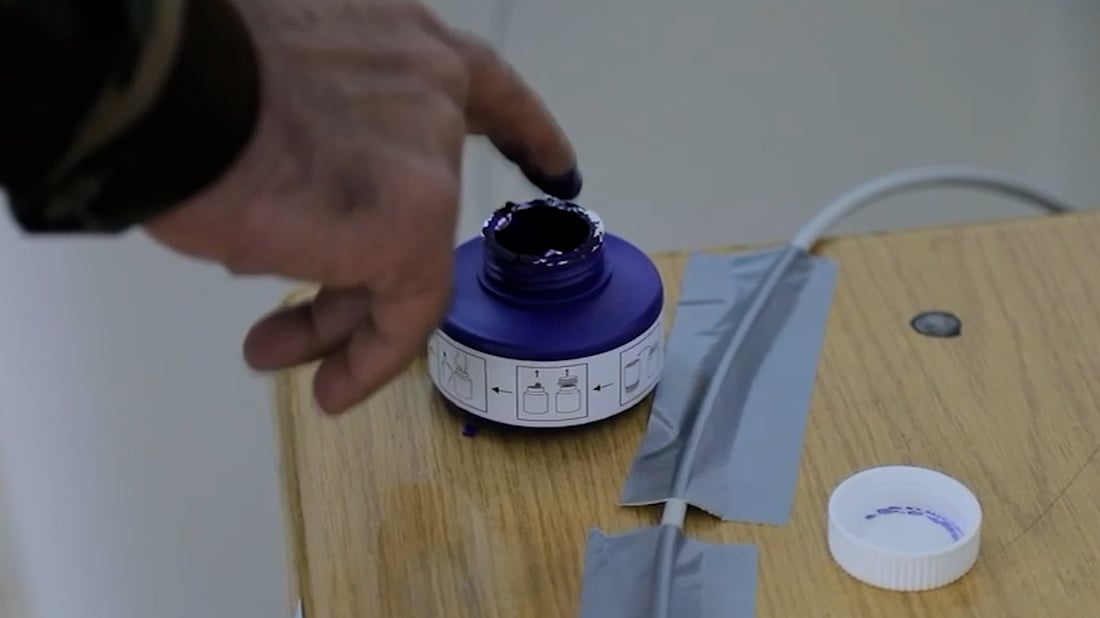
A voter dips their finger into indelible ink during a past Iraqi election
Iconic polling day symbol
Iraq ends use of indelible ink in elections ahead of November vote
BAGHDAD — Iraq’s Independent High Electoral Commission has voted to discontinue the use of indelible ink during elections, ending a practice in place since 2005 that was intended to prevent double voting and enhance public trust in the electoral process.
The decision, approved by majority vote on July 16, comes just months before the country’s scheduled parliamentary elections on Nov. 11 and reflects what the commission described as a shift toward reliance on modern biometric and electronic voting systems.
The ink — typically applied to a voter’s index finger after casting a ballot — served as a visible safeguard against multiple voting. However, following a joint review by the commission’s Operations, Information Technology, and Contracts Departments, officials concluded the measure was no longer necessary.
“Approval was granted to cancel the use of election ink, based on the joint review of the relevant departments,” the commission said in a statement. It also directed the electoral administration to implement the change and publish the decision on its official website.
The announcement comes as the commission intensifies efforts to prevent electoral fraud. On June 29, it warned that individuals caught buying or selling biometric voter cards, or misusing state resources for political gain, could face prosecution and disqualification. The warning followed the arrest of a man in Nineveh accused of trafficking over 1,100 voter cards, which officials said could be used for impersonation, vote suppression, or fraud.
While indelible ink has long been viewed as a practical and symbolic safeguard in a country with fragile institutional trust, advocates for modernization argue that Iraq’s growing use of biometric registration and electronic systems now offers stronger protections.
Still, the ink’s removal may spark debate as campaigning intensifies ahead of Iraq’s sixth parliamentary elections. Voting is scheduled to begin on Nov. 11, with the campaign period set to open Oct. 9.