
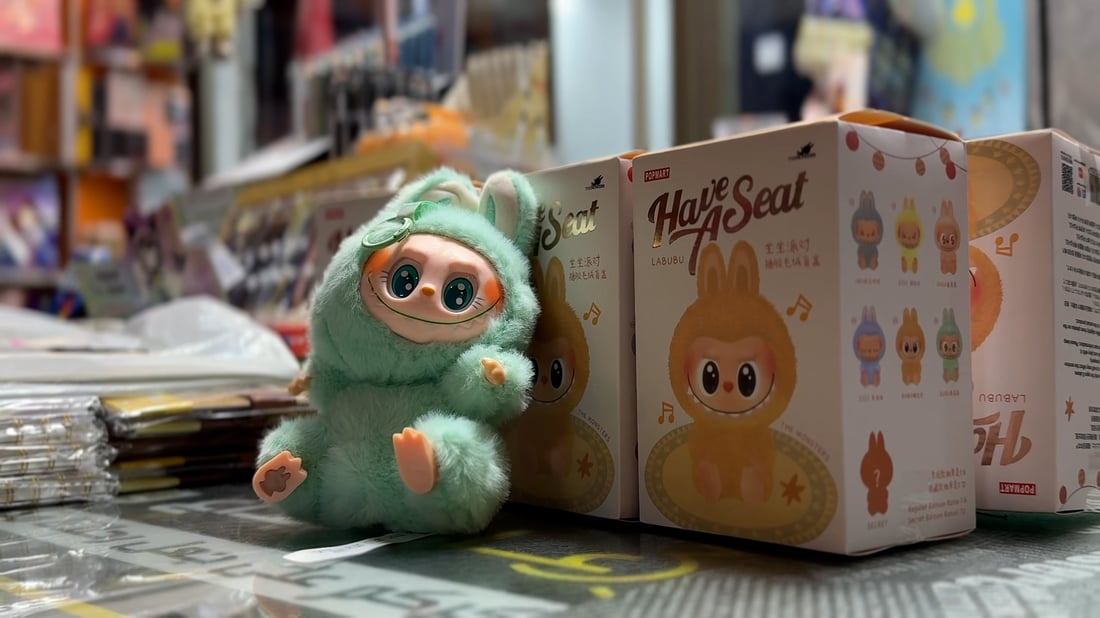
A Labobo doll is displayed next to its packaging at a gift shop in Kut, Wasit governorate. Photo by 964media
Blind-box
‘Labubu’ plush toy craze reaches Kut, with demand driven by children despite steep prices
WASIT — The “Labubu” doll, a popular collectible plush toy that first gained traction in Baghdad markets about a month ago, has now spread to Kut in Wasit governorate — and demand is surging, particularly among children, despite its relatively high price and limited availability.
Originally embraced in Iraq as a novelty or romantic gift exchanged between couples, the toy has rapidly found a younger fan base. Local shopkeepers say they’re struggling to keep up with customer requests.
“The demand for the Labubu doll started recently, especially after Eid, and it has become very high,” said Yousef Kareem, owner of Al-Kareem Stationery in Kut. “We stocked it because of customer requests and insistence.”
Kareem said the toy itself isn’t especially unique in form but has become a viral trend. “It’s a very normal plush figure, like other collectible toys we sell — but it’s the name and the hype that have made it famous.”
Prices range from 12,000 to 20,000 Iraqi dinars (about $8.33 to $13.89) depending on the size, and supplies are scarce. “It’s not available in large quantities at wholesale due to the high demand, and what we receive is relatively little,” he added.
Local shopper Mohammed Mahmoud said children are driving the trend, pushed by social media. “Labubu is one of the trends that has spread quickly. The kids at home are all insisting on having it — that’s what pushes us to buy it,” he said.
Labubu is a character created by Hong Kong artist Kasing Lung, who originally illustrated it as part of a whimsical and slightly eerie universe called “The Monsters,” published in a picture book series in the early 2010s. The character was later adapted into collectible toys by the Chinese company Pop Mart, which launched Labubu figures in 2019 as part of its now-famous blind-box product lines.
Blind-box toys are sold in sealed packaging that conceals which specific figure is inside, meaning buyers don’t know what they’re getting until after purchase. The model encourages repeated buying, with customers hoping to collect a full set or score rarer “chase” figures. The system is similar to trading cards or loot boxes in video games and has been credited with fueling an international boom in collectible designer toys — especially among young adults.
“I bought one because my sister’s kids asked for it. It’s small and ordinary, and the price is high,” he said. “You can’t even choose the color or design — it’s wrapped inside.”