
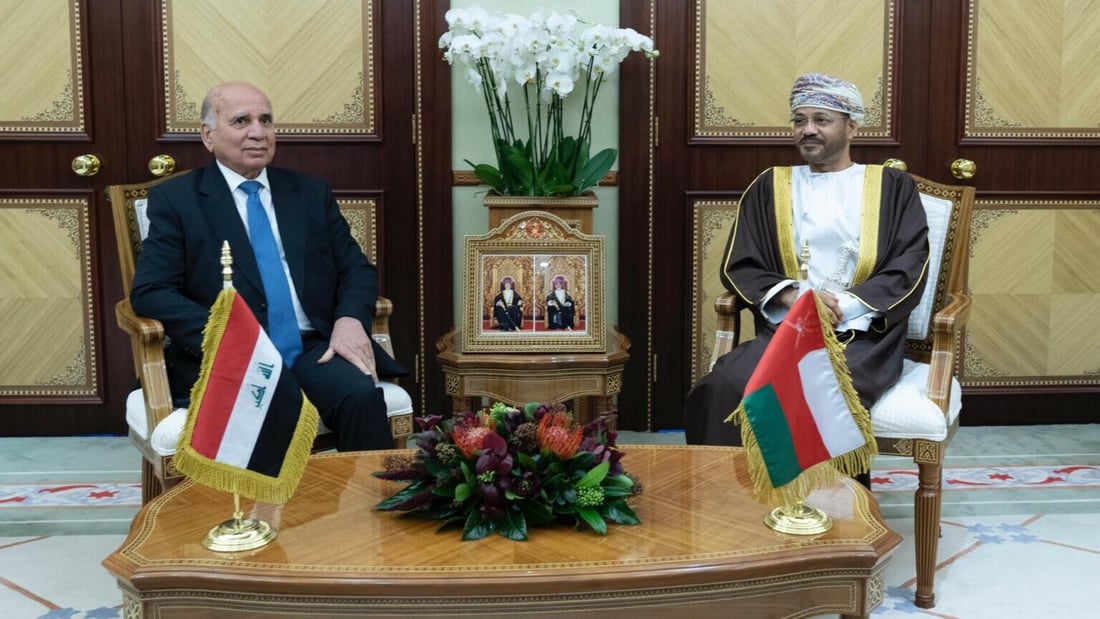
Iraqi Foreign Minister Fuad Hussein meets with Omani Foreign Minister Badr bin Hamad al-Busaidi during diplomatic talks focused on regional tensions and the suspended U.S.-Iran negotiations.
Monitor
Iraqi, Omani foreign ministers discuss Israel-Iran escalation and stalled nuclear talks
BAGHDAD — Iraqi Foreign Minister Fuad Hussein held a phone call Friday with his Omani counterpart Badr bin Hamad al-Busaidi to discuss the impact of Israel’s military strikes on Iran and the broader consequences for regional and international stability, according to a statement from Iraq’s Foreign Ministry.
The two ministers emphasized the importance of continuing diplomatic efforts between the Islamic Republic of Iran and the United States, especially through mediation led by the Sultanate of Oman.
“They commended the dedicated efforts made to advance the dialogue and reach understandings that contribute to easing tensions and strengthening stability,” the statement said.
The call also addressed wider political and security developments, with both sides highlighting the role of diplomacy and coordination in managing regional challenges.
The exchange followed a wave of Israeli airstrikes early Friday targeting more than 200 sites in Iran, including military and nuclear facilities. Among those reported killed were Hossein Salami, commander-in-chief of the Islamic Revolutionary Guard Corps; Mohammad Bagheri, chief of staff of Iran’s armed forces; and several nuclear scientists. Iran reported at least 78 deaths and hundreds wounded, with significant damage reported in East Azerbaijan governorate.
In response, Iran launched dozens of missiles at Israel, some of which struck Tel Aviv. The attacks reportedly resulted in 100 injuries and three fatalities. Iranian officials labeled the Israeli assault a “declaration of war” and suspended the sixth round of nuclear negotiations with the United States, which had been scheduled for Sunday in Oman.
The United States denied any involvement in the strikes but confirmed it had been informed in advance. President Donald Trump urged Iran to return to the negotiating table, warning of serious consequences if it did not.