
Husseiniya
Date groves in Karbala enter Chamri stage as farmers anticipate strong yield
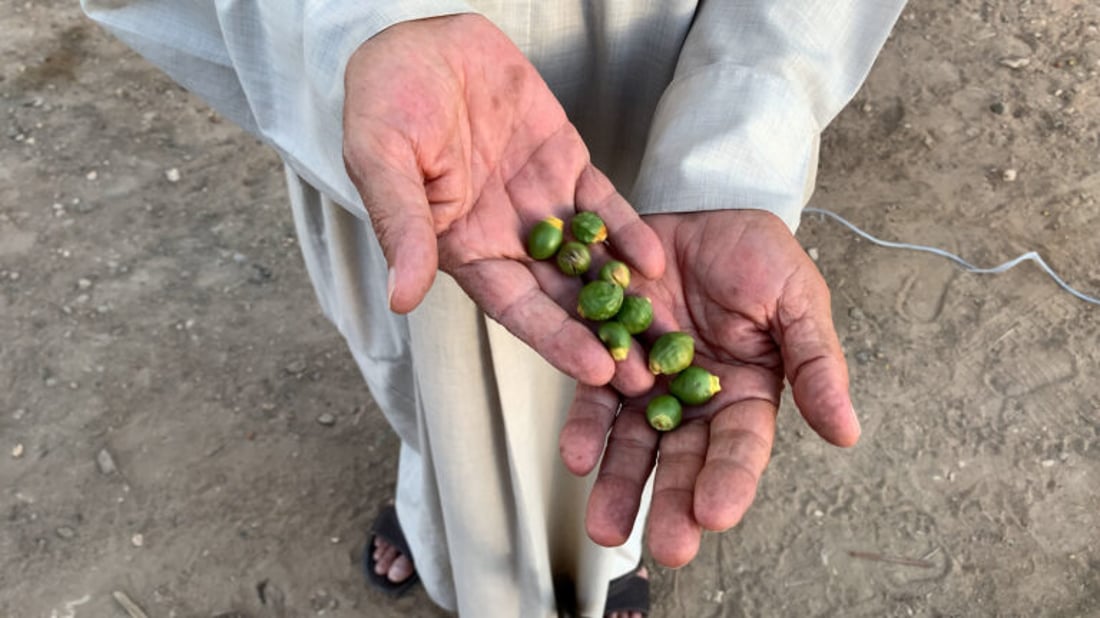
KARBALA — Farmers in the town of Husseiniya, north of Karbala, say palm groves have entered the “Chamri” stage—an early phase in date development marked by rapid fruit growth and high moisture levels.
Though traditionally associated with bitterness, some varieties, including Barhi and occasionally Maktoom, retain a degree of sweetness even at this stage, growers told 964media.
The Chamri phase follows pollination and is part of a five-stage development cycle: hababouk, Chamri, khalal, rutab, and tamr. During Chamri, which typically lasts four to six weeks, the dates remain green but increase significantly in size and weight.
Saleh Dhiyab, a farmer in Husseiniya, said pollination typically occurs between late February and early March, with fruit beginning to form in April. “The Chamri stage lasts about a month and a half,” he said. “The fruit elongates, becomes heavier, and remains green with high moisture. While it’s known for its bitterness, there are varieties like Barhi and Maktoom that are sweet even during this phase.”
Dhiyab said the density and size of the fruit during Chamri helps farmers estimate seasonal yield. “We believe this season will be better than the previous one,” he said, noting that he harvested 12 tons from nine dunams (two acres) last year and expects up to 14 tons this year.
Growers say Chamri characteristics vary widely across date varieties—Zahidi, Khastawi, Jabjab, and Khdrawi each exhibit different growth patterns and flavors.
As the Chamri stage ends, farmers begin a practice called ta’kees, or loosening the bunches, to make harvesting easier later in the season.