
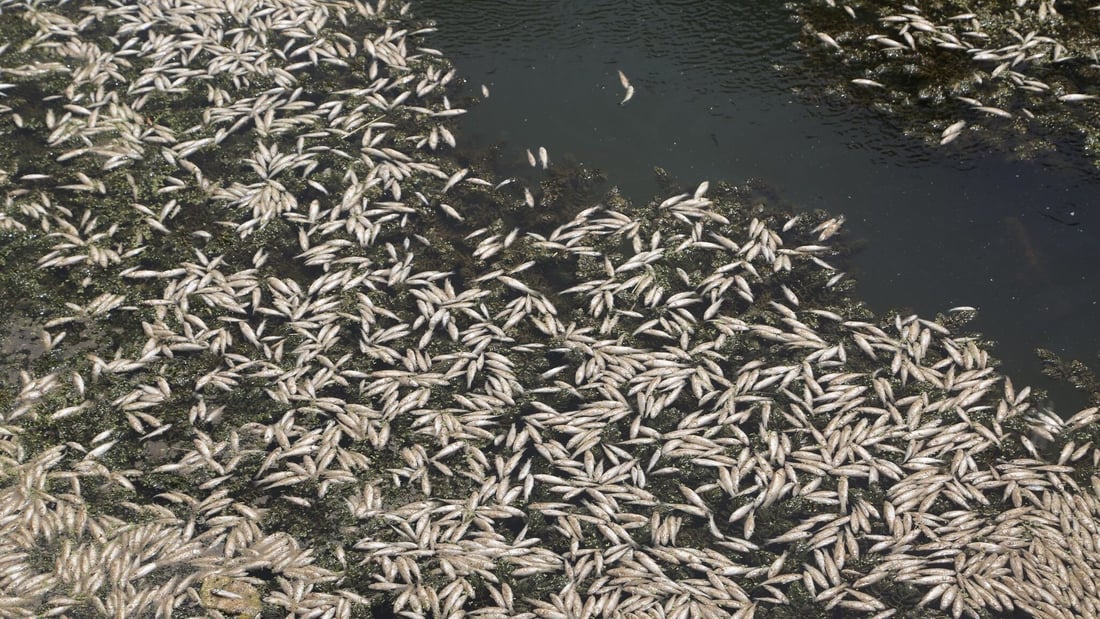
Dead fish scattered across the water surface in Hor Ibn Najm, Najaf.
Falling water levels
Low oxygen levels blamed for fish die-off in Najaf marsh
NAJAF — A mass fish die-off in Hor Ibn Najm was caused by falling water levels that led to dangerously low levels of dissolved oxygen, according to a report released Tuesday by the Najaf Environment Directorate.
The findings followed public complaints and images shared on social media showing dead fish in the Abu Helan area of the marsh. A technical team led by Directorate Director Jamal Abd Zaid Shallaka, along with local water resources staff, inspected the site and found widespread fish deaths across a 500-square-meter area along the riverbank.
The report confirmed that low water levels had caused a drop in oxygen levels, which “negatively impacted the fish population in the marsh, on which many local fishermen depend.”
Local residents told officials the water had recently receded sharply, leading to the die-off. Water samples collected during the visit were tested at the directorate’s lab, confirming reduced oxygen levels.
The directorate urged the Najaf Water Resources Directorate to increase water flow into Hor Ibn Najm, describing the marsh as a vital habitat for birds and a key economic resource for area residents. It also called on local officials in Al-Hurriya subdistrict to treat the site as a protected resource and to crack down on illegal fishing practices, including the use of poison or electric shocks.
“Legal measures will be taken against all forms of pollution and violations affecting water sources,” the directorate said, warning of further ecological damage if water shortages persist.
Iraq is grappling with its worst water crisis in decades, with national reserves at their lowest levels in 80 years following a dry rainy season. Officials have pointed to climate change, drought, and upstream dam projects in Turkey and Iran as major contributors to the crisis.