
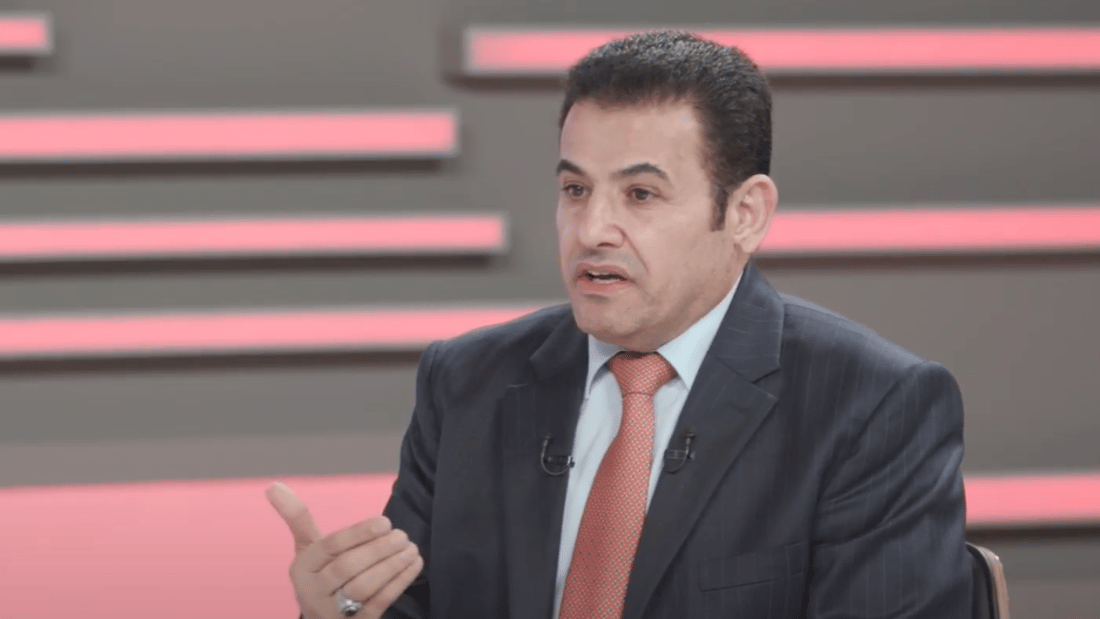
Iraq Rejects Militia Calls for Energy War, Clarifies Government Stance
Media Monitor
Iraq’s national security advisor distances government from Kata’ib Hezbollah ‘energy war’ rhetoric
BAGHDAD — Iraqi National Security Advisor Qasim Al-Araji distanced the government from recent calls for an “energy war” issued by Abu Ali Al-Askari, spokesperson for Kata’ib Hezbollah, a militia group aligned with Iraq’s Islamic resistance against Israel and the U.S. Al-Araji emphasized that al-Askari’s statements reflect personal opinions, not the official stance of the Iraqi government.
“These statements likely fall under the umbrella of media warfare,” al-Araji said in an interview with Al Rabiaa TV. He underscored that Iraq, whose economy heavily depends on oil, would not endorse such drastic measures. Al-Araji also dismissed any likelihood of Iraq becoming directly or indirectly involved militarily in the situation.
When asked about Iraq’s position between the Iran-backed resistance axis and its relations with the U.S., Al-Araji stated, “Iraq is a center of its own.”
Abu Ali al-Askari recently posted on X, formerly Twitter, warning that the world could lose access to more than 12 million barrels of oil per day “once the energy war begins.” He suggested that the region faced two stark choices: “Either everyone benefits from the resources, or no one does.”
Tensions have escalated in recent days, with Iraqi militias ramping up their rhetoric following drone attacks and Iran’s missile strikes targeting Israel. Israeli officials have warned of retaliatory strikes, with reports suggesting that oil and gas facilities in Iran could be potential targets.
Excerpts from Qasim al-Araji, Iraqi National Security Advisor, in an interview with Al Rabiaa TV:
Al-Araji: The powers of war and peace, constitutionally, rest with the government and the Commander-in-Chief of the Armed Forces.
We held a series of meetings with the ambassadors of the United States, Britain, and France, urging them to apply pressure on Israel to prevent the expansion of the conflict.
The Iraqi people are part of the Arab and Islamic world, and when they witness brutal killings, they naturally feel deep emotions and take positions. The religious authority, [Grand Ayatollah Al-Sistani] in its clear and direct statement, aimed to control such emotions that could lead to uncalculated reactions. They emphasised supporting the Palestinian and Lebanese causes through political, humanitarian, and media channels by exposing the crimes taking place.
It is in Iraq’s best interest to avoid military escalation and allow the government to fully pursue diplomatic efforts and apply pressure in all areas to de-escalate and halt the violence and war.
Iraq has the right to respond if armed faction sites are bombed, as sovereignty violations warrant a reaction. However, such decisions rest with the Commander-in-Chief and political forces, and Iraq will not relinquish its rights.
Question: Is Iraq a friend of the U.S. or part of the resistance axis?
Al-Araji: Iraq stands as an independent axis. It is a sovereign nation with an elected government, and it has played the role of mediator in resolving regional crises. Thus, Iraq is a key player in de-escalation efforts.
Question: Will Iraq send fighters, even indirectly through armed factions?
Al-Araji: Iraq opposes the war and its escalation and is far from offering any military assistance. Even the factions have denied such involvement.
The UN Security Council issues resolutions, but they are often ignored. The international community has become powerless to stop the killing machine in Gaza and Lebanon.
Rational states aim to avoid a third world war due to reckless actions from extremist governments. I believe there are many political overlaps, and in the 1973 war, oil was used as a weapon, which ultimately helped halt the conflict.
Question: Abu Ali al-Askari has hinted at the possibility of an energy war.
Al-Araji: That is Abu Ali al-Askari’s personal opinion and does not reflect the stance of the Iraqi government. His statement was likely a response to the potential targeting of Iranian oil facilities, and it could be part of a media strategy.
Iraq is entirely dependent on oil and seeks to always remain a safe international corridor, ensuring no harm comes to Iraqi or regional oil facilities.”