Residents and authorities struggle for solutions
Severe water shortages threaten Hor Um Al-Wada in Dhi Qar
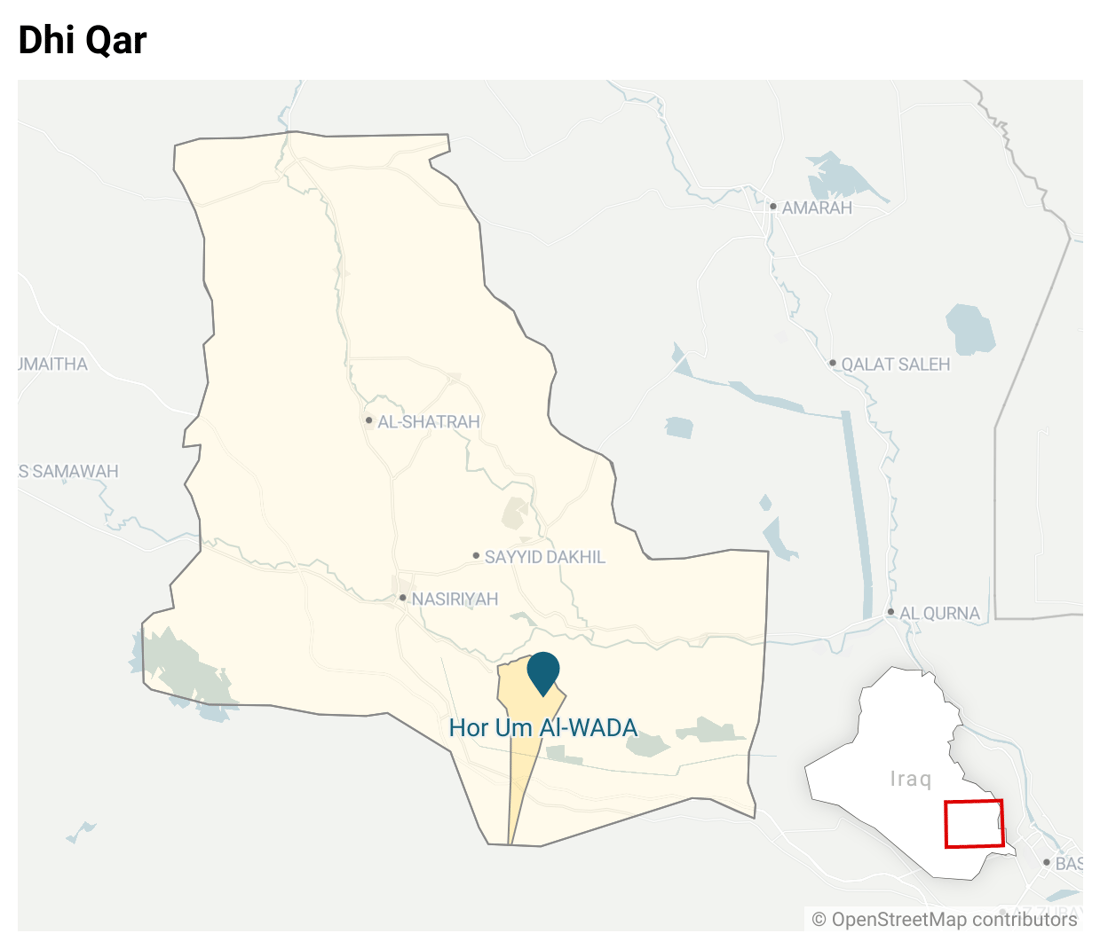
Hor Um Al-Wada in southern Dhi Qar governorate faces severe water shortages, transforming the once lush landscape into a parched expanse. High temperatures, evaporation, and lack of water releases from the main supply channel have caused the marshes to dry up, according to Rahim Kanu, Director of Water Resources.
In April 2024, 964media reported the return of water and resident optimism. However, a recent visit revealed the stark reality of the dried-up marshes. Despite this setback, the Souq Al-Shuyukh Environmental and Social Forum, a local non-profit environmental group, continues efforts with other local and national organizations to declare Um Al-Wada a nature reserve.
Local residents are deeply concerned about the marsh’s fate.
Luai Shihab told 964media, “We suffer from water scarcity and have repeatedly appealed to the central government. People have lost their livelihoods from reed mat production and buffalo and cattle farming, as the animals died due to lack of water. The area, once known as the marshes, has turned into barren land.”
Sami Al-Asadi expressed his frustration, saying, “The marshes dried up two months ago after a wave of water inflow ended. We were happy, but our joy was short-lived.” He said due to the deteriorating circumstances the number of livestock has decreased significantly, with many cows, buffaloes, birds, and fish dying.
“The tragedy is worse than before, and most people have migrated from the villages to the cities. We hope our voices reach the authorities to find a solution, as every entity we approach claims it’s beyond their jurisdiction and refers us to higher authorities,” said Al-Asadi.
The Iraqi Marshes, or Al-Ahwar, are located in southern Iraq between the Tigris and Euphrates rivers. Celebrated for their biological and cultural significance, the marshes were designated a UNESCO World Heritage Site in 2016. However, recent reports indicate a substantial reduction in their size and a decline in wildlife diversity due to drying, which has adversely affected local communities and resulted in lost income for many fishermen.
Iraq is the fifth most vulnerable country to climate change globally, facing rising temperatures, droughts, and extreme weather events. These environmental shifts profoundly impact the nation’s agriculture and oil-dependent economy, threatening food security, worsening electricity shortages, and reducing economic output.
Kanu explained ongoing efforts to restore the marshes, stating that Hor Um Al-Wada is fed by water channel project. The current water shortage, caused by high temperatures, evaporation, and low water levels, has reduced the water supply to Um Al-Wada.
“We will enhance water releases to help restore the marshes from the main channel,” said Kanu.
Asaad Al-Mutairi, Director of the Souq Al-Shuyukh Environmental and Social Forum, outlined their initiative to make Hor Um Al-Wada a nature reserve. He hoped that, following repeated appeals through the Souq Al-Shuyukh Environmental Department, the government will approve the designation.
“Currently, we are training about 20 individuals as tour guides for the marshes and printing informative booklets about Um Al-Wada and its flora and fauna, such as fish and birds, as well as local industries,” said Al-Mutairi. The forum collaborates with organizations like the United Nations Green Climate Fund and Doctors Without Borders to treat buffalo and livestock in the marshes. Currently, the water in Um Al-Wada is salty, and residents rely on buying drinking water from tanker trucks.
Al-Mutairi also highlighted their outreach efforts, such as organizing visits for government officials and foreign diplomatic missions to the area to increase media attention, aiming to secure a stable water share without violations.
Despite the difficult circumstances, the community remains hopeful that these coordinated efforts will bring much-needed water back to Hor Um Al-Wada, restoring the marshes and revitalizing the livelihoods of its residents.