
Dhi Qar buffalo breeders halve feed costs with homegrown fodder corn
DHI QAR — Farmers and livestock breeders in Karma Bani Saeed are turning to fodder corn to feed their buffalo and cattle after years of drought shrank grazing in Iraq’s southern marshes, cutting feed costs by as much as half.
What began as small plots three years ago now covers about 250 to 300 dunams (about 155 to 185 acres), said Ali Nasser, the area’s director of agriculture, offering an alternative to bought bran, flour and other feed. The crop has helped make up for some of the vegetation lost as the marshes dried out, he said, and the results have encouraged more breeders to plant it.
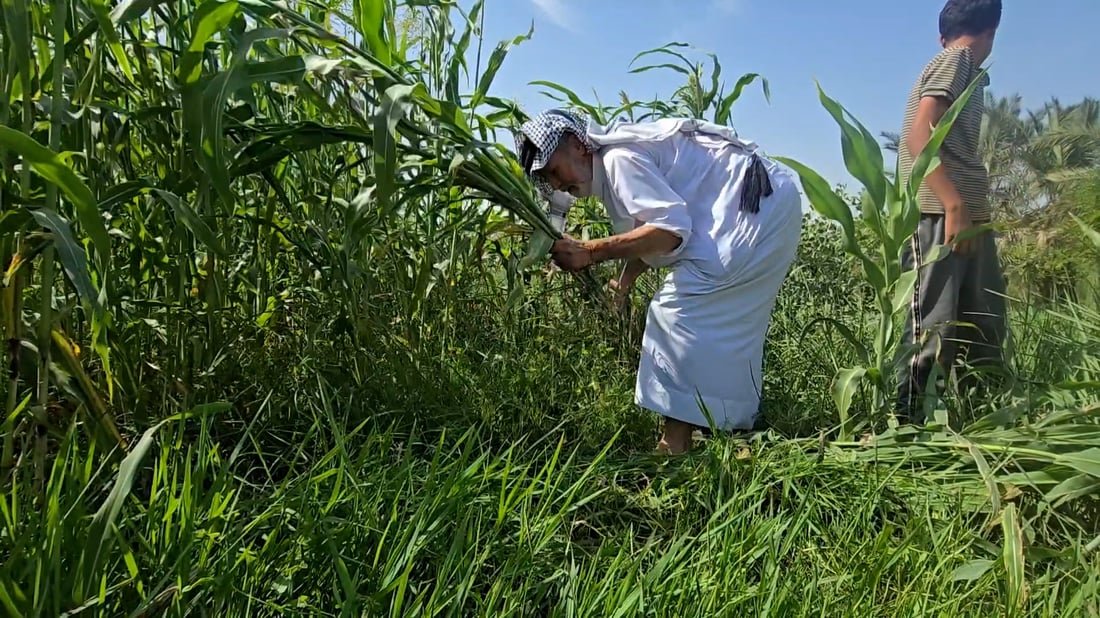
Jassim Adwan Salim planted half a dunam when drought cut the natural feed in the marshes and has since expanded to four, he told 964media. The crop now exceeds what his animals need, so he sells the surplus and uses the money to buy and store dry feed for winter. He puts yields at 15 to 17 kilograms per square meter, up to 20 in parts of his fields. He harvests by hand rather than by machine so the plants grow back for further cuttings, and one field has kept producing for three years.
Saleh Mahdi Saleh, who owns four buffalo, said his daily feed costs had fallen from about 10,000 dinars (about $6) to 5,000 dinars (about $3), and his monthly spending on feed from 250,000 to 300,000 dinars (about $150 to $180) to 100,000 to 150,000 dinars (about $60 to $90). His animals are better fed and giving more milk, he said.
The crop has reduced breeders’ reliance on bought feed, particularly bran, which had reached 500,000 dinars (about $300) a ton, said Nasser Hussein Ghuweyd, head of the local farmers’ association. The plants grow more than 2 meters tall, sometimes 3.
Growing fodder on farmland has reduced some breeders’ dependence on marsh grazing and changed the economics of livestock farming, said Ali Abdul Ridha, Dhi Qar’s deputy director of agriculture. Some farmers are now self-sufficient in feed, he said, and others earn extra income selling their surplus to neighboring breeders.