
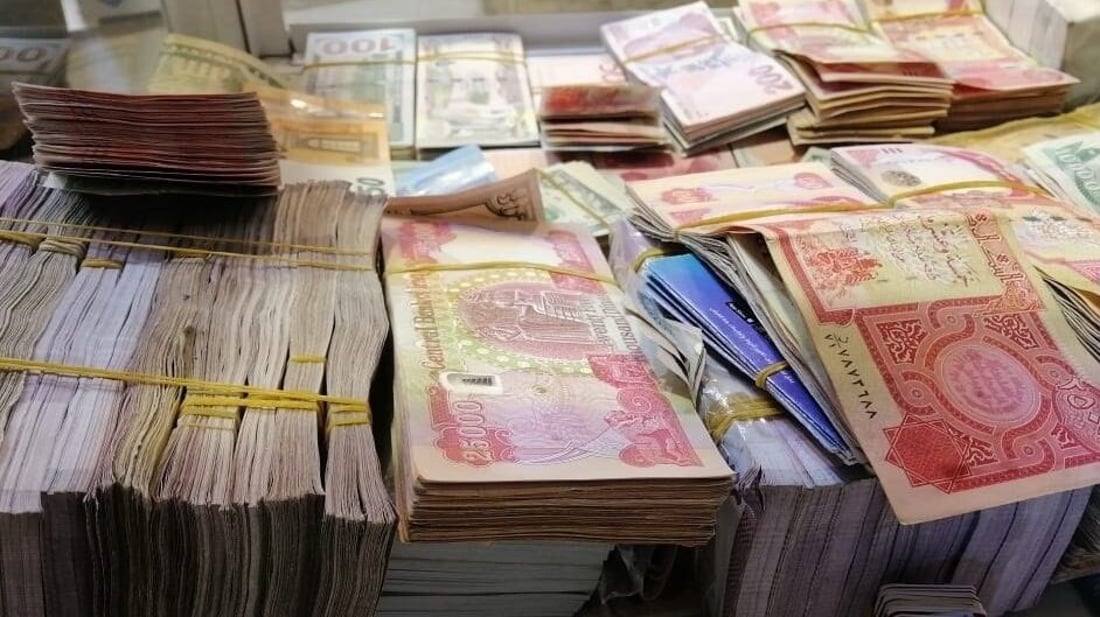
FILES: Stacks of Iraqi dinar and U.S. dollar banknotes at a currency exchange in Baghdad.
Currency traders reassured
Iraq says security forces have no role in setting dollar exchange rates
BAGHDAD — Security forces have received no orders to intervene in currency markets or influence the price of the dollar, Iraq’s Security Media Cell said Sunday, as exchange dealers threatened to strike over a recording in which an Interior Ministry employee appeared to tell them what to charge.
Exchange rates are a matter for the monetary authorities, particularly the Central Bank, not security agencies, the cell said. Prime Minister Ali al-Zaidi, as commander-in-chief, had directed security personnel to act strictly within their legal responsibilities, enforcing laws and carrying out court orders rather than regulating currency prices or interfering with legitimate trade. Any action against people or businesses involved in illegal currency dealing must go through the courts and be coordinated with the Central Bank, to prevent arbitrary measures and protect lawful traders, it said, urging citizens, merchants and exchange owners to carry on their lawful business as normal.
Iraq’s currency exchange union objected on Sunday to a widely shared recording attributed to an Interior Ministry employee suggesting exchange companies should sell dollars at 1,550 dinars, or 155,000 per $100. Licensed exchange companies buy dollars at market prices and cannot be forced to sell below cost, the union said, warning of a strike if the pressure continued without a clear legal basis. The Interior Ministry later said it had taken disciplinary action against an employee of its 911 emergency service who was recorded discussing dollar prices with a caller, saying his remarks were personal, did not reflect its position and concerned matters outside his authority.
A Central Bank official said on Oct. 7 that security forces could not pursue or detain currency traders without a court order, and that only the bank regulates financial institutions.
The dollar traded at 163,000 to 164,000 dinars per $100 in Baghdad and Erbil on Sunday, down from more than 170,000 in Baghdad and 180,000 in Erbil immediately after the devaluation but still above the official rate of 152,000.
The government raised the official selling price of the dollar from 1,320 to 1,520 dinars on Oct. 7, its first change in more than three years; the Central Bank now buys dollars from the Finance Ministry at 1,500 and sells to banks at 1,510. Oil, which provides most government revenue, is sold in dollars, so the change yields more dinars for public spending while exports remain below prewar levels. Goods imported with dollars bought at the official rate will cost more in dinars, though the parallel market, where most retail prices are set, was already above the new official rate before the change.