
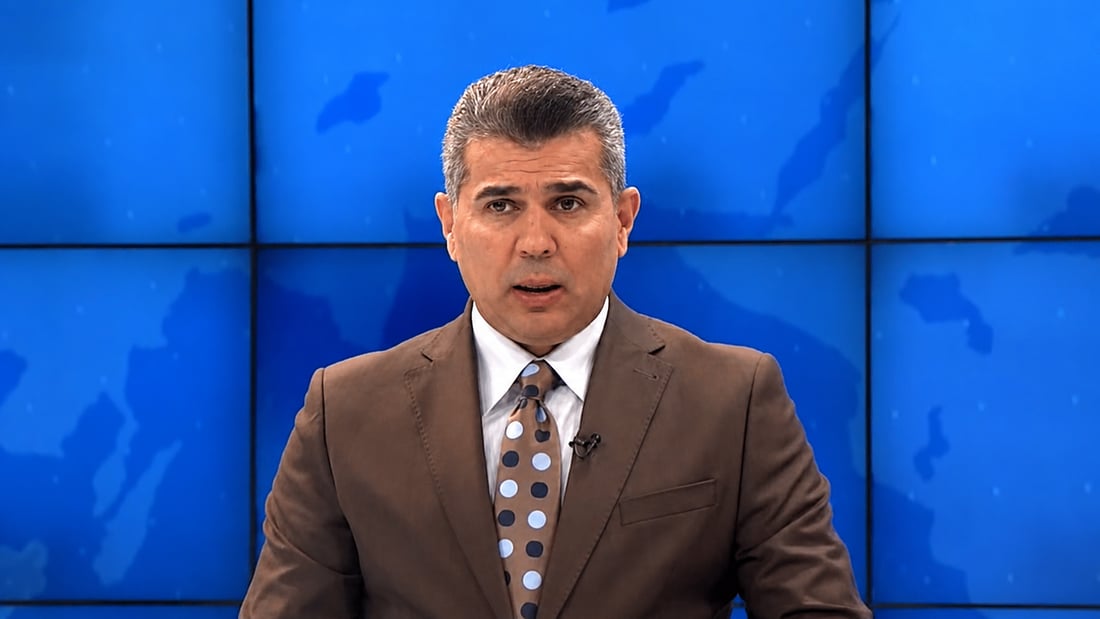
Security Media Cell chief Lt. Gen. Saad Maan
Media Monitor
Entities outside the PMF Commission will be handled by negotiation, spox says
BAGHDAD — Iraq will not accept armed forces operating in parallel with official institutions after Sept. 30, Security Media Cell chief Lt. Gen. Saad Maan said, adding that any group falling outside the Popular Mobilization Forces Commission would be dealt with “through negotiation tracks.”
“The decision of peace and war is exclusively in the hands of the state, and it is not possible to accept multiple decisions or the creation of forces parallel to the official forces,” he told Al-Iraqiya News. “The country is governed by one state, one government and one law.” The PMF Commission is “a constitutional and legal institution and a major and fundamental framework for the movement of units,” he said.
Brigades are to be renamed with government numbers and designations, such as the 30th and 40th, without political or religious labels. Personnel management, redistribution and transfers stay under the PMF’s authority. A committee formed in June with representatives of the armed forces, the PMF and the defense and interior ministries is weighing broader restructuring, including redistributing fighters between brigades. Authorities have taken in a large share of weapons that were never registered with the Commission or entered in its inventories, Maan said, without giving a figure.
He said Sept. 30 should not be a source of concern because negotiation and legal channels remain open, and that the outstanding disagreements are over implementation and timing rather than principle. Legislation restricting weapons to state control has broad parliamentary support and is moving between the Council of Ministers’ General Secretariat and parliament, he said.
Asaib Ahl al-Haq, Saraya al-Salam and the Imam Ali Battalions have moved toward compliance; Kataib Hezbollah, Harakat al-Nujaba and Kataib Sayyid al-Shuhada have resisted while U.S. forces remain in Iraq. Sept. 30 is the scheduled end of the U.S.-led coalition mission.