
Screenshot
Baghdad bookstore opens club exploring architecture and literature
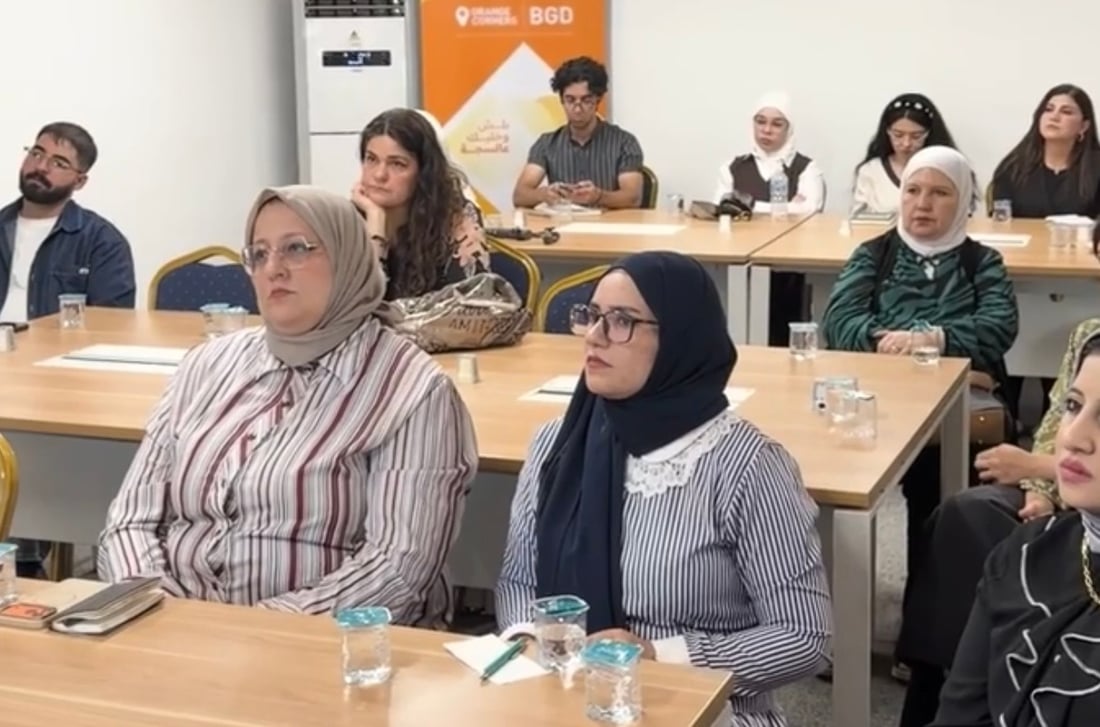
BAGHDAD — A Baghdad bookstore has opened a club devoted to the meeting point of architecture and literature, drawing architects, students and readers to its launch in the Mansour district on Thursday evening.
The club, at Daraj House and Bookstore, is run jointly by Bilal Samir, a lecturer at the University of Technology, and Lian Fadi, who owns Daraj. Samir said the tie between architecture and the written word is close. “It is impossible to talk about the history of architecture or its theories without books, and most architects who left a mark on Iraqi or global architecture have written texts,” he said.
For its first reading the club chose “A Warm, Bright House,” a recent book by Iraqi writer Luay Hamza Abbas, which Samir said gathers texts by successive generations of Iraqi writers on the attachment to the first home — what the Basrayatha author Mohammed Khudayyir called the “second womb.” The idea of an architecture club in Baghdad is not new, Samir added, recalling that the municipality had allocated heritage houses on Haifa Street to such institutions in the 1980s, one of them called the Architecture Club.
Fadi said the club was open well beyond the profession. “The Architecture Club is not limited to architecture students and architects,” she said. “Its doors are open to anyone interested in the visual identity of the city of Baghdad and its impact on society.” Daraj began in 2018 as booksellers standing near restaurants and cafes to draw young people to reading, later growing into book fairs and, from its start on the Rusafa side, expanding recently to Karkh.
At the launch, architecture students from the University of Technology presented designs inspired by the book. Maria Ali, a fifth-year student, said she and her classmates had designed different versions of the Baghdadi house, “and we presented ideas on how to transform a literary text into an architectural design.” Another student, Sally Jawad, described her project, “Self-sufficient Housing,” as a horizontal house drawn from the book’s texts. “The book brought together texts by a group of Iraqi writers and poets about memories of their homes that left an emotional impact on them,” she said, “and the projects we presented reflect those texts.”