
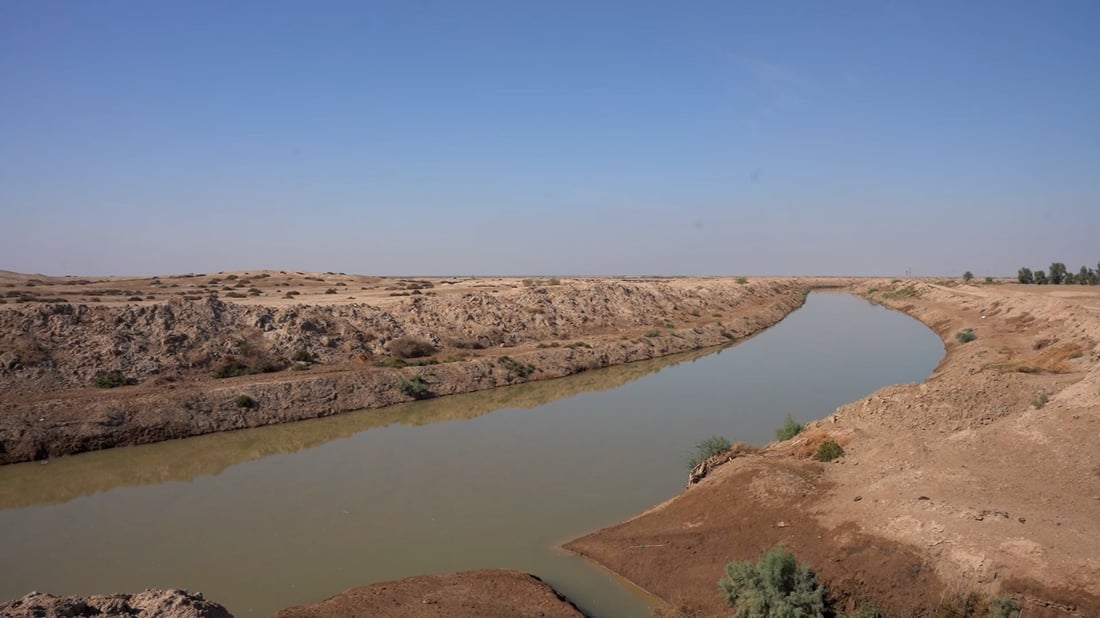
A canal in southern Iraq
Ministry warning
Iraq’s water reserves fall to 8% in worst drought since 1933
BAGHDAD — Iraq’s Ministry of Water Resources on Thursday said the country is experiencing its worst drought in nearly a century, with national water reserves falling to just 8% of total storage capacity.
In a statement received by 964media, the ministry cited climate change, low rainfall, and sharply reduced inflows from upstream countries as the primary causes of the crisis. “The low releases from upstream countries and the effects of climate change have led to a sharp decrease in water storage,” the statement said.
Inflows to the Tigris and Euphrates basins have dropped to 27% of what they were this time last year, according to the ministry. Total reserves in Iraq’s dams and reservoirs are down 57% year-on-year, affecting water availability in all governorates, with central and southern regions facing the most severe shortages.
The ministry warned that continued declines in upstream inflows, combined with a lack of cross-border cooperation, could deepen the crisis and threaten national water security. The ecological health of Iraq’s southern marshlands and the Shatt al-Arab waterway is also under increasing strain.
Officials called for greater cooperation from upstream countries and urged domestic efforts to remove illegal encroachments on water infrastructure and to promote water conservation across agricultural, industrial, and municipal sectors.
Although Iraq and Turkey had agreed to increase water releases to 420 cubic meters per second during July and August, Iraqi officials say the agreement has not been implemented. While Parliament Speaker Mahmoud al-Mashhadani claimed that water flows had improved, Water Resources Minister Aoun Dhiab Abdullah said Turkey has yet to follow through.
With regional water levels low and Turkey prioritizing hydropower generation, Iraq remains heavily dependent on its dwindling reserves.