
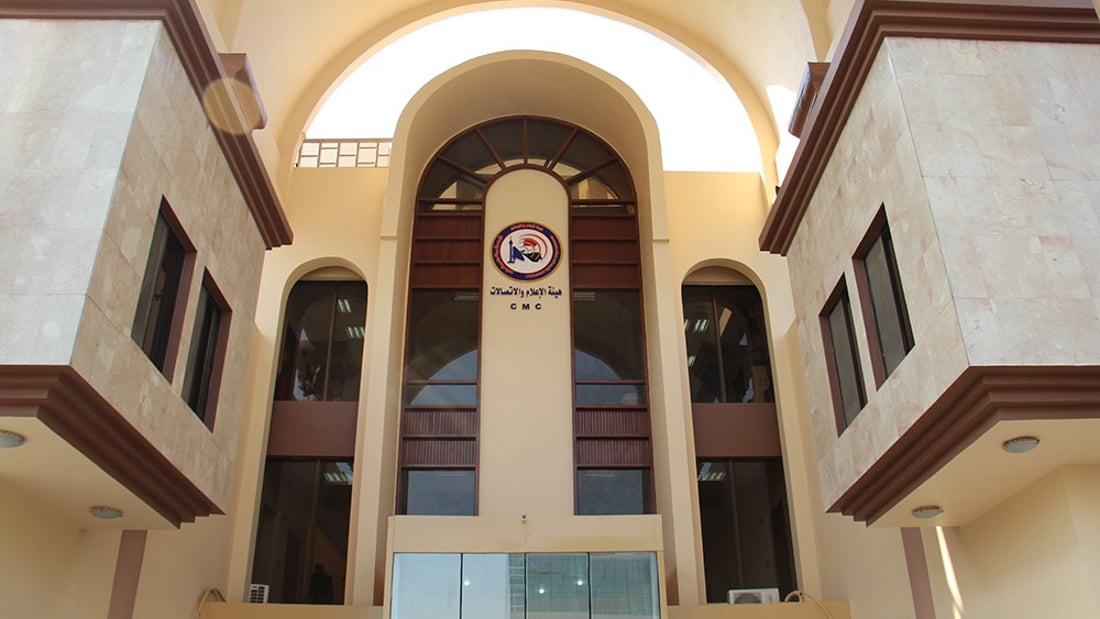
The headquarters of Iraq’s Communications and Media Commission (CMC), the country’s telecommunications regulator, in Baghdad.
Iraq’s telecom regulator shuts Korek network in 14 governorates
BAGHDAD — Iraq’s telecom regulator said Sunday it had shut down the network of Korek Telecom, the Kurdistan Region-based mobile operator, in 14 governorates outside the Region, in a long-running dispute over the company’s debts.
Teams from the Communications and Media Commission, working with the National Security Service, closed four of Korek’s main exchanges, two in Baghdad and one each in Babil and Basra, the commission said in a statement. They also closed the company’s main site in Kirkuk.
The commission said it was coordinating to do the same in Nineveh, the last of the 15 governorates outside the Kurdistan Region. Korek’s network in the Region was not included.
The commission said it acted after an extra deadline expired Sunday. It had announced the extension Oct. 6 at the request of parliament’s Transport and Communications Committee, to give users time to secure their online accounts and digital services.
The shutdown does not mean subscribers must destroy their SIM cards or give up their numbers, the commission said.
Earlier Sunday, Korek said in a statement that Baligh Abu Kalal, the commission’s chief executive, who heads the regulator’s executive body, was breaking the law by refusing to carry out a binding court ruling that restored the company’s settlement with the regulator. The commission had kept up its measures, including closing Korek’s offices, despite a judgment that is enforceable immediately, the company said.
Korek said the commission sent it a letter on Sunday justifying the measures, but the signature on it was dated Thursday, Oct. 29. The company said it reserved the right to claim compensation for all damage caused by the refusal to apply court rulings.
The Rusafa Court of First Instance in Baghdad ruled Sept. 28 to annul the commission’s June decision to cancel the settlement, keeping the agreement in force. The commission responded that the ruling did not return Korek to operation or lift its other measures, and that the company’s debts to the state still stood.
In late October, Abu Kalal said at the Erbil International Book Fair that Korek must pay 500 billion dinars and present a federal tax clearance before it could resume operations. He called the payment, about $330 million at the official rate, a first installment on debts he put at more than 2 trillion dinars (about $1.3 billion). The tax clearance must come from the federal Finance Ministry, he said.
If Korek meets both conditions, the commission is ready to sign a new settlement and let the company return to work, Abu Kalal said. He added that the commission had formally asked for a change in Korek’s management, a right he said the contract grants it.
The regulator moved against Korek on Aug. 9, saying it was shutting down the operator’s network and placing liens on its assets over breaches of its financial and legal obligations. The commission and the National Security Service closed Korek’s Baghdad headquarters and three sales centers on Aug. 20. By Sept. 6, when it shut Korek sites in Kirkuk, Nineveh and Salah al-Din, the commission had closed the company’s offices in eight governorates.
The dispute goes back to the 2007 mobile license auction. The commission says Korek still owes $375 million from it. Korek says that payment depended on the regulator handing over the subscriber base of the former Iraqna network, which it says never happened.