
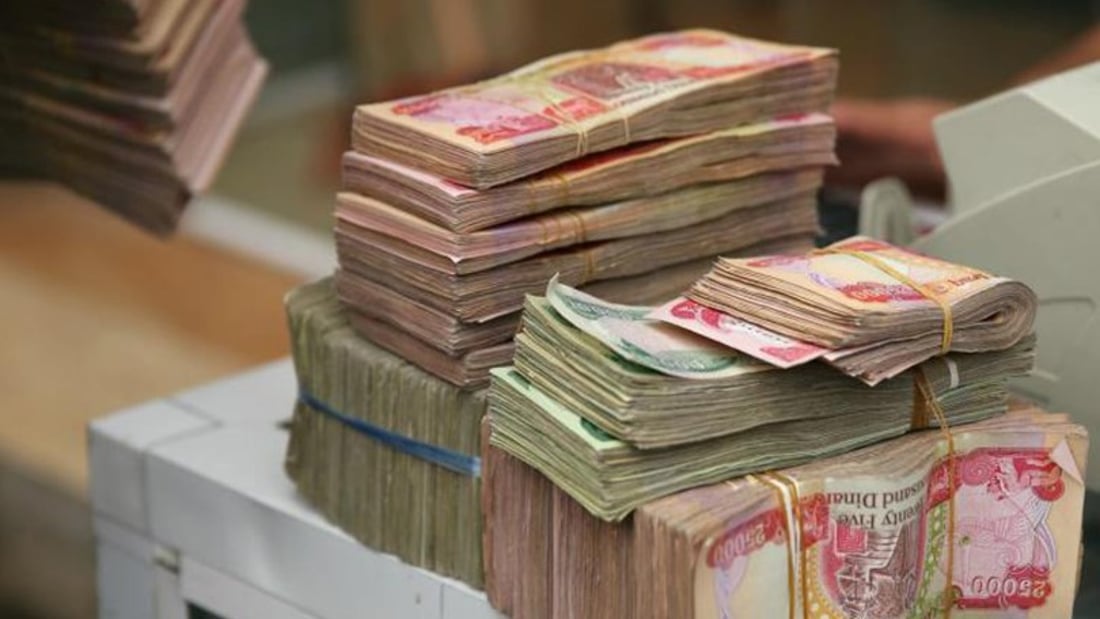
Stacks of Iraqi dinars are seen at a money exchange office
Media Monitor
Dollar could top 170,000 dinars per $100, economist warns
BAGHDAD — The dollar could rise above 170,000 dinars per $100 on Iraq’s parallel market because trade with Iran cannot be financed through banks and demand for dollars outside the official system remains strong, economist Nabil al-Marsoumi said.
“The same factors that led to the widening gap between the official and parallel dollar exchange rates by around 28 points are still present,” Marsoumi said in a televised interview, calling expectations that the gap would narrow premature. Iraq does substantial trade with Iran but cannot pay for it through official banking channels, so merchants buy dollars on the parallel market, he said. Some 55% of small and medium-sized traders still do not use the electronic platform to finance imports and buy their dollars on the parallel market instead, and goods continue to enter through both official and unofficial crossings, he said.
The steady climb was a warning sign, Marsoumi said. “A slow increase means a real increase that reflects actual factors in the market.” If the rate passed 170,000, traders could start pricing goods above that level, setting off another round of price rises, he said.
Iraq lacks the domestic production to cushion a weaker currency, Marsoumi said, so in a market that depends heavily on imports, changes in the dinar’s value pass straight into consumer prices. By his calculations, every 1% fall in the dinar’s value raises the general price level by 0.75%, and the devaluation could push about 2 million Iraqis below the poverty line, adding to welfare spending. “What we do not spend with the right hand, we may end up spending with the left,” he said.
The dollar sold for 169,000 dinars per $100 in Baghdad on Sunday, days after the government said it planned to bring the rate down to 155,000. Since Oct. 7, the Central Bank buys dollars from the Finance Ministry at 1,500 dinars, sells to banks at 1,510 and sets the public rate at 1,520, up from 1,300, 1,310 and 1,320. Prime Minister Ali al-Zaidi told the parliament speaker and committee chairs on Oct. 8 that devaluation was necessary to keep paying salaries without more borrowing, after the government had weighed compulsory savings deducted from salaries, paying public employees every 45 days and taking on more debt.
A Planning Ministry committee is drafting new rules for government contracting after the U.S. Treasury asked Baghdad to tighten oversight of existing and future contracts, to stop state money reaching companies under Iran-related sanctions, sources told 964media.