
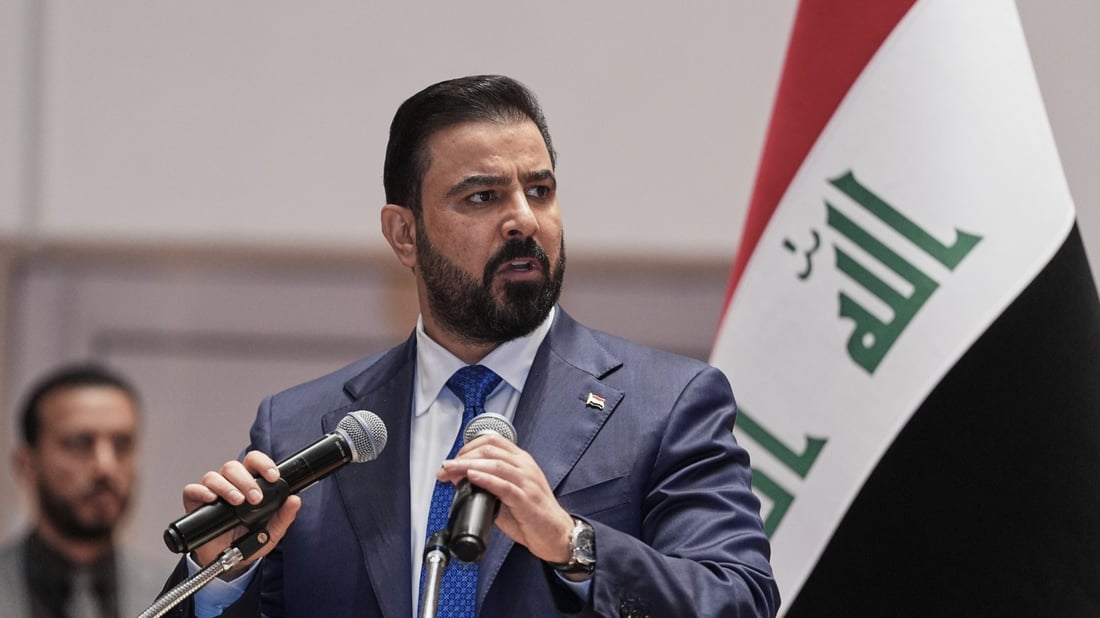
Iraq's Prime Minister Ali Al-Zaidi. (Photo: Al-Zaidi's media office)
Zaidi declares coalition mission over, hails ‘cooperation among friendly forces’
BAGHDAD — Prime Minister Ali al-Zaidi formally declared the end of the U.S.-led coalition’s mission against the Islamic State group on Wednesday, 12 years after it began, telling a Sovereignty Day ceremony in Baghdad that Iraq now takes full responsibility for its own security.
“We announce the conclusion of the International Coalition’s mission to combat ISIS, demonstrating that cooperation among friendly forces and peoples has resulted in victory over one of the darkest chapters of extremism and brutality in history,” Zaidi said. “The conclusion of the International Coalition’s mission does not mean the end of our battle against terrorism. Rather, it marks Iraq’s transition to a phase in which it assumes full responsibility for its security and stability.” Cooperation with coalition countries would continue, with more focus on technology and digital capabilities, he said. “Security cooperation with our friends in the International Coalition will remain an open avenue and will become more effective and focused.”
Kurdish leader Masoud Barzani rejected suggestions that the Kurdistan Region would be left exposed. Some, “whether out of genuine concern or driven by ill intent and misguided analysis,” believed the departure would “leave the Region vulnerable and threaten its very existence,” he said in a statement, but there was “strong coordination with the Federal Government of Iraq to confront any threat or danger, whether it emerges under the name of ISIS or any other name.” Anyone thinking of threatening the Region “must know that Kurdistan has more than enough Peshmerga, heroes, and patriots prepared to sacrifice their lives,” he said. Both the federal government and the Kurdistan Regional Government may make bilateral agreements with coalition countries as circumstances require, he added.
The Region’s Peshmerga Ministry said on Monday that the departure would leave it without any air defence, and Iraq says systems from South Korea, Turkey and the United States are coming without giving a date.
The day is also the start of Zaidi’s plan for the armed factions: a 90-day halt to attacks, then six months to hand over weapons, ending on June 30, 2027. Two factions refusing the process said this week they would act after Sept. 30. Ashab al-Kahf said any foreign presence on the ground or in the air would “face a military response” from Wednesday night, and a Kataib Hezbollah security official said the group would monitor Iraqi airspace and try to shoot down aircraft it considers hostile. State of Law leader Nouri al-Maliki said last week that the weapons programme and timetable would be announced on Sept. 30.
Security adviser Qasim al-Araji said the partnership would continue in a different form. “The end of the coalition’s mission does not mean the end of the partnership, but rather a transition to more firmly established bilateral relations, with continued security and intelligence cooperation, exchange of information and expertise, and capacity building, based on mutual respect and common interests,” he said.
First Deputy Speaker Adnan Faihan of Asaib Ahl al-Haq called the date “an important turning point in the history of the modern Iraqi state.”
“Today, the presence of American and foreign forces on Iraqi territory has ended, and the presence of Turkish forces has also been scheduled,” he said. Turkey agreed last week to hand its Bashiqa base to Baghdad gradually, with no dates published; its other positions in northern Iraq are unaffected. Chief Justice Faiq Zaidan called the day “an inspiring national milestone,” and Finance Minister Falih al-Sari said sovereignty would strengthen the state’s ability “to protect its resources, manage its wealth and regulate its revenues.”
The mission ends under a 2024 agreement between Baghdad and Washington. Advisers left bases and command headquarters in federal Iraq in January, including Ain al-Asad and the Joint Operations Command, and the remaining presence in the Kurdistan Region, which supported operations in Syria, has now handed over its bases. The government has declared a holiday for state institutions until Saturday.