
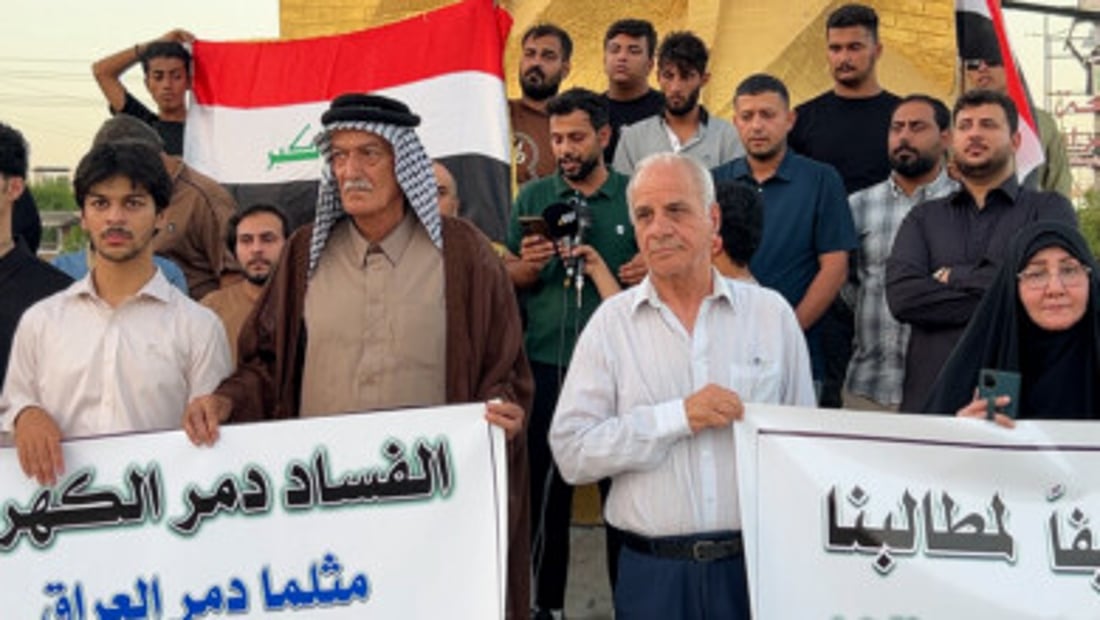
Protesters gather in Karbala’s Al-Tarbiya Square on Aug. 21, 2026, to demand improvements to electricity supply and an end to recurring power shortages. (Photo: 964media)
Karbala protesters demand a lasting fix to power cuts
KARBALA — Protesters gathered in Karbala’s Tarbiya Square on Friday evening to demand a lasting solution to power shortages, with organisers from districts and subdistricts across the governorate saying earlier demonstrations had gone unanswered.
“This is not the first demonstration. It was preceded by several demonstrations that carried the people’s demands, but our voice did not reach the governor and officials,” said protester Hathal Hamad al-Mu’nis. “So we came out today to deliver our demands to Electricity Minister Ali Saadi Wahib and Prime Minister Ali al-Zaidi.”
Human rights activist Walid Qahtan al-Shammari said the rationing schedule was erratic, with power sometimes on for an hour and off for the next, and that access to electricity was a basic right. Civil activist Hassan al-Husseini asked why one of the world’s richest countries had shortages when neighbours including Iran had steady supply.
“Billions have been spent on the energy system in its various sectors, including electricity, so what is the reason?” said political activist Bushra Abu al-Eis, calling provision a constitutional duty. “Especially Karbala, which has large resources such as religious tourism and others. Is it reasonable that it lacks electricity?” The governorate hosted millions of pilgrims for Arbaeen three weeks ago.
Iraq’s plants depend on imported Iranian gas for 33% to 40% of output, and deliveries fell sharply after attacks on Iran’s South Pars field. The ministry aimed in April to generate 30,000 MW at peak against projected demand of 55,000 to 60,000 MW; generation has since fallen to about 21,000 MW. It said this month that 600 MW from Turkey and 300 MW from Jordan had begun flowing after cross-border links entered service, four days after the minister had told parliament that none of the promised interconnections was running.
Protests have spread across the country. At least 52 members of the security forces were wounded in clashes in Kut that ran from the evening of Aug. 10 into the following morning, with dozens of protesters also believed hurt and no count available. Residents of Basra, Najaf and Wasit have protested for longer supply hours, blocking roads and clashing with security forces.