
Basra
Hundreds of Gulf pilgrims stranded at Safwan after Kuwait closes Abdali crossing
BASRA — Hundreds of Gulf pilgrims returning from the Arbaeen pilgrimage have been stranded at the Iraq-Kuwait border after Kuwait closed the Abdali border crossing following an attack, prompting a religious procession in southern Basra to provide temporary shelter and aid.
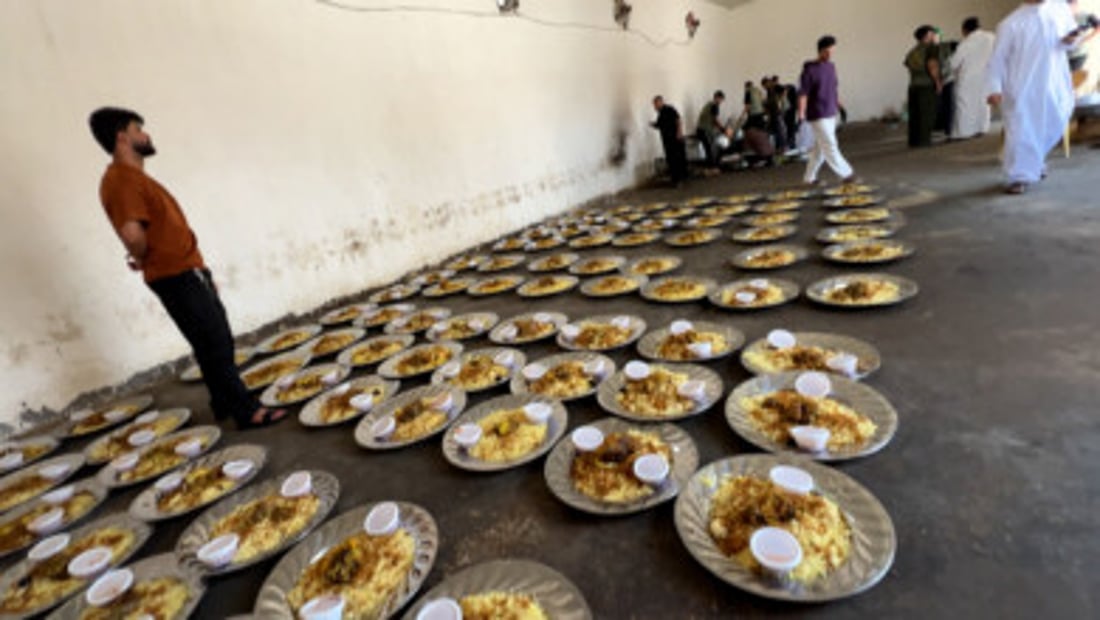
The Muslim bin Aqeel procession in Safwan is hosting about 400 pilgrims from Saudi Arabia, Kuwait and Bahrain, including families with children, after the closure prevented them from returning home following their visit to Karbala.
Volunteers, working in coordination with local authorities, are providing accommodation, meals and basic services while the pilgrims wait for the crossing to reopen. Some have spent two days or more in the border area.
The disruption follows explosions at Kuwait’s Abdali border crossing on Thursday after two drones struck the facility. Iraqi security officials told 964media that no damage or security incidents were reported at Iraq’s Safwan crossing, but Kuwait closed the border crossing from its side.
Saudi pilgrim Moeen Ali Al Abbas, from the city of Saihat, told 964media that his group’s journey into Iraq had gone smoothly and that they had received a warm welcome in Najaf and Karbala before becoming stranded on their return.
“About an hour before we reached Safwan, a strike hit the Abdali crossing,” he said. “The Kuwaiti side closed the border and we could no longer cross. My family of five had to walk for nearly six hours, and we were left not knowing what to do.”
He said volunteers from the Muslim bin Aqeel procession transported stranded families to a hussainiya in Safwan, where they were given accommodation, food and care.
“Our Iraqi brothers did more than anyone could expect,” Al Abbas said. “They hosted us and looked after us as though we were among our own family. I will never forget what they have done for us.”
He said organized pilgrimage groups from Gulf countries remain in the area and that attempts to return home by air have failed because flights are fully booked ahead of the Arbaeen peak.
“We contacted our families in Saudi Arabia and the authorities, but so far there has been no solution,” he said. “We entered Iraq by land and hope to return the same way.”
Haider Al Sabah, who oversees the Muslim bin Aqeel procession, told 964media that local officials asked religious processions and hussainiyas in Safwan to assist stranded pilgrims after the border closure.
“The pilgrims were on their way home after commemorating Arbaeen when the attack on Abdali and its closure from the Kuwaiti side halted movement,” he said.
“We responded by receiving them and providing their basic needs until the crossing reopens.”
Al Sabah said the procession is currently hosting about 400 pilgrims, who arrived by buses, organized tour groups and private vehicles.
“Some of them have now spent two days in the border area,” he said. “Our volunteers will continue providing services until the crisis ends and border traffic resumes.”
The Safwan-Abdali crossing is the main overland route between Iraq and Kuwait and is widely used by Gulf pilgrims traveling to Iraq for major Shiite religious occasions, including Arbaeen. Each year, millions of pilgrims travel to Karbala to commemorate the 40th day after the killing of Imam Hussein in the Battle of Karbala in 680.