
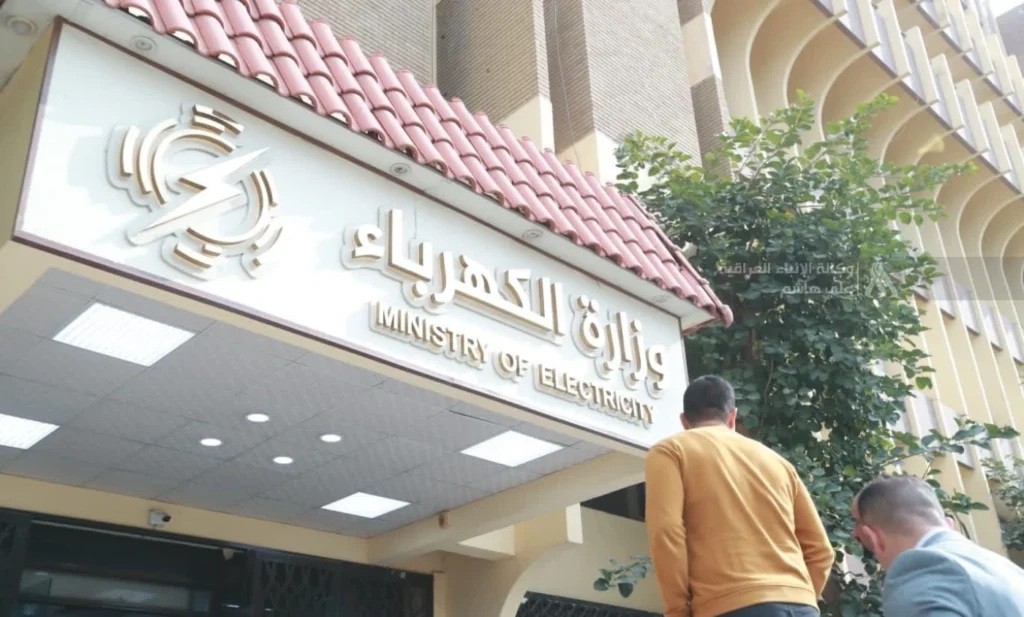
The entrance of Iraq’s Ministry of Electricity headquarters in Baghdad
Nineveh launches campaign against power grid violations as losses reach 40%
NINEVEH — Nineveh Governor Abdul Qader Al-Dakhil announced Monday the launch of a joint campaign to remove illegal connections to the national electricity network and reduce losses that account for about 40% of the governorate’s total power supply.
Speaking at a press conference today alongside electricity officials and local authorities, Al-Dakhil said the campaign was launched in line with directives from Supreme Judicial Council President Faiq Zaidan, which call for legal action against electricity violators. He said unauthorized use of the electricity system is considered theft of public funds and is punishable by imprisonment ranging from one to seven years.
The Supreme Judicial Council directed investigative courts Sunday to take strict measures against electricity violations, classifying illegal connections as “theft of public funds” punishable under the Penal Code, and warned that attacks on enforcement teams would draw deterrent penalties.
Al-Dakhil said Iraq faces financial and electricity-sector challenges that are worsened by violations and network losses. He described the 40% loss rate in Nineveh as very high and said it requires immediate field measures to protect public funds and improve distribution efficiency.
He said joint field committees have been formed from branches of the electricity sector under the direct supervision of the local government to implement the campaign.
According to Al-Dakhil, the campaign will not be limited to removing violations. It will also seek to regulate the relationship between consumers and the electricity department. Homes that are not officially registered, particularly those built on housing association lands, will receive “red cards” identifying their occupants as actual consumers, allowing them to be formally included in the billing system.
Meanwhile, Zaidan Khalaf, director of the state-owned North Electricity Distribution Company, outlined the mechanism for determining provincial electricity allocations. He said a coordination committee at the Prime Minister’s Office, working with governors and electricity departments, determines each the governorate’s share.
Khalaf said Nineveh currently receives 9% of Iraq’s total electricity production.
The step comes as Iraq enters the summer peak, when demand has been estimated to exceed 50,000 MW against generation of about 22,000 MW. The gap causes long and frequent outages, especially in the south. Power cuts have repeatedly triggered protests in Basra governorate, including in Zubair, al-Madina and Shuaiba, where residents have demanded better supply.