
Basra
Zubair residents demand end to electricity cuts as summer heat intensifies
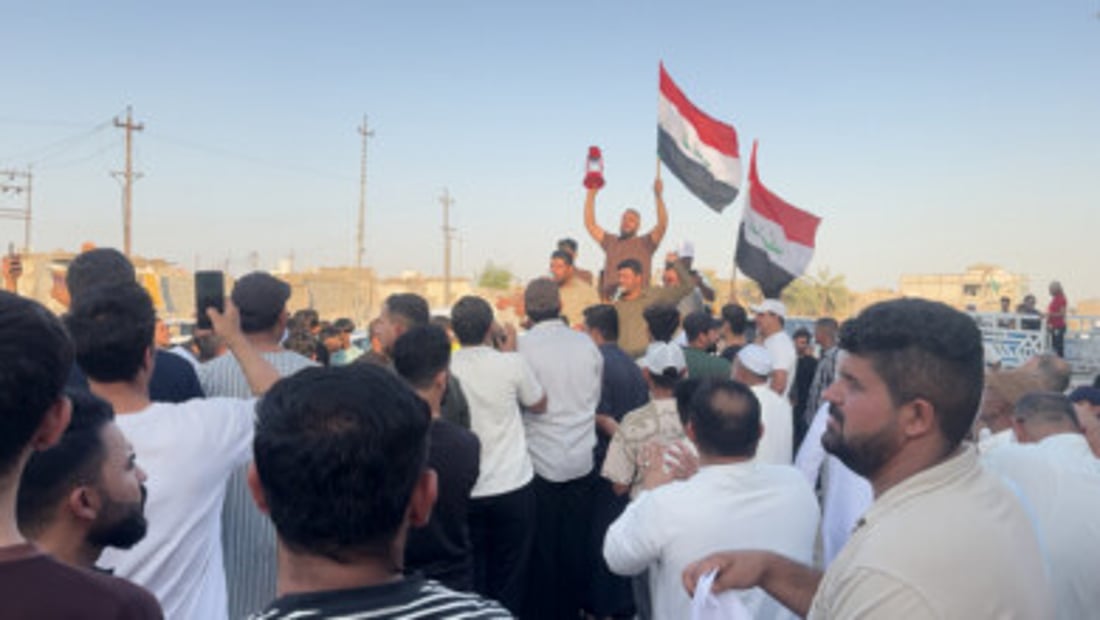
BASRA — Hundreds of residents of Zubair district in Basra protested outside the Al-Jahiza power station Thursday, demanding the district be exempted from scheduled electricity outages as blackouts lengthen and summer temperatures rise.
Protesters carried banners calling for continuous electricity service and rejected the current rationing system of four hours of supply followed by two hours of outage, as well as proposals to shift to a five-hours-on, one-hour-off schedule.
Residents and activists said Zubair’s circumstances warrant special treatment. Activist Ahmed Khalaf told 964media that “providing continuous electricity is not a privilege but a legitimate right and deserved compensation for the environmental and health damage.” Protester Ahmed Salam said residents suffer from serious illnesses linked to gas emissions from nearby oil fields and that officials forget local communities after elections.
Cleric Ali al-Sharifi, who joined the protest, said Basra and Zubair in particular face neglect despite being among Iraq’s largest oil-producing areas and among those most affected by the environmental consequences of oil activity. “Despite that, it is treated like any other area in the electricity file without consideration for its special circumstances or the burdens borne by residents,” he said, warning that continuing the current approach could lead to further escalation.
Basra had enjoyed relatively stable electricity since widespread protests in 2014, but reduced Iranian gas imports since the outbreak of regional conflict in late February have hit generation across the governorate. A protest in the Shuaiba area of Zubair on Monday drew hundreds over outages demonstrators said left them without power for up to eight hours a day.
The broader supply crisis stems from reduced Iranian gas imports, which account for more than 30% of Iraq’s electricity generation, lower domestic production and disruptions linked to the regional conflict. Imports collapsed after strikes on Iran’s South Pars gas field in March, while the closure of the Strait of Hormuz cut southern export routes and reduced associated gas output. Authorities have explored alternatives including floating liquefied gas terminals, increased electricity imports from neighboring countries and expanded solar projects.
Private neighborhood generators remain a primary electricity source for many Iraqi households during summer, when grid supply often declines and temperatures regularly exceed 50°C in Baghdad and the south. Many families cannot afford enough generator supply to run air conditioning for extended periods.